


Special Report
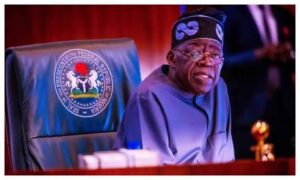
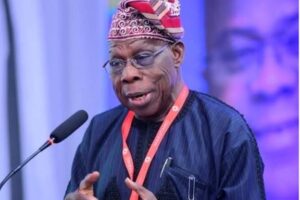
Former President Olusegun Obasanjo has openly declared support for U.S. military intervention to assist Nigeria in combating terrorism—an extraordinary endorsement that underscores the severity of the nation’s escalating security crisis. Speaking with characteristic frankness, Obasanjo said the Nigerian government has “failed to adequately protect its citizens,” and that those calling for international help are “not wrong.”
His comments hit at the heart of a debate Nigeria has avoided for years: whether the country possesses the capacity, leadership structure, and political will to defeat a jihadist-driven insurgency that has now stretched for more than 15 years.
This report examines Obasanjo’s intervention within historical and global context, analyses Nigeria’s prolonged struggle against terrorism, and outlines urgent measures—including the adoption of weaponised drones and the appointment of competent defence professionals—required to prevent the country from sliding into irreversible collapse.
A Struggle Too Long: 15 Years of Inconclusive Warfare
Nigeria’s war against Boko Haram began in 2009. Over 15 years later:
More than 90,000 Nigerians have been killed across insurgency, banditry, and terror attacks.
Over 3.5 million citizens remain displaced in the North East and North West.
At least $50 billion in economic losses have been recorded across agriculture, mining, and commerce.
Kidnapping has expanded into a billion-naira criminal enterprise.
Despite periodic victories, the Nigerian Armed Forces have not produced a decisive, strategic defeat of terrorism. The failure is not due to lack of courage—Nigerian soldiers are among the most battle-tested on the continent—but due to a structural mismatch between the threat and Nigeria’s defence architecture.
Obasanjo’s blunt remark reflects what security analysts have been saying privately for years: Nigeria is fighting 21st-century terrorists with 20th-century tools, outdated strategy, and political complacency.
Why Obasanjo’s Call Is Significant
Few Nigerians understand national security like Olusegun Obasanjo—a former military Head of State, twice-elected civilian President, and commander with combat experience in the civil war. When such a figure calls for U.S. military involvement, it signals:
■ Loss of confidence in Nigeria’s internal capability
■ Recognition that the threat has evolved beyond Nigeria’s current capacity
■ Urgency for international strategic assistance
Obasanjo is not known for frivolous statements. His intervention should be seen as a sober national warning.
Comparative Analysis: How Other Nations Responded Differently

Nigeria is not the first country to face insurgency. But it is one of the few that has failed to end it after more than a decade.
• Colombia vs FARC (52-year insurgency)
Ultimately defeated through:
advanced intelligence sharing with the U.S.
precision airstrikes
integrated national strategy
• Iraq vs ISIS (2014–2017)
ISIS conquered territory the size of a country. Victory only happened when:
U.S.-led coalition provided airpower, drones, and intelligence
coordinated ground operations were executed
• Somalia vs Al-Shabaab
Somalia made gains only after African Union troops received:
U.S. drone support
counterterrorism training
precision strike capabilities
• Nigeria’s Unique Weakness
While these nations modernised, Nigeria’s military remained under-equipped, structurally outdated, and starved of high-tech weapons, despite spending trillions of naira on defence in 15 years.
The comparative fact is stark: countries that embraced advanced ISR, drones, and foreign support won. Nigeria refused—and continues to pay the price.
An Under-Equipped Army Facing 21st-Century Threats
It is an open secret within defence circles that Nigerian troops lack:
real-time ISR (intelligence, surveillance, reconnaissance)
sufficient attack helicopters
long-endurance drones
loitering munitions
night-fighting equipment
precision weapons
Worse still, the Armed Forces are often deployed with inadequate logistics, insufficient armour, and limited air support.
A senior retired officer told Headlinenews.news:
“We trained for decades with billions of naira and millions of dollars invested in us. Yet when it is time to serve the nation at the highest strategic levels—Minister of Defence, NSA—we are not considered. It is hurting Nigeria.”

This structural defect has crippled Nigeria’s ability to wage modern counter-terror warfare.
Why Nigeria Must Restructure Leadership Now
Despite having dozens of retired generals with advanced training from the U.S., U.K., India, Pakistan, and Israel, Nigeria continues to appoint political allies with limited knowledge of military doctrine as Minister of Defence or National Security Adviser.
This approach is now unacceptable.
Terrorists are evolving. Nigeria’s defence leadership is not.
If Nigeria fails to reform now, Terrorist enclaves risk:
overrunning communities,
overwhelming overstretched troops,
expanding into more states,
destabilising the country beyond control.
The warning signs are already present.
The Case for Modern Aerial Warfare: Weaponised Drones
Headlinenews.news can confirm that Fraser Consulting has submitted a proposal offering Nigeria a range of weaponised drones, including:
Kamikaze (loitering) drones
Long-endurance surveillance UAVs
Forest-penetration targeting systems
Precision strike capabilities with minimal collateral damage
These drones are specifically designed to hit targets hidden under tree cover—something conventional bombing cannot do as efficiently.
Unlike heavy bombs, kamikaze drones:
Strike with surgical precision
Separate civilians from hostiles in seconds
Avoid large explosions
Neutralize targets hiding in forests or rocky terrain
Reduce cost and risk to troops
Countries like Turkey, Azerbaijan, Israel, Ukraine, and the U.S. have used such drones to devastating effect against insurgents and invading forces.
Nigeria must join them if it wants real results.
A Dual Approach: U.S. Support + Internal Reform
While Obasanjo supports U.S. assistance, analysts argue that foreign help will be useless if Nigeria fails to fix its internal weaknesses.
Nigeria must immediately:
Appoint a seasoned defence professional as Minister of Defence
● Restructure the NSA office with real security expertise
● Adopt drone-led warfare strategy
● Upgrade intelligence coordination
● Standardise community-based intelligence networks
● Move from defensive postures to aggressive, intelligence-driven operations
Anything less is cosmetic.
Conclusion: Nigeria Is Out of Time
Obasanjo’s endorsement of U.S. military help is not a political jab—it is a national alarm bell. Nigeria stands at a dangerous crossroads. Terrorists are expanding, communities are vulnerable, and the Armed Forces are fighting outdated battles with outdated tools.

The time for diplomacy, denial, and political appointments is over.
Nigeria must restrategise now—before the terrorists overrun the country.
The path forward demands:
military professionalism,
modern technology,
international partnership, and
leadership with strategic competence.
History will not forgive further delay.
Dr. G. Fraser. MFR.
The National Patriots Movement.




