

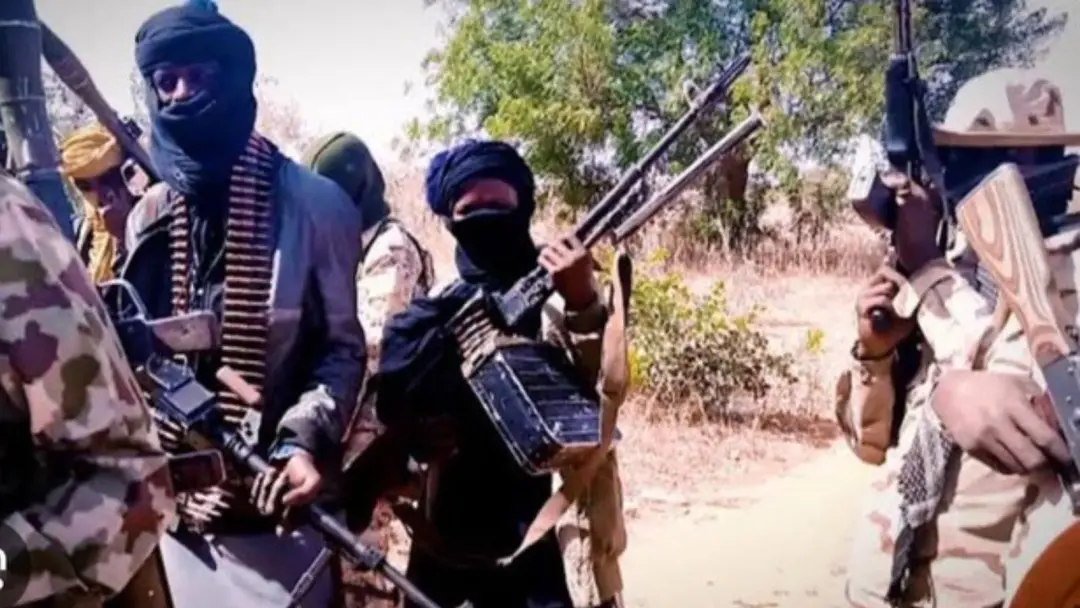
The Federal Government has disclosed that Nigerian security agencies are collaborating with major social media platforms to identify and remove accounts used by terrorists and criminal organizations to promote their activities and solicit funds.

Speaking at an end-of-year briefing in Abuja on Tuesday, Maj.-Gen. Adamu Laka, Director-General of the National Counter Terrorism Centre, highlighted that platforms such as TikTok, Facebook, Instagram, Snapchat, and X have been exploited by terrorists to publicize operations, display stolen goods, and communicate with supporters.

He explained that security agencies have held multiple engagements with these social media companies to address content that threatens national security.
“The issue of social media accounts used by terrorist groups—if you knew how many we have taken down. We’ve met repeatedly with platforms like TikTok, Instagram, Snapchat, Facebook, and X. While these platforms aim to grow their user base, we explain the national security risks posed by certain content, and we ensure it’s removed.
“There was a time when bandits would go on TikTok flaunting their loot, even live streaming and holding conversations. Those accounts have now been taken down,” he said.
Maj.-Gen. Laka noted that terrorist methods continue to evolve, including the use of aliases and unverified accounts, requiring constant adaptation by security agencies.

He also identified ransom payments as a major source of terror funding, pointing out that point-of-sale (POS) operators are increasingly used to move money. “You see a transfer made by terrorists, and upon investigation, it belongs to a POS operator. The kidnappers give out the POS number, the money is transferred, and they collect it,” he explained.
Laka emphasized that security agencies have intensified efforts to track ransom payments, apprehend those involved, and disrupt terror financing networks, although operational details cannot be disclosed for security reasons.

He confirmed that several arrests and prosecutions have been carried out in connection with ransom payments and terrorism financing. Asset recoveries and seizures also form part of Nigeria’s compliance with international anti-money laundering and counter-terrorism standards.
The DG said the country’s recent progress in meeting Financial Action Task Force requirements is largely due to coordinated investigations by a joint committee including security agencies, financial intelligence units, and the judiciary.
Acknowledging the challenges posed by evolving terror tactics and porous Sahel borders, he assured Nigerians that counter-terrorism efforts—both physical and digital—would continue to be strengthened.

“Towards the end of 2023, the security situation in Nigeria was improving. But after coups in some Sahel countries, threats intensified because these terrorist groups have regional networks. Nigeria must play a leadership role in West Africa and the Sahel. As long as these countries face instability, we will also encounter challenges. We are committed to intensifying our efforts, and in 2026, we will up our game,” he said.
Bandits and other criminal networks have increasingly used social media to flaunt ransom payments, livestream their activities, and communicate with followers, posing significant security risks.




