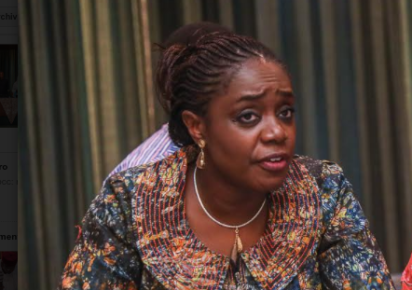
Former Finance Minister Kemi Adeosun has said that members of the Federal Executive Council during her time in office were fully aware that fuel subsidy was harmful to Nigeria and unsustainable in the long run.
Adeosun made the disclosure during a television programme on Friday, explaining that ministers knew it was no longer reasonable to continue allocating funds to the subsidy regime.
She noted that although government officials eventually realised that subsidised fuel was being smuggled across Nigeria’s borders to neighbouring countries, there was insufficient political will at the time to completely remove the subsidy.

“There was no minister who did not see that subsidy was killing us,” she said.
According to her, several measures were attempted to curb the problem, including the introduction of intervention programmes and monitoring mechanisms. She explained that Nigeria’s fuel price was significantly lower than prices in neighbouring countries, making large-scale smuggling inevitable.
She said fuel consumption figures at the time did not align with the number of vehicles in the country, leading the government to conclude that subsidised fuel was not only serving Nigerians but also consumers across West Africa.
“We concluded that we could not just remove the subsidy because it was going to affect the people,” she said.
Adeosun added that when tracking systems were introduced, the government discovered that Nigeria was effectively subsidising fuel for the entire sub-region, a burden the country could no longer bear.

She explained that funds spent on fuel subsidy deprived critical sectors such as education, healthcare, and infrastructure of much-needed investment, stressing that there was little to show for the huge sums expended on the policy.
She said the decision to remove the subsidy was inevitable, adding that the savings from the policy should now be channelled into projects that directly improve the lives of citizens.
Adeosun urged Nigerians to closely scrutinise how government budgets are implemented and to demand accountability from their leaders. She also appealed for patience, saying the long-term benefits of subsidy removal would outweigh the short-term challenges.
“Now that the policy is gone, of course, there are some overspills, but in the long run, Nigerians are going to be so much better off on that,” she said.

She emphasised that increased revenues being shared among the tiers of government must translate into tangible benefits for the people through well-planned and structural interventions, rather than temporary relief measures.
On her resignation from office in 2018, Adeosun said the controversy surrounding her National Youth Service Corps certificate was used by political opponents as an excuse to force her out of the cabinet.
She explained that she informed then-President Muhammadu Buhari of her intention to resign and pursue legal action to clear her name, stating that it was inappropriate to remain in government while suing the same government.
“I sued the federal government. You can’t be suing the government and staying in the government. You can’t. You have to go,” she said.
Adeosun maintained that stepping aside was the right decision, adding that reputation and integrity were more important than holding public office.