

…As Power Struggle Freezes Rivers State Again
By Luminous Jannamike, Abuja
By mid-afternoon on Thursday in Abuja, Tamuno Briggs could no longer focus on his laptop. His attention kept drifting to his phone, scrolling through the latest alerts from Rivers State. Another escalation. Another headline signaling that the fragile calm had collapsed once more.

Tamuno’s concern was not political curiosity but calculation. If the impeachment succeeds, would contracts his younger brother relies on in Port Harcourt be suspended again? Would payments owed to his uncle’s construction company, already long delayed, be pushed further into uncertainty? He had seen this pattern before: in Rivers State, political battles freeze the economy first.
From the relative calm of Abuja, Tamuno understood the harsh reality: the Wike–Fubara conflict may be local, but its effects travel far.

A Familiar Story Repeats
At the core, Rivers State is witnessing a familiar cycle. A political godfather chooses a successor. The successor seeks independence. The godfather resists.
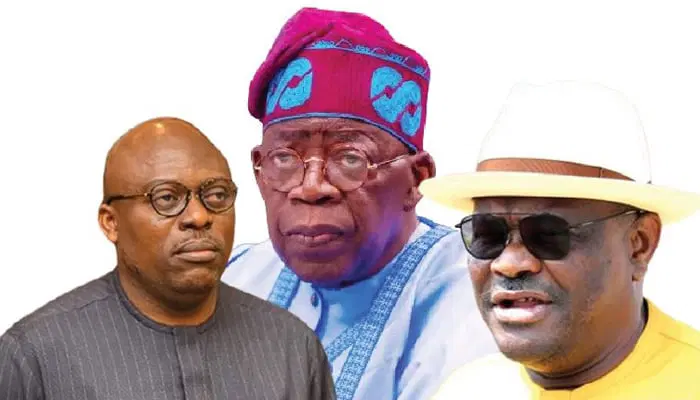
Former Governor Nyesom Wike, now Minister of the Federal Capital Territory, handpicked Siminalayi Fubara in 2023, expecting continued influence over appointments, finances, and political structures. Fubara’s insistence on autonomy broke that expectation.
By late 2023, the fallout became institutional. The Rivers State House of Assembly split into rival factions, the assembly complex was set on fire, and impeachment threats became routine political tools rather than constitutional safeguards.
President Bola Tinubu intervened, first through mediation and then by imposing a six-month state of emergency in 2025. From March to September, a sole administrator managed Rivers while elected officials were sidelined. Politics paused briefly, and governance resumed — but only temporarily.

Fubara’s defection to the All Progressives Congress (APC) in late 2025 changed the equation. What began as a PDP feud became a national political issue, affecting budgets, laws, and party dynamics.
Budgets, Laws, and the Real Fight
The latest confrontation was triggered by fiscal disagreements. Lawmakers loyal to Wike proposed a supplementary appropriation to adjust the N1.48 trillion 2025 budget, enacted during emergency rule. Fubara rejected the proposal, arguing the budget was sufficient, and refused to present the 2026 budget, accusing lawmakers of acting in bad faith.
Under Nigerian law, this refusal was explosive. The House of Assembly, dominated by Wike loyalists, initiated impeachment proceedings against Fubara and his deputy, Ngozi Odu, citing “gross misconduct.” Days earlier, Wike had publicly declared a “fresh war,” pledging to block Fubara’s re-election and promising to expose prior agreements.
For Rivers residents and those economically tied to the state, the warning was clear: governance had once again stalled.

Abuja Watches Uneasily
The crisis now reaches Abuja. Wike, a key figure in Tinubu’s calculations, delivered Rivers votes in 2023 and earned a prominent cabinet role. But Fubara, now an APC governor, is an asset the party cannot afford to lose with 2027 approaching.
Tinubu’s options carry political risk. He could broker another peace deal despite previous failures, impose party discipline to restrain impeachment efforts, let the courts decide (risking paralysis), or intervene forcefully (inviting accusations of overreach). Every choice has implications beyond Rivers.
Who Bears the Burden?
Impeachment itself is uncertain. Removal requires a two-thirds majority, a seven-member investigative panel appointed by the chief judge named by Fubara, and judicial endorsement. Without alignment, the process could stall. But even a stalled impeachment freezes projects, delays payments, stalls civil servants, halts contractors, and disrupts student bursaries. Families across Nigeria tied to Rivers feel the impact without appearing in official statements.
Tamuno sees it clearly: while politicians fight, ordinary lives pause.
The Road Ahead
Short-term, impeachment may falter, particularly if the State House or Aso Villa signals restraint. A temporary truce is possible: budget presentation in exchange for dropped proceedings.
Long-term, the conflict is moving toward the 2027 elections. Wike aims to block Fubara’s re-election, while Fubara, backed by incumbency, the APC, and Ijaw support, seems determined to hold his ground.
Rivers State has seen this cycle before. Godfathers may lose eventually, but residents always pay the price in lost time and stalled development.
Public Reactions
Peter Ameh, former National Chairman of the Inter-Party Advisory Council (IPAC), said: “The tension in Rivers stems from Wike’s attempt to control Fubara. Leaders must prioritize governance over personal and political disputes. The people’s needs should guide performance, not power struggles.”
Baba Yusuf, political strategist, added: “The impeachment proceedings are a calculated move by the Wike camp. For over three years, Fubara has struggled to execute his mandate.”

Dr Leloonu Nwabubasa of the Rivers Liberation Movement said: “Wike is politically drowning. He is not only targeting Fubara but also blaming unrelated actors, preventing governance from functioning.”
Dickson Iroegbu, PDP member, remarked: “The sudden return of the state assembly from recess shows their clear intent to pursue impeachment. The President must act decisively to maintain order.”
Political analyst Dr. Ibrahim Modibo concluded: “Fubara can survive this, but failure to resolve it risks a dangerous democratic path ahead.”



