

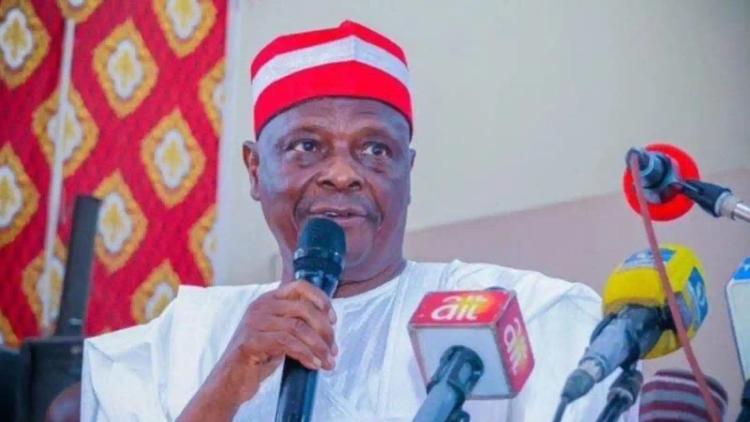
Rabiu Musa Kwankwaso, the 2023 presidential candidate of the New Nigeria Peoples Party (NNPP), has declared January 23 as a “Day of Betrayal” in response to Kano State Governor Abba Kabir Yusuf’s defection from the party.

Kwankwaso, speaking in Hausa, said the Kwankwasiyya movement will commemorate January 23 annually to mark those who have betrayed the group. “I saw multiple discussions about betrayal on social media,” he said. “One post suggested declaring January 23 as World Betrayal Day. As the leader of this movement, I now endorse that date as Betrayal Day. It will be observed nationwide.”
Meanwhile, Governor Yusuf has cautioned his supporters against making disrespectful or inflammatory remarks about Kwankwaso. The warning was delivered by the Director-General of Media and Publicity, Government House, Bature Tofa, during a motorcycle distribution event at the Open Space Theatre, Government House, Kano.

“To maintain peace and unity, political differences should not turn into personal attacks,” Tofa said. “We will not tolerate insults or indiscipline against the leader of the Kwankwasiyya movement. Anyone engaging in such behavior will face consequences.”
Yusuf formally resigned from the NNPP on January 23, leaving behind 21 members of the Kano State House of Assembly, eight members of the House of Representatives, and all 44 local government chairmen in the state. He cited “deepening internal crises” and “prolonged leadership disputes” as key reasons for his exit. His resignation followed a meeting with President Bola Tinubu at the State House, Abuja.

Kwankwaso had played a central role in Yusuf’s rise to the governorship in 2023 through his Kwankwasiyya movement. However, relations between the two have reportedly soured, culminating in the governor’s defection.
Kano Politics has Predominantly Been in the Opposition

The resignation of Gov. Abba Yusuf of Kano State from the NNPP leading towards the 2027 general elections is a big mistake, if he eventually joins the APC. The reason is simple – it will mean he does not understand the evolutionary history of Kano politics! If he had, he would have known that Kano politics has always essentially aligned with opposition politics, and never purposefully leaned toward the center. The pattern of its politics since independence validates this assertion.

In the 1st Republic, while the North and the nation formed NPC governments, Kano overwhelmingly voted an opposition party, the NEPU. Likewise, in the 2nd Republic, while the North and the nation voted NPN, Kano still tilted toward the opposition and voted for the PRP.
Under the present dispensation as well in 1999, Kano rejected the perceived Conservative Party, the ANPP, and overwhelmingly voted the perceived liberal PDP. But when it turned out that PDP formed the national government, Kano promptly voted it out after only one term in 2003 and voted the opposition party, the ANPP. Then in 2015, along with other opposition parties, Kano joined the bandwagon and fused into the newly formed APC. It remained in the APC for two terms under controversial circumstances but in 2023 moved back to its opposition stance by voting in a fringe opposition party, the NNPP. Even when the courts, at the tribunal and Court of Appeal levels, tried to move the state into the ruling national party, the APC, Kano electorate staunchly stood against the move and the Supreme Court, perceiving the danger fraught in the process, hence reversed the move in its final verdict. Hence, keeping Kano politics where it has always been – predominantly in the opposition!

To this end, therefore, by joining APC, the ruling party at the center, Gov. Yusuf and the APC are automatically courting defeat in 2027. Either the APC wins national government and loses Kano state, or it wins Kano state and loses the national election. But they cannot win both as Kano’s election pattern over the years doesn’t support that. The pattern is clear; now the choice is left for the APC and Gov. Yusuf to make.
… Dr. Ardo
What do you think prompted Abba Yusuf’s departure from the NNPP, and how will this affect Kano’s political landscape? Share your thoughts in the comment section.




