

Headlinenews.news | Special Report.
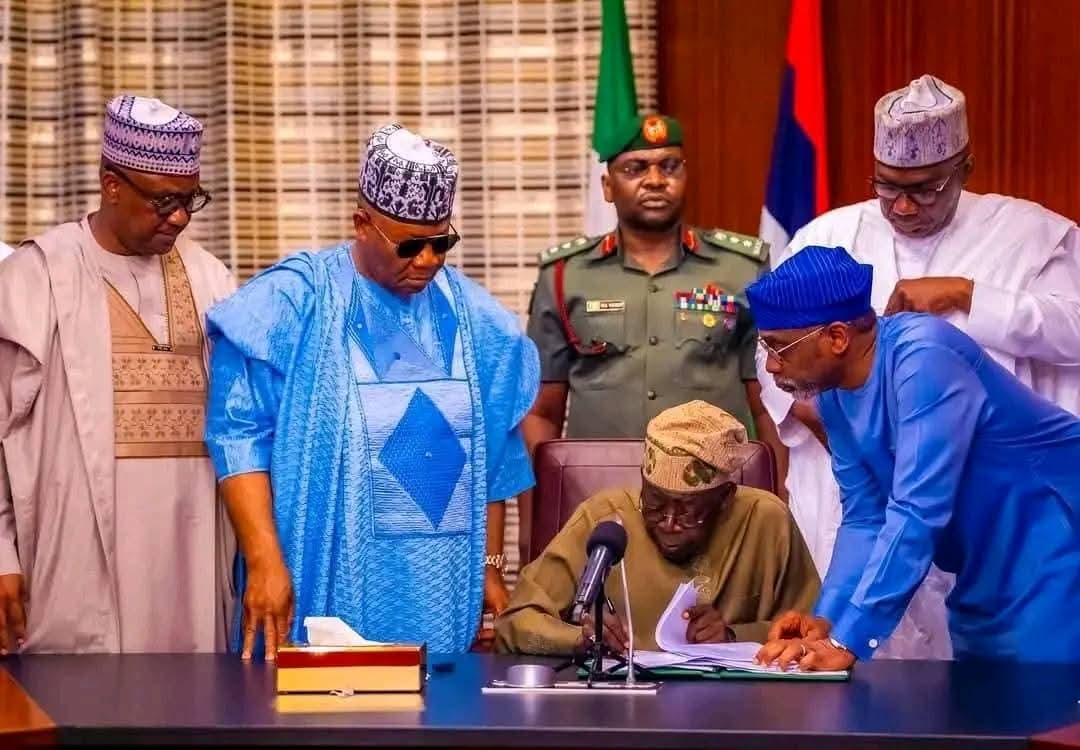
President Bola Ahmed Tinubu has signed the Electricity Act (Amendment) Bill 2025 into law, reinforcing one of the most consequential structural reforms in Nigeria’s electricity sector in decades.
The amendment strengthens the ongoing decentralisation of Nigeria’s power framework, expanding the authority of state governments to participate more actively in electricity generation, distribution, and regulation within their territories.
While the push for state-level electricity markets formally gained momentum with the Electricity Act 2023 — following constitutional alterations that removed electricity powers from an exclusively federal grip — the 2025 Amendment is widely seen as a further consolidation of that new federalist energy order.
A Shift Away from Over-Centralisation.
For decades, Nigeria’s electricity sector was constrained by a highly centralised governance structure.

Under the 1999 Constitution, the Exclusive Legislative List concentrated critical infrastructure powers at the federal level, limiting the capacity of states to independently legislate or develop full electricity value chains.
This over-centralisation produced systemic bottlenecks: an overstretched national grid, sluggish investment, bureaucratic licensing constraints, and limited local accountability for electricity delivery.

Tinubu’s administration, building on the reforms initiated through the 2023 Electricity Act, has now moved further to entrench state-driven energy solutions as a national priority.
What the Amendment Means in Practical Terms.
With greater legal clarity and authority, states can now:
Develop electricity markets suited to their local needs.

Support independent generation and embedded power projects.
Establish state-level regulatory frameworks.
Attract private investment without waiting solely on federal institutions.
Reduce pressure on the national grid.
This means Nigerians will increasingly assess electricity performance not only through Abuja, but through their state governments.

“If Your State Has No Light…”
Analysts note that this reform introduces a new era of accountability.
Electricity is no longer a strictly federal burden; governors and state assemblies now hold stronger responsibility to deliver reliable power for households, industries, and businesses.
The implication is direct: states with strong leadership can innovate, while those that fail may no longer rely on federal excuses.
Economic Impact: Investment, Jobs, Industrial Growth
Nigeria’s electricity shortfall has long constrained economic growth.
Decentralised power markets could unlock:

Industrial clusters powered by state-level generation.
Expanded renewable energy adoption.
Improved rural electrification.
Increased competition and service delivery efficiency.
Job creation across transmission, distribution and energy infrastructure.
The 2025 Amendment strengthens the path toward a modern electricity economy where power supply becomes a tool for regional productivity rather than national stagnation.

Tinubu’s Reform Credentials.
By reinforcing state participation and reducing over-reliance on central monopoly structures, President Tinubu has again positioned himself as a bold reformer willing to confront Nigeria’s structural governance challenges.
Supporters say the reform reflects a deeper commitment to true federalism, economic competitiveness, and practical service delivery — moving responsibility closer to the people.
A New Electricity Era.
Nigeria’s power crisis will not be solved by one institution alone.
The future lies in coordinated state innovation, private-sector capital, renewable expansion, and accountable leadership.

The era of excuses is narrowing. States must now generate solutions — literally.
The National Patriots warmly commend President Bola Ahmed Tinubu and the APC-led administration for signing the Electricity Act (Amendment) Bill 2025 into law, a landmark reform that devolves electricity authority to state governments.
This bold step strengthens true federalism, unlocks investment, accelerates industrial growth, and ends decades of over-centralisation. Governors must now deliver stable power for their people.
Nigeria is repositioned.
Dr. G. Fraser. MFR
The National Patriots Movement.




