

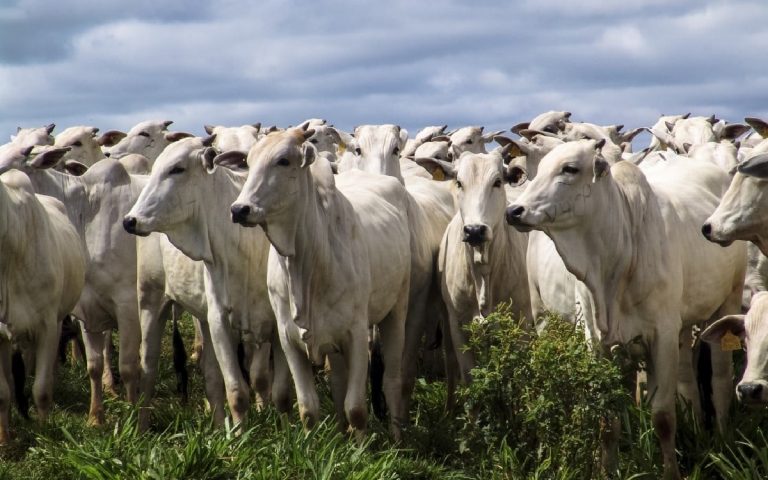
The Federal Government has inaugurated a Technical Sub-Committee under the National Economic Council (NEC) to accelerate the growth and reform of Nigeria’s livestock sector, with the goal of boosting economic expansion, strengthening food security, and promoting national cohesion.
The Minister of Budget and Economic Planning, Senator Abubakar Atiku Bagudu, announced the development during the maiden meeting of the sub-committee held at the ministry’s headquarters in Abuja.

Bagudu explained that the technical team was established to align existing policies, studies, and proposals into a single, actionable framework that can be swiftly approved and implemented by the National Economic Council.
He noted that the NEC had earlier constituted a high-level committee on livestock development chaired by Kebbi State Governor, Nasir Idris, and comprising governors from the six geopolitical zones, relevant ministers, and the co-chair of the Presidential Committee on Livestock Development.
However, due to the demanding schedules of the governors and the urgency of the task, the council resolved to set up a smaller technical committee to handle the detailed groundwork and fast-track progress.

According to the minister, the assignment of the sub-committee is to consolidate already available research and policy documents into a practical roadmap that can be adopted without delay.
Bagudu emphasized President Bola Ahmed Tinubu’s strong commitment to livestock development, describing it as a key component of the administration’s broader agricultural and economic reform agenda. He said the President views livestock as a major driver of food security, job creation, and inclusive economic growth, rather than a peripheral agricultural activity.
He also pointed to the establishment of a standalone Ministry of Livestock Development as evidence that the sector is now being treated as a strategic pillar of the national economy.
The minister further explained that the initiative aligns with Nigeria’s federal structure, where responsibilities for agriculture and food security are shared among federal, state, and local governments, requiring close collaboration across all levels.

Bagudu outlined several funding and support programmes available to states and communities, including the World Bank-supported Livestock Productivity and Resilience Support (L-PRES) project, NG-CARES, the Nigeria for Women Programme, and the Renewed Hope Ward-Based Development Plan, which targets economic opportunities across the country’s 8,809 wards.
He urged state commissioners to take ownership of the process, noting that once the NEC adopts the committee’s recommendations, it would be easier for states and local councils to commit resources. He added that consistent and predictable policies would also attract investors and development partners by reducing risk and improving confidence.

Addressing recurring tensions linked to livestock production, Bagudu said the sub-committee’s work should help reposition the sector as a source of shared economic benefit rather than conflict.
Also speaking at the meeting, the Director overseeing the Office of the Permanent Secretary, Dr. Sampson Ebimaro, described the gathering as a critical step toward advancing the Tinubu administration’s Renewed Hope Agenda. He stressed that food security remains central to national development and economic stability.
The meeting brought together senior government officials and industry experts, including representatives from federal and state ministries, development programmes, agribusiness institutions, and livestock policy specialists.

With the technical sub-committee now operational, the government said its focus would be on translating years of research and policy work into a clear implementation plan aimed at modernising livestock production, improving livelihoods, and supporting Nigeria’s long-term economic and social stability.



