

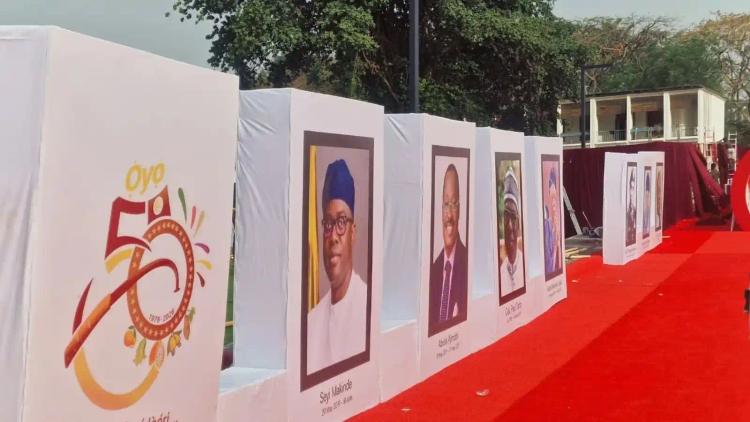
On February 3, 2026, eleven Nigerian states—along with the Federal Capital Territory (FCT), Abuja—are commemorating their golden jubilee, exactly 50 years since their establishment on February 3, 1976, during the military administration of General Murtala Ramat Muhammed.
The 1976 state creation exercise increased Nigeria’s number of states from 12 (established in 1967 by General Yakubu Gowon) to 19. It aimed to decentralize governance, promote even development, and bring administration closer to the grassroots.

While seven new states were formally announced in 1976, boundary adjustments, name changes, and subsequent carve-outs mean that 11 states (plus the FCT) officially trace their founding date to February 3, 1976, and are therefore celebrating 50 years today.
Below is the full list of the 11 states and the FCT marking their 50th anniversary in 2026, including details on their creation and historical context:

1. Bauchi State
Created in 1976 from the former North-Eastern State (previously a province). It originally included what is now Gombe State and comprised 16 local government areas (LGAs), later increased to 20 and then 23. In 1996, Gombe State was carved out, leaving Bauchi with 20 LGAs. Bauchi is located in Nigeria’s North-East geopolitical zone.
2. Benue State
Carved out of the old Benue-Plateau State on February 3, 1976. Named after the River Benue, Nigeria’s second-largest river. At creation, it had seven LGAs (Gboko, Katsina-Ala, Makurdi, Otukpo, Ankpa, Idah, and Dekina). Following further restructuring in 1991, the number of LGAs rose to 23. Benue lies in the North-Central zone.

3. Borno State
Formed in 1976 from the former North-Eastern State. Originally included the area that became Yobe State in 1991. Borno is Nigeria’s second-largest state by land area (after Niger) and consists of 27 LGAs. It borders Cameroon, Chad, and Niger internationally, and Yobe, Gombe, and Adamawa within Nigeria. Its capital is Maiduguri, historic seat of the Borno Emirate.
4. Imo State
Created on February 3, 1976, from the division of the old East-Central State into Imo and Anambra States. Named after the Imo River, it is located in the South-East zone, bordered by Anambra, Abia, Rivers, and Delta States. Owerri, former capital of the East-Central State, is the state capital. Imo has 27 LGAs divided among the Owerri, Orlu, and Okigwe zones.

5. Niger State
Carved from the old North-Western State in February 1976. It is Nigeria’s largest state by land area, with its capital in Minna. Bordered by Kaduna and the FCT to the east, Kebbi and Zamfara to the north, Kogi and Kwara to the south, and Benin Republic to the west. Niger has 25 LGAs; other major towns include Bida, Kontagora, and Suleja.
6. Ogun State
Created from the defunct Western State on February 3, 1976. Bordered by Lagos and the Bight of Benin to the south, Ondo to the east, Oyo and Osun to the north, and Benin Republic to the west. Its capital is Abeokuta. Ogun has 20 LGAs and is known for its industrial and agricultural significance.
7. Ondo State
Also carved from the old Western State on February 3, 1976. Named after the historic town of Ondo. It borders Ekiti, Kogi, Osun, Edo, and the Atlantic Ocean. Akure is the state capital. Ondo currently has 18 LGAs and is a major producer of cocoa, oil palm, and bitumen.

8. Oyo State
Created from the old Western State in 1976. Nicknamed the “Pace Setter State,” with Ibadan as capital—the third most populous city in Nigeria. Bordered by Kwara, Osun, Ogun, and Benin Republic. Oyo is the largest state in Southern Nigeria by landmass and the second most populous in the South after Lagos. It has 33 LGAs (11 in Ibadan alone).
9. Plateau State
Formed in February 1976 from the separation of Benue-Plateau State. Nicknamed the “Home of Peace and Tourism,” with Jos as capital. It borders Bauchi, Nasarawa, Taraba, Kaduna, and Gombe. Plateau has 17 LGAs and is home to diverse ethnic groups including Berom, Ngas, Tarok, and Afizere.

10. Sokoto State
Carved from the old North-Western State on February 3, 1976. Located in Nigeria’s extreme northwest, it borders Niger Republic to the north and west, and Zamfara and Kebbi within Nigeria. Sokoto city is the capital and historic seat of the Sokoto Caliphate. The state has 23 LGAs.
11. Federal Capital Territory (FCT), Abuja
Established on February 3, 1976, primarily from parts of the old Kaduna (now Kaduna and Katsina), Kwara, Niger, and Plateau (now Plateau and Nasarawa) States, with the bulk of land taken from Niger State. Unlike states, the FCT is administered by the Federal Capital Territory Administration under a minister appointed by the President. It covers 7,315 km²—larger than several Nigerian states including Enugu, Akwa Ibom, Ekiti, Abia, Ebonyi, Imo, Anambra, and Lagos.

The 1976 state creation policy was a landmark reform aimed at addressing regional imbalances and fostering national unity. Fifty years on, these states and the FCT have developed distinct identities, faced unique challenges, and recorded significant achievements in governance, infrastructure, economy, and culture.
As they mark this milestone, the occasion offers an opportunity to reflect on progress made and recommit to addressing ongoing development needs for future generations.




