


No serious or fair-minded Nigerian expects President Bola Ahmed Tinubu to reverse 57 years of national misrule in three years. That would be an unreasonable demand.
Nations do not heal overnight from decades of structural decay, military distortion, elite capture, and institutional erosion.
Yet Nigeria today is a country in deep anguish, and citizens have every right to question whether present policies are easing their burdens or intensifying them.
The distinction between inherited problems and policies that deepen suffering remains central to any honest national conversation.
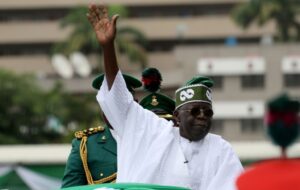
This is not simply a debate about blame. It is a debate about consequence, direction, and whether reform can be pursued without breaking the people it is meant to save.
To understand the Tinubu moment, Nigerians must first confront a difficult truth: the rot of the Nigerian system did not begin in 2023.
It is the accumulated outcome of decades.
A Crisis Older Than Any One Administration.
Nigeria’s present economic fragility is rooted in a post-independence trajectory marked by cycles of military rule, oil dependency, policy inconsistency, corruption, and weak institutions.

Since the oil boom of the 1970s, Nigeria gradually became a rent-based economy — consuming more than it produced, importing what it could have manufactured, and distributing oil revenue instead of building productivity.
Rather than industrialise, Nigeria institutionalised waste.
Military rule disrupted governance norms, weakened accountability frameworks, and entrenched patronage as a governing culture.
By the return to democracy in 1999, Nigeria inherited not only damaged infrastructure, but damaged institutions.
Over two decades of civilian rule, successive administrations struggled with the same deep contradictions: an expanding population, weak electricity supply, underperforming refineries, porous borders, ballooning subsidies, and an economy heavily exposed to global oil price shocks.

By 2023, Nigeria’s economic warning signs were flashing unmistakably.
Debt servicing was consuming a troubling portion of federal revenue. Foreign exchange was distorted by multiple rates. Fuel subsidy costs were spiralling. Inflation was accelerating. Investor confidence was fragile. Public trust was thinning.
These were not newly created problems.
They were postponed crises.
The Subsidy Trap and a Fiscal Breaking Point.

One of the clearest examples of inherited dysfunction was Nigeria’s petrol subsidy regime.
For decades, Nigeria spent trillions of naira annually subsidising fuel consumption — a system that often benefitted smugglers, middlemen, and the urban wealthy far more than the rural poor.
Multiple independent analyses showed that subsidy payments were increasingly unsustainable and riddled with leakage.
Nigeria was borrowing to fund consumption, not investment.
By Tinubu’s inauguration, subsidy removal was no longer merely a policy option — it had become an unavoidable fiscal reckoning.
The question was not whether reform would come.
The question was who would take the political risk to begin it.
President Tinubu did.

Early Reforms: Confronting Long-Avoided Realities.
Tinubu’s administration has taken some of the boldest structural steps any Nigerian government has attempted in years.
The removal of petrol subsidy, the push toward foreign exchange unification, tax and revenue reforms, and renewed emphasis on infrastructure and investment mobilisation represent a deliberate effort to address foundational distortions rather than apply temporary political bandages.
These reforms are painful.
But they were not invented to punish Nigerians.
They were initiated because Nigeria’s economic model was approaching collapse.

It is important to state this clearly: Tinubu did not create Nigeria’s structural decay. He inherited it at full maturity.
Many of the difficult choices now being implemented were choices previous governments avoided, delayed, or softened for political convenience.
Why Tinubu Cannot Be Held Solely Responsible for Present Hardship.
Critics are correct to say that hardship has deepened. Inflation, food prices, transport costs, and unemployment pressures have placed enormous strain on families.
But it is analytically dishonest to suggest that Tinubu personally created the economic hardship Nigerians are experiencing.
The hardship is partly the cost of correcting decades of distortion.
A patient does not blame the surgeon for the pain of removing a tumour that was ignored for years.
Nigeria’s economic tumour has been growing for decades.
Tinubu’s government may be the one attempting surgery — and surgery is rarely painless.
The real debate, therefore, is not whether reform is necessary, but whether reform is being managed with sufficient sequencing, empathy, and cushioning.
The Real Weakness: Cushioning, Communication, and Human Impact.
Here lies the most legitimate critique of the Tinubu reform agenda.
Even theoretically sound reforms can become politically combustible when citizens feel abandoned in transition.
Nigerians did not ask for magic.
They asked for direction, empathy, shared sacrifice, and visible relief.
When reforms are rolled out rapidly, without adequate buffers, households absorb the shock immediately while the benefits arrive slowly.
This creates the perception — sometimes justified — that sacrifice is unequal.
A reform programme must not only be economically logical. It must be socially survivable.

The administration must therefore improve in key areas:
Stronger targeted social protection for vulnerable citizens.
Faster food security interventions to stabilise prices.
Clearer public communication of timelines and expected outcomes.
Visible elite accountability, so reforms do not appear one-sided.
Accelerated job creation to translate macro reforms into human relief.
The Nigerian people can endure hardship when hope is credible.
What breaks societies is hardship without visible direction.
National Security and the Broader Burden.
Beyond economics, Nigeria’s security challenges also predate Tinubu by many years.
Insurgency in the North-East, banditry in the North-West, farmer-herder violence, separatist tensions, and transnational arms flows have evolved over more than a decade.
Tinubu inherited multiple conflicts already in advanced stages.
His administration has intensified defence partnerships, procurement engagement, and counterterrorism coordination — including strategic cooperation with Türkiye and other allies.
Security gains are incremental, not instant.
Yet Nigerians must judge seriousness, not miracles.
The expectation is progress, not overnight peace.
A Government Still in its Opening Chapter.
Tinubu’s presidency is still in its early reform phase.
History shows that structural reform governments often face maximum public anger in the beginning, before benefits stabilise.
The question is whether this administration can translate reform from macroeconomic charts into kitchen-table relief.
That is the next test.
Nigeria has attempted reforms before, but failed because corruption returned, political will weakened, and institutions remained hollow.
Tinubu’s opportunity — and burden — is to ensure that this reform era does not end as another painful adjustment without payoff.
The Fair Conclusion: Inherited Collapse, Present Responsibility.
It is correct to say Tinubu did not create Nigeria’s problems.
It is incorrect to suggest his government bears no responsibility for how conditions evolve.
Leadership is defined not only by what is inherited, but by what choices are made under pressure.
Tinubu deserves credit for confronting distortions that previous governments postponed.
But reforms must now become humane, better paced, and socially cushioned.
Nigeria’s challenge is bigger than one man.
But one administration can either stabilise the ship or rock it further while insisting the storm is old.
The Nigerian people are not impatient idealists demanding instant transformation.
They are citizens reacting to lived reality.
When hunger deepens, insecurity spreads, and hope thins, explanations — however historically accurate — cannot substitute for relief.

History will place every character in their proper place.
But governments are judged daily by the condition of their people.
The task ahead is not to reverse 57 years overnight.
It is to ensure that the path to renewal does not break the very citizens it is meant to save.
The National Patriots Movement maintains that President Tinubu did not create Nigeria’s decades-long structural decay, including an unsustainable fuel subsidy regime that cost trillions annually. His administration has taken bold corrective reforms long postponed. While hardship is real, Nigerians must imbibe patriotism, believe in their country, and offer constructive criticism with practical solutions rather than negativity without historical perspective. Stronger cushioning, faster cost-of-living relief, and visible shared sacrifice are essential, as well-funded governors must also act decisively to deliver progress.
Princess G. Adebajo-Fraser MFR.
President, the National Patriots.




