

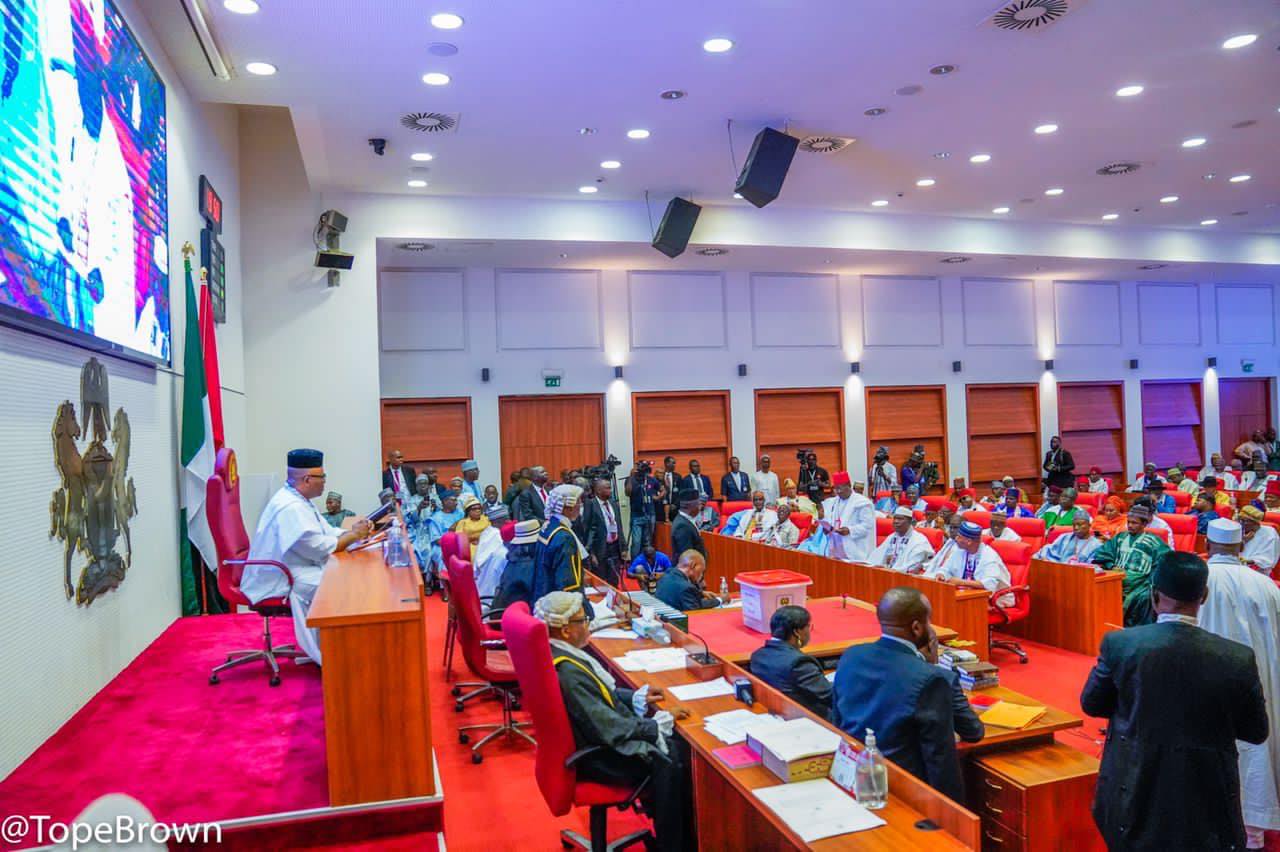
The Nigerian Senate on Tuesday passed the Electoral Act, 2022 (Repeal and Re-Enactment) Bill 2026 after a session marked by intense debate over Clause 60.
The controversy began when Senator Enyinnaya Abaribe (ADC/Abia South) demanded a division on the provision concerning electronic transmission of election results. Clause 60(3) states that if electronic transmission fails, Form EC8A should not serve as the sole basis, with a caveat allowing manual transmission in the event of network failure.

Senate President Godswill Akpabio sustained a point of order, while opposition senators voiced objections, leading to a brief standoff with Abaribe. Following a division, 55 senators voted in support of the clause, while 15 opposed it.

Earlier in the day, the Senate had commenced clause-by-clause consideration of the bill after a motion to rescind the previous amendment was seconded. The motion followed concerns over timing and technical inconsistencies in the legislation, particularly with respect to the 2027 general elections timetable announced by the Independent National Electoral Commission (INEC).

Senate Leader Opeyemi Bamidele explained that certain provisions, including the 360-day notice requirement in Clause 28, could result in scheduling elections during the Ramadan period, potentially affecting voter turnout, logistics, and overall inclusiveness. Other discrepancies were identified in multiple clauses, impacting cross-referencing, numbering, and internal consistency within the bill.

After detailed deliberations, the upper chamber formally passed the revised Electoral Act, paving the way for a clearer legal framework ahead of the 2027 general elections.




