

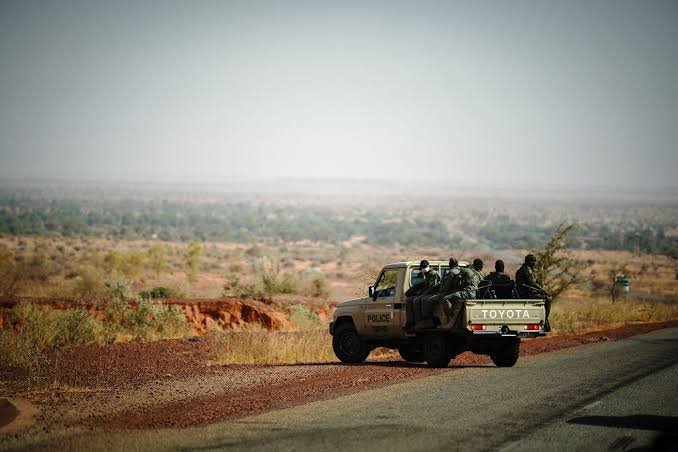
New data from the Armed Conflict Location & Event Data (ACLED) project reveals a sharp escalation in jihadist violence across the border region linking Nigeria, Niger, and Benin, transforming the area into a major flashpoint of instability in West Africa.

While Nigeria’s northern regions have faced Islamist terrorism for over a decade, various jihadist groups—including Al-Qaida affiliates, Jama’at Nusrat al-Islam wal Muslimeen (JNIM), Islamic State Sahel Province (ISSP), Islamic State West Africa Province (ISWAP), and Boko Haram—have significantly expanded their operations in recent years.

ACLED’s latest analysis shows that in 2025, violent jihadist events in Nigeria’s border states of Sokoto, Kebbi, Niger, and Kwara surged by 86% compared to previous years.
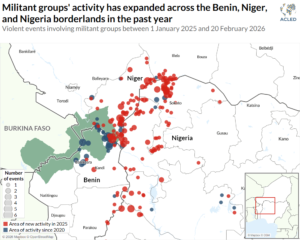
Benin has experienced sporadic but highly lethal cross-border raids by Islamist militants, while in Niger, ISSP claimed responsibility for two deadly ambushes on Nigerien armed forces—one in Goubey in December 2025 and another in Birni N’Konni in February 2026.

The report describes the Nigeria-Niger-Benin borderlands as a “connected conflict zone,” with distinct but interrelated dynamics in each country. Jihadist groups exploit porous borders, ungoverned spaces, and weak state presence to conduct attacks against civilians, security forces, and infrastructure.

Governments in the region have struggled to contain the spread of violence, prompting increased international attention. Most recently, the United States conducted airstrikes on ISSP camps in Nigeria, citing Nigeria’s perceived failure to curb violent attacks on Christian communities.
The escalation has raised alarms about the potential for further destabilisation across West Africa, with analysts warning that the interconnected nature of these militant networks could lead to broader regional insecurity if left unchecked.
The ACLED findings underscore the urgent need for stronger cross-border cooperation, enhanced intelligence sharing, and coordinated counter-terrorism strategies among Nigeria, Niger, Benin, and their international partners.




