

Iran is set to appoint a new supreme leader for the first time in almost 37 years following the death of Ali Khamenei on February 28. Khamenei had led the Islamic Republic since 1989, succeeding Ruhollah Khomeini, the country’s founding supreme leader.
The title “ayatollah” is one of the highest ranks in Twelver Shia Islam, reserved for senior clerics recognized for their deep religious scholarship and authority to interpret Islamic law. In Iran’s political structure, the supreme leader holds ultimate authority over all branches of government, including the presidency.

Although Khomeini was already an ayatollah when he assumed office, constitutional changes made shortly before his death allowed a lower-ranking cleric to become supreme leader — a position Khamenei held at the time of his appointment.

Khamenei’s death followed joint US-Israeli airstrikes that also claimed the lives of several top Iranian officials. Among them were Abdol Rahim Mousavi, Iran’s army chief of staff; Aziz Nasirzadeh, the defence minister; Mohammad Pakpour, a senior commander of the Revolutionary Guard; and Ali Shamkhani, a key security adviser to the late leader.
With the leadership position now vacant, attention has shifted to the process of selecting his successor.

What the law says
Under Iran’s constitution, the Assembly of Experts — an 88-member body elected by the public and made up largely of senior clerics — is responsible for choosing the new supreme leader. The constitution requires the assembly to convene within ten days of a vacancy.
In the interim, a temporary leadership council takes charge. This council includes President Masoud Pezeshkian, judiciary chief Gholam-Hossein Mohseni-Ejei, and Ayatollah Alireza Arafi, a member of the Guardian Council and head of the Basij paramilitary force.

Iran’s foreign minister, Abbas Araghchi, has indicated that a new leader could be selected within days.
While the president is not eligible for the role, both Mohseni-Ejei and Arafi — already part of the interim council — are considered possible contenders. Other prominent clerics outside the council are also being discussed as potential successors.
Leading contenders
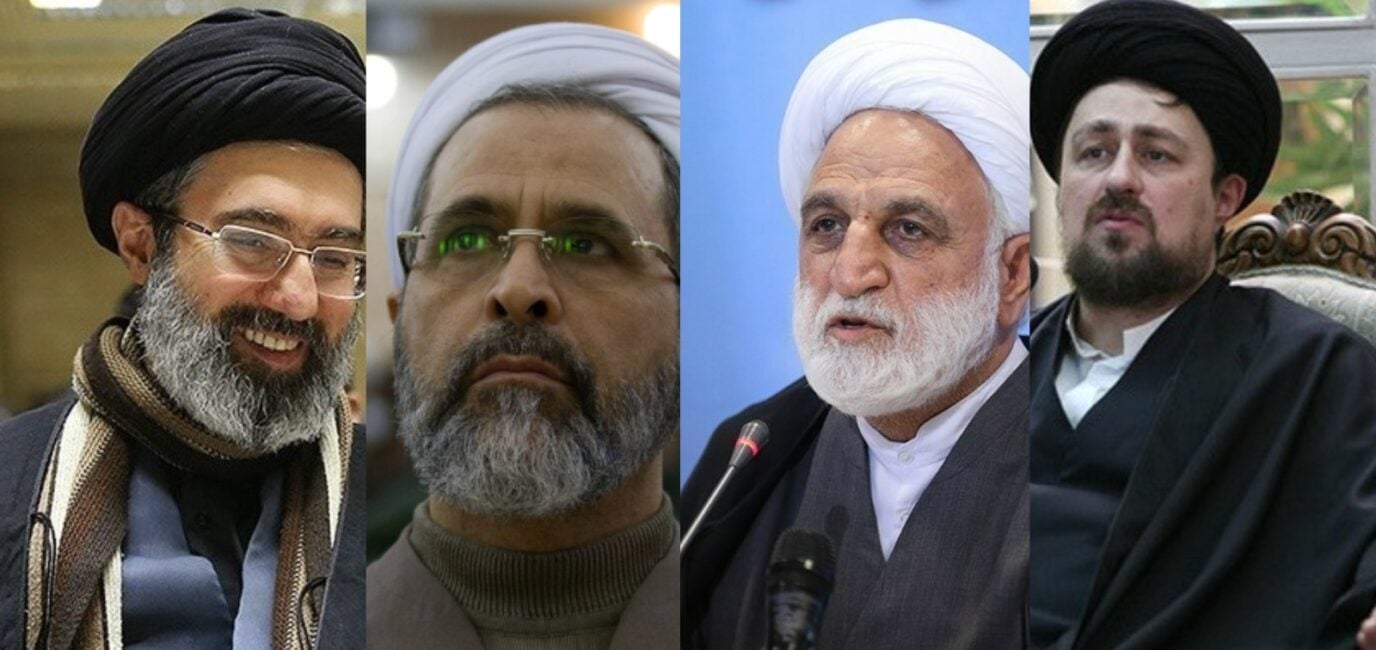
Alireza Arafi
Arafi, an ayatollah and longtime associate of Khamenei, currently serves as deputy chairman of the Assembly of Experts and is a member of the influential Guardian Council, which reviews legislation and electoral candidates. He also oversees Iran’s nationwide seminary system. Known for his academic background, Arafi has authored numerous publications and is fluent in Arabic and English.

Gholam-Hossein Mohseni-Ejei
Mohseni-Ejei has led Iran’s judiciary since 2021 after being appointed by Khamenei. Over the years, he has held several senior roles, including intelligence minister and prosecutor-general. Widely viewed as a conservative hardliner, he has faced criticism from Western governments over human rights concerns linked to his tenure in the judicial system.
Hassan Khomeini
Hassan Khomeini, grandson of Ruhollah Khomeini, carries strong religious and revolutionary credentials due to his lineage. Though he has not held major political office, he serves as custodian of his grandfather’s mausoleum and is often seen as more moderate compared to other clerics. His ties to prominent religious families in the region could enhance his standing on the international stage.

Mojtaba Khamenei
Mojtaba Khamenei, son of the late supreme leader, is regarded as influential within conservative circles and maintains close ties with the Revolutionary Guard. Though he has not officially held government office, he was seen as playing a key advisory role during his father’s leadership. However, domestic economic challenges and political tensions may affect perceptions of his candidacy.
As Iran prepares for a historic transition, the Assembly of Experts faces the critical task of selecting a figure who will shape the country’s political and religious direction for years to come.




