


The Lagos State Government has reiterated its commitment to improving electricity supply in the Lekki-Epe corridor as part of efforts to support development in the fast-growing area.
The Permanent Secretary of the Lagos State Ministry of Energy and Mineral Resources, AbdulHafeez Toriola, disclosed this during a stakeholders’ engagement with residents. The meeting took place on Tuesday at the Adeyemi Bero Auditorium in Ikeja.
In a statement issued on Wednesday by the Director of Public Affairs of the ministry, Adetola Idowu, Toriola explained that the planned project is aimed at tackling the persistent power challenges affecting communities in the Ajah and Ibeju-Lekki areas.

According to him, improving electricity supply will help unlock the full economic and infrastructural potential of the corridor.
He acknowledged that residents of Ibeju-Lekki and surrounding communities have long faced unstable power supply and said the government is working to change the situation.
Toriola added that the stakeholders’ meeting was organised to inform residents about the proposed project, gather feedback and address possible concerns. These include issues relating to land use, physical planning, and ongoing road construction within the corridor.
As part of the planned infrastructure upgrade, the state government also intends to construct a gas pipeline alongside the electricity transmission project.
Officials explained that the proposed 132kV electricity transmission line will run through a Right-of-Way corridor stretching from Ajah to Ibeju-Lekki (Eleko) Junction. The gas pipeline, on the other hand, will extend from Bonny Camp to Alaro City in Epe.
During the engagement, government representatives assured residents and property owners that those whose buildings or structures might be affected by the project would receive compensation.

The Director of Acquisitions, Revocation and Compensation at the Lagos State Lands Bureau, Olawale Ojikutu, said landowners must have valid land titles and approved building plans to qualify for compensation.
He, however, noted that the government often adopts a flexible approach to ensure that many affected residents are fairly compensated.
According to Ojikutu, once a detailed inventory and necessary surveys are completed, all affected properties will be properly documented and adequate compensation arrangements will be made.
The recent meeting was the second engagement between the state government and stakeholders in the Lekki-Epe corridor. The first meeting was held on February 6, 2026, and involved residents, traditional rulers, youth groups and other community representatives.
At that earlier meeting, the Commissioner for Energy and Mineral Resources, Biodun Ogunleye, emphasised that the projects are designed to ease several infrastructural challenges in the area.
He explained that the government is creating service corridors that will allow electricity infrastructure, gas pipelines and drainage systems to be installed more efficiently.
Ogunleye added that the initiative aligns with the broader vision of Governor Babajide Sanwo-Olu’s administration to transform Lagos into a modern economy supported by reliable energy infrastructure.
The state government has also been exploring ways to strengthen its electricity generation capacity. In April 2025, Governor Sanwo-Olu announced plans for Lagos to generate about six gigawatts of electricity within three years as part of a clean energy initiative aimed at improving power supply across the state.
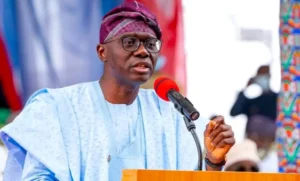
According to the governor, Lagos must gradually reduce its dependence on the national grid in order to achieve long-term energy stability and support the state’s growing population and economy.




