


In every democracy, the right of citizens to hold public officials accountable is essential.
Civil society organizations, advocacy groups and activists play an important role in raising questions, highlighting grievances and demanding transparency from institutions of state.

But there is a growing concern in Nigeria that deserves serious reflection: the increasing weaponisation of petitions against security officers performing their constitutional duties.
A petition is an important democratic tool.
Yet when petitions become instruments for reputational sabotage, political pressure or media manipulation—particularly at critical moments such as promotion exercises—they risk weakening the very institutions that safeguard national stability.

The recent controversy surrounding Lagos State Commissioner of Police Olohundare Jimoh Moshood illustrates this dilemma.
A coalition of activist groups submitted a petition accusing the Commissioner of assault and brutality during a protest at the Lagos State House of Assembly.
The allegations, widely circulated online, paint a picture of reckless abuse of power.
However, the broader context raises legitimate questions that any fair observer must consider.
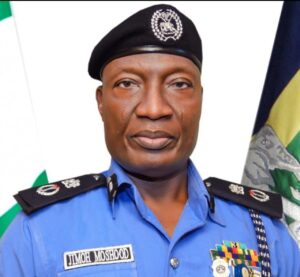
First, the same protest cited in the petition was officially acknowledged by the Lagos State House of Assembly itself.
In a formal letter signed by the Clerk of the House, the Assembly commended CP Moshood and officers of the Lagos State Police Command for their professionalism, prompt response and effective management of a potentially volatile situation.
The letter specifically credited the police with preventing a breakdown of law and order while still allowing citizens to exercise their rights to peaceful expression.

That official commendation stands in sharp contrast to the brutality narrative being promoted in the petition.
This contradiction highlights a larger issue in contemporary activism: the tendency to present single narratives as absolute truth before any independent investigation has taken place.
Democracy requires scrutiny—but it also requires fairness.

Security agencies operate under extremely complex circumstances.
Officers must protect citizens’ rights to protest, yet they must simultaneously prevent protests from descending into chaos, protect critical infrastructure and ensure public safety.
In megacities like Lagos—home to over twenty million residents—these responsibilities become even more delicate.

A protest near a legislative complex is not merely a civic gathering.
It is a security-sensitive event involving the protection of elected officials, government facilities and the wider public.
Under such conditions, police commanders are required to make rapid decisions that balance competing constitutional responsibilities.
The Nigerian Constitution itself recognises this reality.
While Sections 39 and 40 guarantee freedom of expression and peaceful assembly, Section 45 clearly provides that these freedoms may be restricted in the interest of public safety, public order and the protection of the rights of others.
In other words, democratic rights exist within a framework of responsibility.
When protesters approach sensitive government facilities or when crowd control risks escalating into violence, the police are legally empowered to intervene.

This does not mean abuses should be tolerated.
Allegations of misconduct must always be investigated.
But investigations must be guided by evidence—not activism alone.
Unfortunately, Nigeria has increasingly witnessed situations where petitions are deployed strategically to influence public perception or institutional decisions.
Promotion seasons within security agencies often become fertile ground for such tactics.
A senior officer approaching a career milestone may suddenly find themselves confronted with petitions, online accusations and media narratives that appear conveniently timed.
This does not mean every petition is false.
But it does mean institutions must treat such documents with careful scrutiny.

The Police Service Commission (PSC), which oversees appointments and discipline in the Nigeria Police Force, carries a heavy responsibility in this regard.
Its role is not simply to react to petitions.
Its duty is to evaluate evidence, verify claims and ensure that both accountability and fairness prevail.
If the Commission allows unverified allegations to derail professional advancement, it risks setting a dangerous precedent—one where any officer performing difficult duties can be targeted through coordinated petitions.
Such a precedent would have profound implications for national security.
Police officers already operate under enormous pressure.
They confront violent crime, civil unrest, terrorism threats and the everyday complexities of policing one of Africa’s largest populations.

If officers begin to believe that strong enforcement of the law will expose them to politically motivated reputational attacks, the likely consequence will be hesitation, reduced morale and weakened enforcement capacity.
No society benefits when its security institutions become timid.
At the same time, the solution is not to silence civil society.
Nigeria’s democratic progress owes much to activists who have courageously challenged injustice.
The answer lies in balance.
Civil society must exercise responsibility by grounding accusations in verifiable evidence rather than speculative claims. Security institutions must remain open to oversight while defending the integrity of officers who act within the law.
Most importantly, oversight bodies must remain guided by facts.
In the case of the Lagos protest, the PSC will need to examine all available evidence: official police reports, witness testimonies, independent documentation and the commendation issued by the Lagos State House of Assembly.
The outcome must be determined by facts—not by the volume of social media narratives or the political weight of petitioners.
Nigeria’s democracy is strongest when institutions are resilient, when accusations are tested by evidence and when justice is not swayed by pressure campaigns.
Security agencies must remain accountable.
But they must also be protected from intimidation masquerading as activism.
Only through that balance can the rule of law truly prevail.
Dr. G. Fraser. MFR
The National Patriots.




