

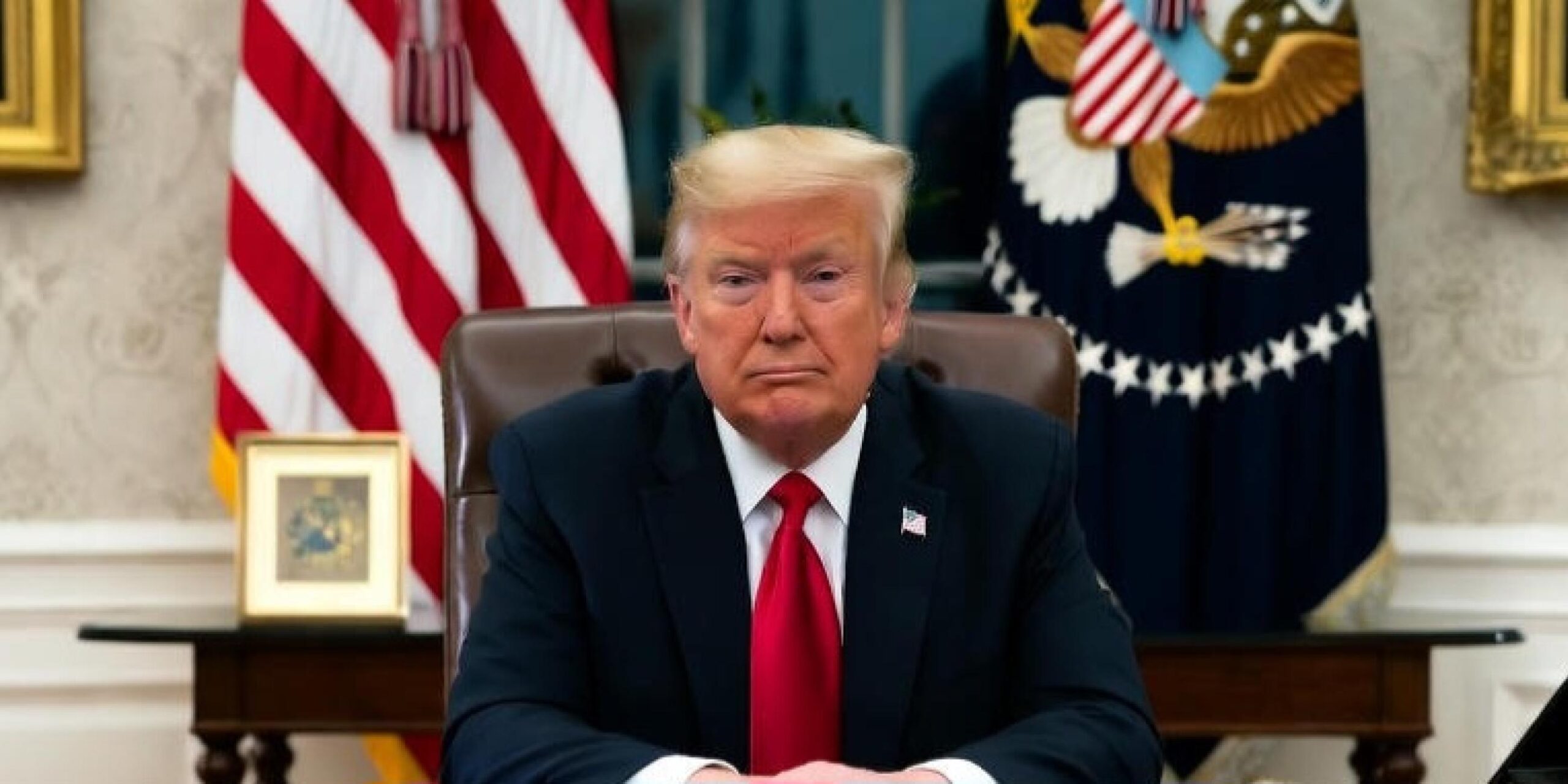
United States President, Donald Trump, has criticised Iran’s appointment of Mojtaba Khamenei as the country’s new supreme leader, describing the move as a “big mistake.”
Speaking in an interview with NBC News, cited by Aljazeera, Trump expressed skepticism about Mojtaba Khamenei’s ability to consolidate power following the death of his father, Ali Khamenei, in a recent US–Israel strike.

“I think they made a big mistake,” Trump said, adding that he considered the new Iranian leader a “light weight” amid heightened regional tensions.
The transition marks a significant shift in Iran’s leadership. Ali Khamenei, who passed away on February 28, 2026, had served as supreme leader for more than three decades, holding the highest political and religious authority in the country.

Trump’s remarks come as US–Iran relations remain deeply strained following military operations targeting Iranian leadership and infrastructure. He addressed speculation about potential US action against Iran’s oil sector, saying it was “too soon to talk about” but did not rule out future measures.

Analysts note that Mojtaba Khamenei’s rise could alter Iran’s internal power dynamics, particularly within the clerical establishment and the Islamic Revolutionary Guard Corps (IRGC), which has been central to Iran’s political and military influence.
According to state media reports, the Assembly of Experts appointed Mojtaba Khamenei following his father’s death. Despite Iran’s traditional rejection of hereditary succession, Mojtaba enjoyed strong backing from the Revolutionary Guards and the late supreme leader’s lingering influence, which secured his rise.

The US and Israel jointly carried out the strikes that killed Ali Khamenei on February 28, 2026, prompting a national mourning period of 40 days in Iran. The attacks have intensified conflict in the Middle East, leading Western allies, including the United Kingdom, to mobilize defensive operations.

Under Ali Khamenei’s leadership, Iran was central to the “Axis of Resistance,” an alliance of armed groups across Lebanon, Iraq, Syria, Yemen, and Palestine, shaping the country’s ideological stance against Israel and the West.




