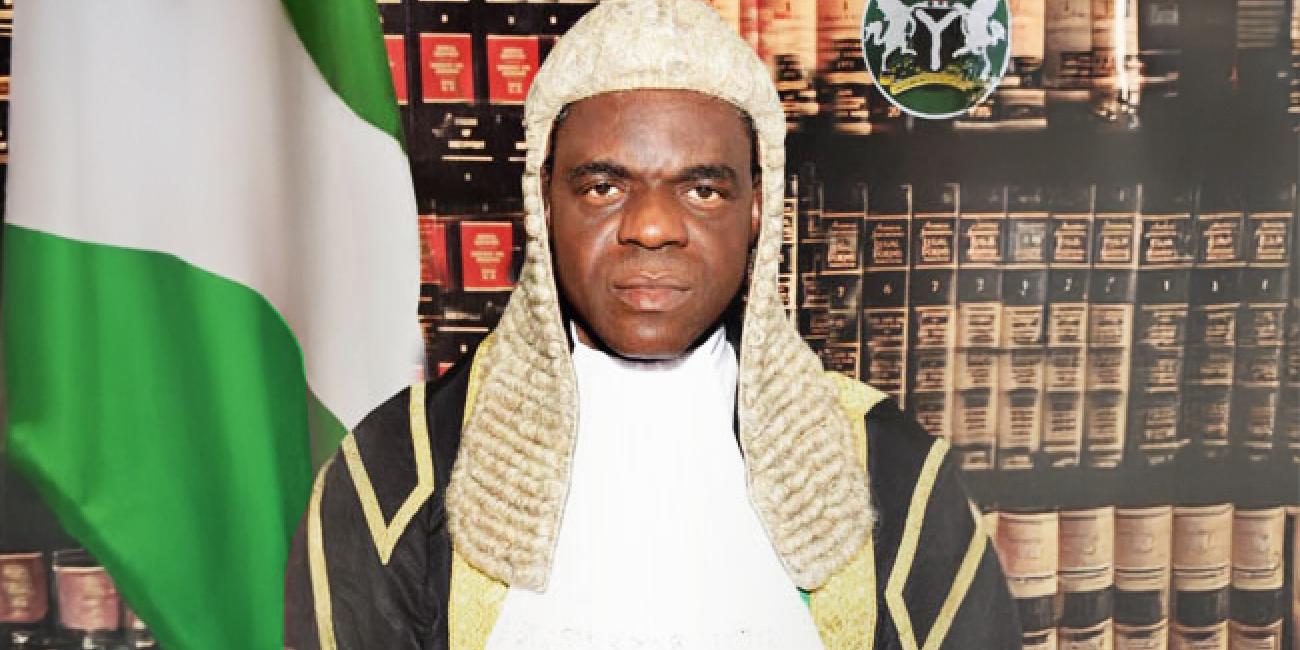
Officials of the Economic and Financial Crimes Commission on Tuesday reportedly questioned the Chief Judge of the Federal High Court of Nigeria, John Terhemba Tsoho, for several hours over a large sum of cash allegedly discovered in the possession of his wife.
According to sources familiar with the development, the interrogation followed an incident in which EFCC operatives intercepted the judge’s wife while she was travelling to Benue State. She was reportedly returned to Abuja after the interception.
Sources alleged that about $160,000 in cash was found in her possession at the time. However, the circumstances surrounding the money and the purpose of the trip have not yet been officially clarified.
The development comes amid increasing scrutiny surrounding Justice Tsoho, who is also scheduled to appear before the Code of Conduct Bureau on March 16, 2026, over allegations related to asset declaration.

A petition reportedly accused the chief judge of failing to fully disclose his assets, including three bank accounts with United Bank for Africa and another account with Access Bank.
If the bureau establishes a prima facie case, it could proceed with charges that may lead to prosecution under Nigeria’s Code of Conduct laws. Conviction for such offences could attract penalties including imprisonment and a possible 10-year ban from holding public office.
Responding to the allegations earlier, the Director of Information of the Federal High Court, Catherine Christopher, stated that Justice Tsoho remains committed to cooperating with the bureau’s investigation.
According to the statement, the chief judge intends to appear before the bureau alongside his legal representative, Kanu Godwin Agabi, who is currently outside the country receiving medical treatment but has indicated his willingness to accompany the judge upon his return.

The court said the position had already been formally communicated to the bureau, reaffirming Justice Tsoho’s readiness to participate in the process in accordance with constitutional provisions and legal safeguards.
It also noted that the chief judge had requested that his appearance before the bureau be scheduled from the week beginning March 16 to allow him attend with his legal counsel.
The invitation from the Code of Conduct Bureau reportedly followed an investigation that alleged the judge failed to disclose several bank accounts in an asset declaration submitted to the bureau on April 29, 2024.
Under Nigerian law, public officers are required to declare all assets, liabilities, and bank accounts, including domiciliary accounts. Failure to do so can attract penalties such as removal from office, disqualification from holding public office for up to 10 years, and the forfeiture of undeclared assets.
Justice Tsoho, however, has denied the allegations, insisting that he has complied with all legal requirements regarding asset declaration.