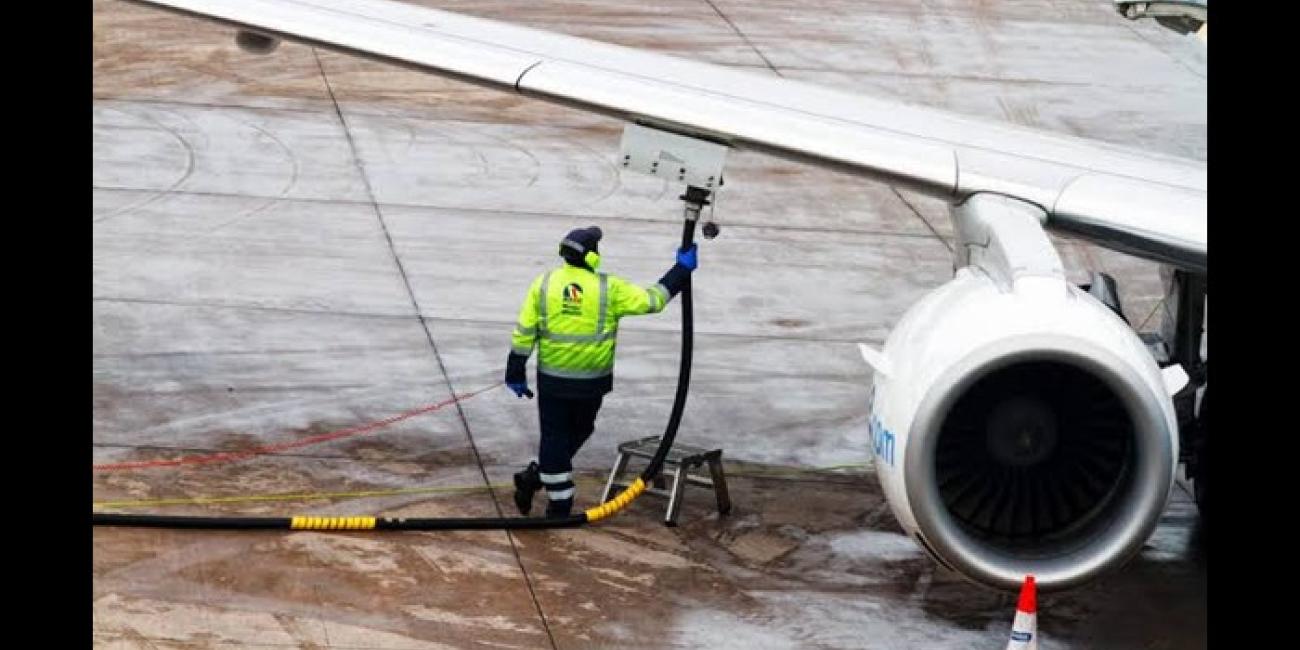
Airline operators in Nigeria have raised concerns over the sharp increase in the price of aviation fuel, warning that the development is placing domestic carriers under serious financial strain.
The Airline Operators of Nigeria said the price of Jet-A1, the fuel used by commercial aircraft, has risen from about ₦1,000 per litre two weeks ago to nearly ₦1,800 per litre in several parts of the country. The spike represents an increase of roughly 80 percent within a short period.
Industry players say the sudden rise has intensified pressure on airlines that are already battling high operational costs. Aviation fuel remains the largest single expense in airline operations, accounting for about 30 to 35 percent of total operating costs.

Operators attribute the surge partly to the ongoing tensions in the Middle East, which have caused volatility in global energy markets.
Speaking during an interview on Channels Television, the spokesperson for the Airline Operators of Nigeria, Obiora Okonkwo, said airlines are currently absorbing the impact of the increase instead of immediately transferring the burden to passengers.
“Two weeks ago, we were getting Jet-A1 at about ₦1,000 per litre, which today is about ₦1,800, and even more in some locations. That’s an increase of roughly 80 percent, which is quite significant,” he said.
Okonkwo explained that many airlines are currently selling tickets at prices that do not reflect the rising cost of operations, resulting in financial losses for operators.
“At the moment, we are absorbing the shock. We are basically bleeding because ticket prices have not yet been adjusted to reflect the new fuel cost,” he said.
He warned that if the situation continues, airlines may soon have no option but to review ticket prices.
According to him, operators are mindful of the economic challenges facing Nigerians and are trying to avoid placing additional pressure on travellers.
Okonkwo also expressed optimism that improvements in domestic refining capacity could help stabilise the supply and price of aviation fuel in the country.

He suggested that the government could engage the Dangote Refinery if global fuel market pressures persist, noting that the presence of local refining capacity offers hope compared to previous years when Nigeria relied entirely on imports.
However, he cautioned that prolonged high fuel prices could threaten the survival of some domestic airlines.
“If the situation continues for too long, some airlines may not be able to absorb the losses associated with these rising costs,” he said.
Meanwhile, Okonkwo also responded to reports that the Federal Competition and Consumer Protection Commission had sanctioned about five airlines over alleged price fixing.
He rejected the allegation, insisting that airline ticket pricing in Nigeria’s aviation sector remains fully deregulated.
“There is no meeting where airlines agree on prices. Price fixing would mean forming a cartel, and that does not happen. Each airline sets its fares based on its operational structure and costs,” he explained.
He urged regulators to recognise the fragile state of the aviation industry and avoid actions that could worsen the challenges facing operators or damage the sector’s reputation.