


HEADLINENEWS.NEWS | SPECIAL REPORT
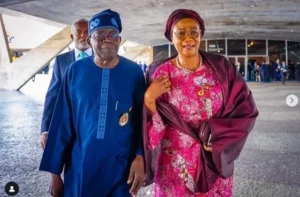
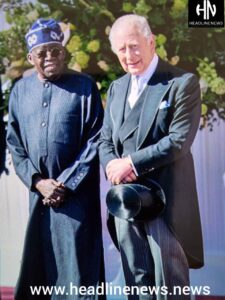
President Bola Ahmed Tinubu’s state visit to the United Kingdom has marked a significant diplomatic milestone for Nigeria, coming 37 years after a Nigerian leader last undertook a state-level visit of this scale to the UK.
The visit, hosted by King Charles III and accompanied by formal engagements with senior British officials, including the Prime Minister, combines royal ceremony with strategic dialogue at a time when Nigeria is pursuing far-reaching economic and institutional reforms.
A Long Gap in High-Level Engagement
Nigeria and the United Kingdom maintain one of Africa’s most enduring bilateral relationships, shaped by history, trade, and institutional ties. Bilateral trade between both countries is estimated at over £8 billion annually, with strong links across finance, energy, education, and services.
Despite this, a gap of nearly four decades in state-level visits has raised questions among observers about the consistency of Nigeria’s high-level diplomatic engagement.
Analysts say the absence reflects a combination of domestic challenges and shifting foreign policy priorities over the years, which limited Nigeria’s ability to fully leverage strategic partnerships at the highest level.
That gap is now being addressed—with intent.

Ceremony and Symbolism
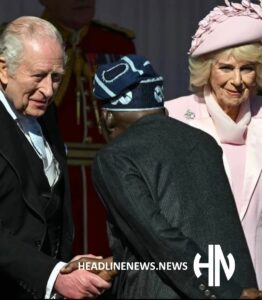
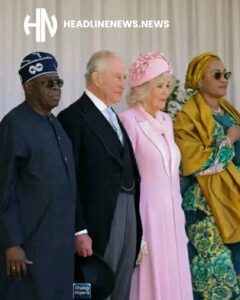
The current visit has been marked by traditional royal pageantry, including a formal reception at Windsor, a horse-drawn carriage procession, and a state banquet attended by members of the Royal Household, diplomats, and senior officials.
Large crowds, including members of the Nigerian diaspora, gathered in Windsor and London to welcome the President and First Lady Oluremi Tinubu, highlighting strong people-to-people ties and a renewed sense of national pride.
Such symbolism carries deeper meaning.
“State visits of this nature signal a willingness to deepen engagement and elevate bilateral relations,” said a UK-based policy analyst familiar with Commonwealth diplomacy.
www.headlinenews.news
At the state banquet, King Charles III added a cultural touch with a remark that resonated widely: “Naija no dey carry last” and welcomed President Tinubu in Yoruba language before delivering his address.
A moment of humour—yet diplomatically significant.
Focus on Trade, Investment and Security
Beyond the ceremony, discussions have centred on expanding economic cooperation and strengthening security collaboration.
Officials from both countries identified priority areas including:
Trade expansion and investment flows
Infrastructure financing
Energy transition
Technology partnerships
Security and counterterrorism cooperation
Nigeria, Africa’s largest economy by population, continues to position itself as a key investment destination, with vast untapped potential across multiple sectors.
Reforms Under Scrutiny—and Recognition
The visit comes at a time when Nigeria is implementing bold economic reforms aimed at stabilising the macroeconomic environment and improving investor confidence.
These include fuel subsidy removal, exchange rate adjustments, and fiscal restructuring—policies widely acknowledged as necessary, even if difficult in the short term.

President Tinubu, speaking at a recent engagement, stated:
“We have undertaken bold and necessary reforms to stabilise the economy, restore confidence, and lay the foundation for long-term growth.”
Global institutions have taken note.
The International Monetary Fund observed that Nigeria has implemented reforms that are improving macroeconomic stability and resilience, while the World Bank has pointed to improvements in growth and revenue mobilisation—though both emphasise the need for these gains to translate into better living conditions.
This is the defining balance:
recognition abroad, expectation at home.
Diplomatic Optics and the 2027 Question
Beyond policy and ceremony, the visit carries an unspoken political dimension.
In global diplomacy, events of this magnitude are not routine—they are signals. They reflect a level of comfort, credibility, and willingness by international partners to engage with a government over time.
While no foreign government openly endorses political outcomes in another country, the optics of a state visit after 37 years—combined with the level of reception and engagement—suggest a growing international confidence in Nigeria’s current leadership direction.
Support from global financial institutions for Nigeria’s reform trajectory reinforces this perception.
For political observers, this creates a subtle but important narrative as Nigeria looks ahead to 2027.
It is not endorsement—but it is alignment.
Not declaration—but recognition.
The message is quiet, but unmistakable:
Nigeria’s leadership is being taken seriously again.
Global Perception and Strategic Positioning

The scale and visibility of the visit have been interpreted as a signal that Nigeria is reasserting itself within the global system—engaging both traditional Western partners and emerging economic blocs.
At a time of shifting geopolitical alliances, Nigeria’s positioning matters—not only for itself, but for the African continent.
The Domestic Dimension
Despite the positive optics, challenges at home remain significant.
Security concerns, inflationary pressures, and cost-of-living issues continue to affect millions of Nigerians.
Analysts are clear:
“The real test is whether diplomatic engagement translates into tangible economic benefits and improved stability.”
That remains the benchmark.
A Moment of Opportunity
For Nigeria, the visit represents both recognition and responsibility.
It reflects renewed global engagement—but also places pressure on the government to sustain reform momentum and deliver measurable outcomes.
After 37 years, Nigeria has re-entered this level of diplomatic relevance.
What follows will define its trajectory.
National Patriots Perspective
Princess Gloria Adebajo-Fraser, MFR, President of the National Patriots, described the visit as both a signal and a responsibility:
“This historic state visit reflects renewed global confidence in Nigeria’s direction and the reformist posture of the current administration. When a nation is received at this level, it speaks to credibility, engagement, and trust. However, recognition must now be matched with results that impact the lives of ordinary Nigerians.”
She further emphasised the broader global context:
“Nigeria’s engagement with the global community must be understood as a partnership of mutual value, not dependency. The world needs Nigeria just as Nigeria needs the world. It is a symbiotic relationship. What is critical is that nations come to the table as equals—negotiating in fairness, with mutual respect and shared interests. That is what we are beginning to see under this administration.”
Conclusion
After 37 years, Nigeria’s return to this level of global engagement is both symbolic and strategic.
The visit signals intent.
It reflects recognition.
It creates opportunity.
But in the final analysis, its true value will not be measured by ceremony or optics—
but by what Nigeria makes of it.




