

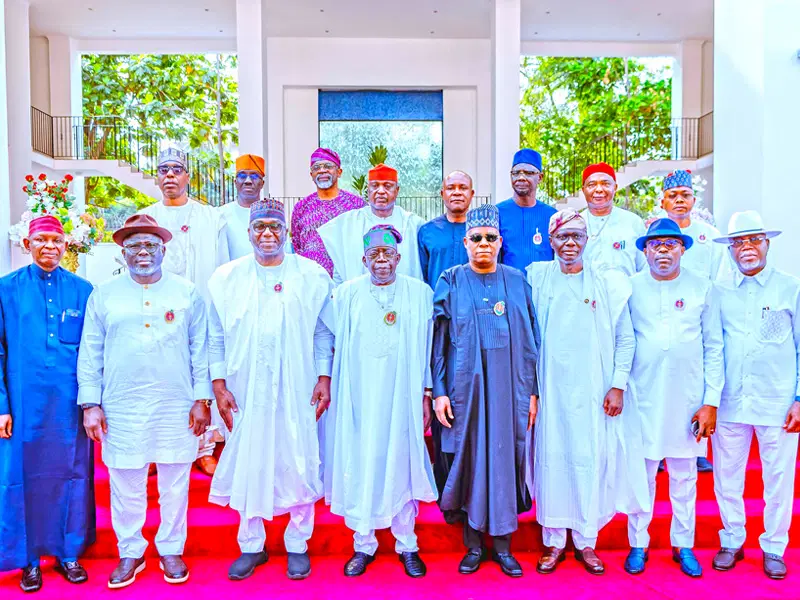
The push for state police in Nigeria gained renewed momentum over the weekend as rising insecurity across the country pushed governors, lawmakers, and stakeholders into a heated debate. While several states back the proposal, others warn of potential abuse, repression, and political misuse.
Across the country, positions are divided. Governors in Ogun, Plateau, Kano, Zamfara, Taraba, Kebbi, Adamawa, Nasarawa, and Kwara states have begun laying frameworks for decentralised policing, arguing it will enhance community safety. Ogun State’s Governor, Dapo Abiodun, described state police as “non-negotiable,” while Plateau’s Caleb Mutfwang said “the time for the creation of state police is now.” Kano has deployed over 2,000 personnel under a neighbourhood watch scheme, with Governor Abba Yusuf calling it a professionalised approach to community security.

However, critics remain cautious. Borno State Governor, Babagana Zulum, warned that “Nigeria is not mature for state police,” cautioning that some governors could misuse such powers to target other groups. Stakeholders in Sokoto and other states echoed fears of political intimidation if state police were implemented without safeguards.
In the South-West and South-South, support is stronger. States like Oyo, Ondo, Ekiti, Bayelsa, Delta, and Akwa Ibom are already rolling out community-based security structures that could serve as the foundation for state police. Bayelsa’s Community Safety Corps is operational, Akwa Ibom has a 5,000-strong Ibom Community Watch, and Delta is investing in policing infrastructure across its 25 councils. Still, Edo State has opted to wait for clear federal guidelines.

Experts emphasise that while decentralised policing could improve response times, intelligence gathering, and job creation, strong safeguards are essential to prevent political interference. Public analyst Ayo Fadaka described the absence of state police as “an aberration,” highlighting that security is inherently local and communal. Security professionals and former officials, including Braimah Nasiru, a former NDLEA director, support the move but caution against abuse by political office holders.
Constitutional amendments are required before state police can be fully implemented. The National Assembly must approve the change with backing from at least 24 states. To this end, Senate Deputy President, Senator Barau Jibrin, APC, Kano North, has emphasised the need for robust frameworks to promote accountability and public confidence. An eight-member committee led by Professor Olu Ogunsakin has been tasked to develop guidelines for state and community policing, including public consultations across Nigeria’s six geopolitical zones.
As Nigeria stands at this crossroads, momentum for state police continues to build nationwide. Success, however, will hinge on political will, proper funding, training, and oversight. As one stakeholder put it: “State police is achievable. The question is whether the political will matches the urgency.”




