
In a move that has sent shockwaves through global diplomacy and energy markets, Iran has executed what may become one of the most consequential geopolitical maneuvers of the modern era—selectively reopening the Strait of Hormuz while excluding the United States and its direct military partners.
At precisely 7:41 a.m. Eastern Time on March 19, 2026, Tehran transmitted a carefully calibrated diplomatic communiqué to twelve major global capitals, including Beijing, Brussels, Tokyo, New Delhi, and Riyadh.
The message was simple, deliberate, and strategic: the Strait of Hormuz would reopen to commercial shipping within 48 hours—but only for “non-aggressor nations.”
The United States was not informed directly. Neither was Israel.
This was not a ceasefire. It was a recalibration of power.

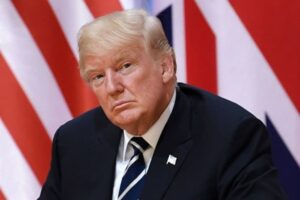
The Strategic Pivot
For decades, the Strait of Hormuz has remained the most critical energy chokepoint in the world, responsible for the transit of approximately 21 million barrels of oil daily—roughly 20–21% of global consumption.
Historically, any disruption to this corridor has triggered immediate global panic, price volatility, and diplomatic scrambling.
Iran’s temporary blockade had already driven oil prices above $140 per barrel, echoing the shocks of 2008. Washington’s calculation appeared straightforward: sustained pressure would isolate Tehran, trigger global backlash, and ultimately force strategic concessions.

Instead, Iran rewrote the script.
By reopening the Strait selectively, Tehran has transformed a blunt blockade into a precision instrument—a controlled access system that rewards neutrality and punishes aggression. In effect, the Strait is no longer closed; it is curated.
The “Non-Aggressor” Doctrine
Iran’s definition of “non-aggressor nations” is not ambiguous. It excludes any country that participated in or materially supported military action against its territory.
This categorically bars the United States and Israel while allowing access to Europe, Asia, and much of the Global South.
Five operational pillars underpin this policy:
Guaranteed naval escort for approved vessels
Restoration of navigational safety certifications
Structured coordination with global insurance markets
Priority access for major economies including China, India, Japan, and the EU
Explicit military warning against U.S.-escorted transit attempts
The implication is stark: oil flows resume—but not universally.
The world’s energy lifeline is now governed by political alignment.
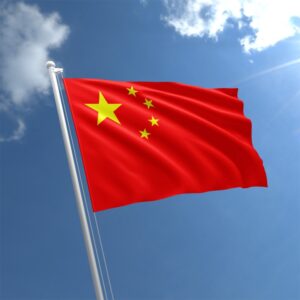
China’s Quiet Architecture
Behind this maneuver lies a deeper geopolitical layer—China’s strategic mediation.
Diplomatic signals indicate that Beijing engaged Tehran through a backchannel framework that extended beyond de-escalation into long-term economic alignment. China’s incentive was clear: secure stable, discounted energy flows at a moment of peak market disruption.
With imports exceeding 11 million barrels per day, China had been absorbing significant cost shocks during the blockade.
The reopening eliminates that pressure almost instantly.
In exchange, Iran gains assured revenue streams, expanded infrastructure investment, and geopolitical insulation.
China, in turn, consolidates its position as the central diplomatic broker in a crisis initially triggered outside its sphere.
This is not just energy diplomacy. It is influence consolidation.
Markets Deliver Their Verdict

Global markets responded with precision—and without hesitation.
Brent crude dropped sharply, marking one of the steepest single-day declines in recent history. European energy firms surged, reflecting restored supply chains. Asian markets rallied on anticipated cost relief.
Meanwhile, U.S.-linked energy interests lagged behind, reflecting continued exclusion from normalized supply access.
Currency movements further reinforced the shift.
The U.S. dollar weakened against major global currencies, signaling a recalibration of confidence among investors.
Markets did not wait for official narratives.
They interpreted the outcome in real time.
The Insurance Factor
One of the least visible yet most decisive components of the crisis lies in maritime insurance.
Without war-risk coverage, no commercial vessel can legally transit high-risk zones.
Iran’s provision of navigational guarantees directly addresses this barrier for non-aggressor states, enabling insurers in London, Tokyo, and Singapore to resume coverage.

This effectively operationalizes the reopening.
For American-linked vessels, however, the absence of such guarantees maintains a commercial blockade—even without physical obstruction.
Diplomatic Silence Speaks Loudest
Perhaps the most revealing development is not what has been said—but what has not.
Key global actors have responded cautiously, even positively, to the reopening. There has been no unified condemnation of Iran’s selective exclusion policy.
Instead, the prevailing tone is pragmatic acceptance.
This reflects a broader reality: energy security often overrides political alignment.
In this moment, access to supply has taken precedence over alliance solidarity.
Washington’s Strategic Dilemma
The United States now faces a constrained set of options.

Direct military enforcement risks escalation and alienation of allies.
Economic sanctions against participating nations would provoke retaliatory measures from economies representing over half of global output. Diplomatic pressure appears blunted by the absence of unified backing.
Each available pathway carries significant cost.
Three trajectories emerge:
Strategic Acceptance: Quiet adaptation to the new order while reframing the reopening as a broader success
Escalation: Military enforcement attempts that risk widening the conflict
Negotiated Re-entry: Engagement with intermediaries—most notably China—to restore access
None offers a clean resolution.
A Redefined Power Equation
What has unfolded is not merely a regional maneuver. It is a structural shift.
Iran has demonstrated that control over a physical chokepoint can be converted into selective economic leverage. China has reinforced its role as a geopolitical stabilizer where Western strategy faltered.
The United States, despite unmatched military capacity, finds itself navigating constraints imposed not by force—but by global interdependence.
The Strait of Hormuz is no longer just a passage. It is a filter.
And in this new configuration, access is no longer guaranteed—it is negotiated.
Dr. G. Fraser. MFR
The National Patriots

Headlinenews.news Special Investigative Report.