

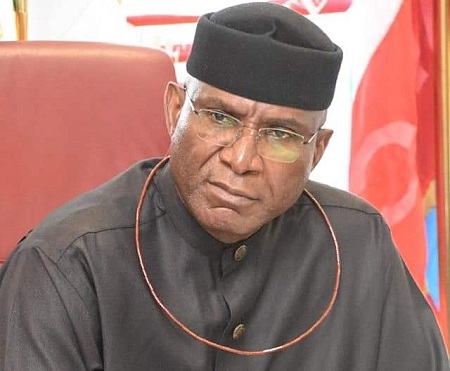
As the 2027 political season approaches, questions are arising over Senator Ovie Omo-Agege’s intentions and past actions in the Senate, stirring debate across the Urhobo nation.

Over the years, the political development of Urhobo has faced disruptions at key moments, often with Omo-Agege at the center of controversy. Ahead of the 2023 general elections, many Urhobo leaders had encouraged him to remain in the Senate, where he had already served as Deputy President. This was seen as a strategic move, as the Senate Presidency was likely to be zoned to the South, offering him a realistic shot at Nigeria’s top legislative position.

Instead, Omo-Agege opted to contest for governor, a decision that fractured alliances, weakened cohesion, and deepened divisions within Urhobo politics. Throughout his tenure in the Senate, his engagement with key Urhobo institutions—including the Urhobo Progress Union, youth leaders, traditional rulers, and opinion leaders—was limited, leaving much of the political network underdeveloped.

Critics note that while other ethnic blocs maintained broad institutional engagement, Omo-Agege centralized influence around himself, restricting collective access to power. Now, as speculation grows about his possible return to the Senate, questions arise about the value of his re-entry. After eight years and a tenure as Deputy Senate President, can he deliver from the backbench what he did not achieve in one of the country’s most powerful legislative roles?

His track record of political fragmentation raises further concern. Past maneuvering, from post-2007 realignments to 2011 contests, often coincided with divisions within opposition ranks, undermining Urhobo collective interests. Constituency development under his tenure also drew criticism, with key projects largely concentrated in his immediate community, leaving other parts of Delta Central with minimal federal presence. This uneven development contributed to resistance during the 2023 elections.

Currently, Delta Central enjoys unprecedented political harmony, with elected representatives aligned with Governor Sheriff Oborevwori’s administration, enabling coordinated development. Reintroducing a figure associated with internal dissent risks reversing these gains.
The question now is not simply about ambition—it is about consequences. Should the Urhobo nation repeat a cycle of divisive leadership, or is this an opportunity to embrace a political culture rooted in inclusiveness, collaboration, and strategic unity?

Many argue that Omo-Agege has already shown his full capacity in the Senate and that the Urhobo people might benefit more from his guidance as a political elder or kingmaker rather than a returning senator. Some speculate he could step aside for other leaders like Ominimini, who reportedly deferred his 2023 senatorial ambition for Omo-Agege.
The Urhobo nation is being urged to prioritize progress over recycled leadership, ensuring collective advancement over personal ambition.




