


Arithmetic vs Reality — Why Opposition Vote Aggregation Is a Political Myth
In the aftermath of Nigeria’s 2023 presidential election, a growing wave of political commentary has attempted to reinterpret the results through a selective lens—one that aggregates opposition votes and projects an inevitable coalition victory in the next cycle.
At first glance, the numbers appear compelling.
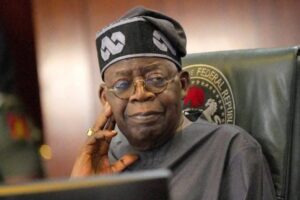
President Bola Ahmed Tinubu secured 8,794,726 votes, representing about 36.6% of total valid votes. His closest challengers—Atiku Abubakar, Peter Obi, and Rabiu Musa Kwankwaso—collectively polled 14,582,740 votes, approximately 63.4%.

These figures are correct.
But the conclusion being drawn from them is not.
The Fallacy of Post-Election Arithmetic
Elections are not mathematical exercises conducted in hindsight. They are political contests defined by competing identities, structures, ideologies, and voter loyalties.
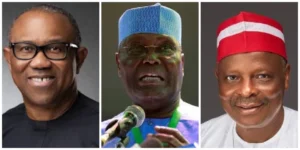
The 14.5 million opposition votes were not cast for a single vision. They were distributed across three rival candidates, each representing distinct political blocs:
Atiku Abubakar: 6,984,520 votes
Peter Obi: 6,101,533 votes
Rabiu Kwankwaso: 1,496,687 votes
These were not complementary votes. They were competing mandates.
To assume that these figures can be seamlessly merged into a future coalition outcome is to ignore the fundamental realities of Nigerian politics—where regional alignment, religious balance, candidate trust, and grassroots structures determine voter behaviour.
Coalitions may exist at elite level. Voter transfer is an entirely different matter.
The Kano Argument: Strength or Limitation?
One of the most cited statistics is Kwankwaso’s 997,279 votes in Kano State—reportedly higher than the total APC votes across 11 selected states combined.
This is numerically accurate.
However, it proves something quite different from what is being suggested.
Kwankwaso’s total national vote stood at 1,496,687. This means nearly two-thirds of his entire support base came from Kano alone. Outside Kano, he secured roughly 499,000 votes nationwide.
This is not evidence of national strength. It is evidence of regional concentration.
Nigeria’s presidency is not won by dominating one state—no matter how impressively—but by building a broad, cross-regional coalition that satisfies both vote totals and constitutional spread.
Kano is a fortress. It is not Nigeria.

The “State Count” Misconception
Another recurring claim is that Tinubu won only 12 states while the opposition collectively won 25 states including the FCT.
Again, this is technically correct—but analytically weak.
A state won by 3,000 votes and one won by 300,000 votes both count equally in such summaries, yet their strategic implications differ significantly.
Several states in 2023 were decided by extremely narrow margins:
Benue: margin of 2,096 votes
Sokoto: 3,235 votes
Katsina: 6,762 votes
Lagos: 9,848 votes
Osun: 10,421 votes
These margins reveal a competitive and fluid electoral landscape—not a fixed anti-APC majority.
In such an environment, small shifts in turnout, alliances, or candidate perception can significantly alter outcomes.
Governors and Electoral Reality
The argument that APC’s 22 governors in 2023 translated into only 12 presidential victories is often framed as a weakness.
It is not.
It is a reminder that Nigeria’s democracy is not a command structure where governors can dictate voter behaviour.
More importantly, the current political landscape tells a different story. APC now controls a significantly larger number of governorships than it did prior to the 2023 election, strengthening its grassroots reach, institutional coordination, and mobilisation capacity ahead of future contests.
Structure matters.
And structure evolves.
The Coalition Question: Theory vs Practice
The suggestion that a coalition involving Atiku, Obi, Kwankwaso, and other political actors automatically translates into electoral dominance is, at best, speculative.
Political history—both in Nigeria and globally—shows that coalition building is not merely about assembling names.
It is about reconciling competing ambitions, managing ideological differences, negotiating regional expectations, and most critically, convincing voters.
There is no empirical evidence that voters will transfer loyalty wholesale from one political figure to another simply because of elite agreements.
If anything, Nigerian electoral history suggests the opposite.
What the Data Actually Shows
A sober reading of the 2023 election reveals four key realities:
The opposition was fragmented, not unified.
Kwankwaso’s strength was regionally concentrated, not nationally distributed.
The electoral map was competitive, with several swing states.
APC secured a legitimate national victory, meeting both vote and constitutional requirements.

When these realities are combined with the current political structure—where APC has expanded its state-level control—the narrative of an inevitable opposition takeover becomes far less certain.
Conclusion: Facts Must Inform Strategy, Not Distortion
Numbers are powerful tools. But when selectively applied, they can create illusions that collapse under scrutiny.
The 2023 election did not produce a unified opposition majority.
It produced a divided electorate in a competitive political environment.
Any serious projection for 2027 must begin from that truth—not from convenient arithmetic.
National Patriots
The National Patriots caution against the misuse of selective statistics to create false political momentum.
Democracy is not built on arithmetic convenience but on structure, credibility, national spread, and voter trust. The 2023 elections clearly demonstrated a fragmented opposition and a competitive electoral map—not a consolidated alternative. Any attempt to project inevitability from aggregated figures is misleading and risks distorting public understanding.
As Nigeria approaches another electoral cycle, stakeholders must prioritise truth, responsible engagement, and nation-building over sensational narratives.
Redemption lies not in manufactured perceptions, but in disciplined leadership, strategic clarity, and a genuine commitment to the collective progress of Nigeria.
Princess Gloria Adebajo-Fraser MFR
President, The National Patriots.

“Do not confuse arithmetic with strategy.
Yes, the 2023 opposition combined vote was larger than Tinubu’s in a four-way race.
Yes, Kwankwaso’s Kano tally was bigger than APC’s combined votes in some selected states. But those are selective statistics, not proof of an inevitable coalition victory.
Kwankwaso’s strength was heavily concentrated in Kano, not spread nationally.
Opposition votes were cast for rival candidates, not one unified platform, and there is no law of politics that says those votes transfer perfectly in a future alliance.
Tinubu still won the actual national contest in 2023, and APC’s state-level political structure is stronger today than it was then.
That is the real empirical picture.
That viral post is just misleading the undiscerning gullible public by mixing some correct numbers with a false conclusion.
That false conclusion is that 2023 opposition totals can simply be carried forward, merged neatly, and converted into a guaranteed 2027 victory.
There is no empirical basis for that certainty.
What the 2023 data actually show is a fragmented opposition, a geographically concentrated Kwankwaso vote, a competitive but not unified anti-APC electorate, and a ruling party that still won nationally.
What current 2026 data add is that APC now has a larger governorship footprint than it had before the last presidential election.
Dr. G. Fraser.
The National Patriots.




