

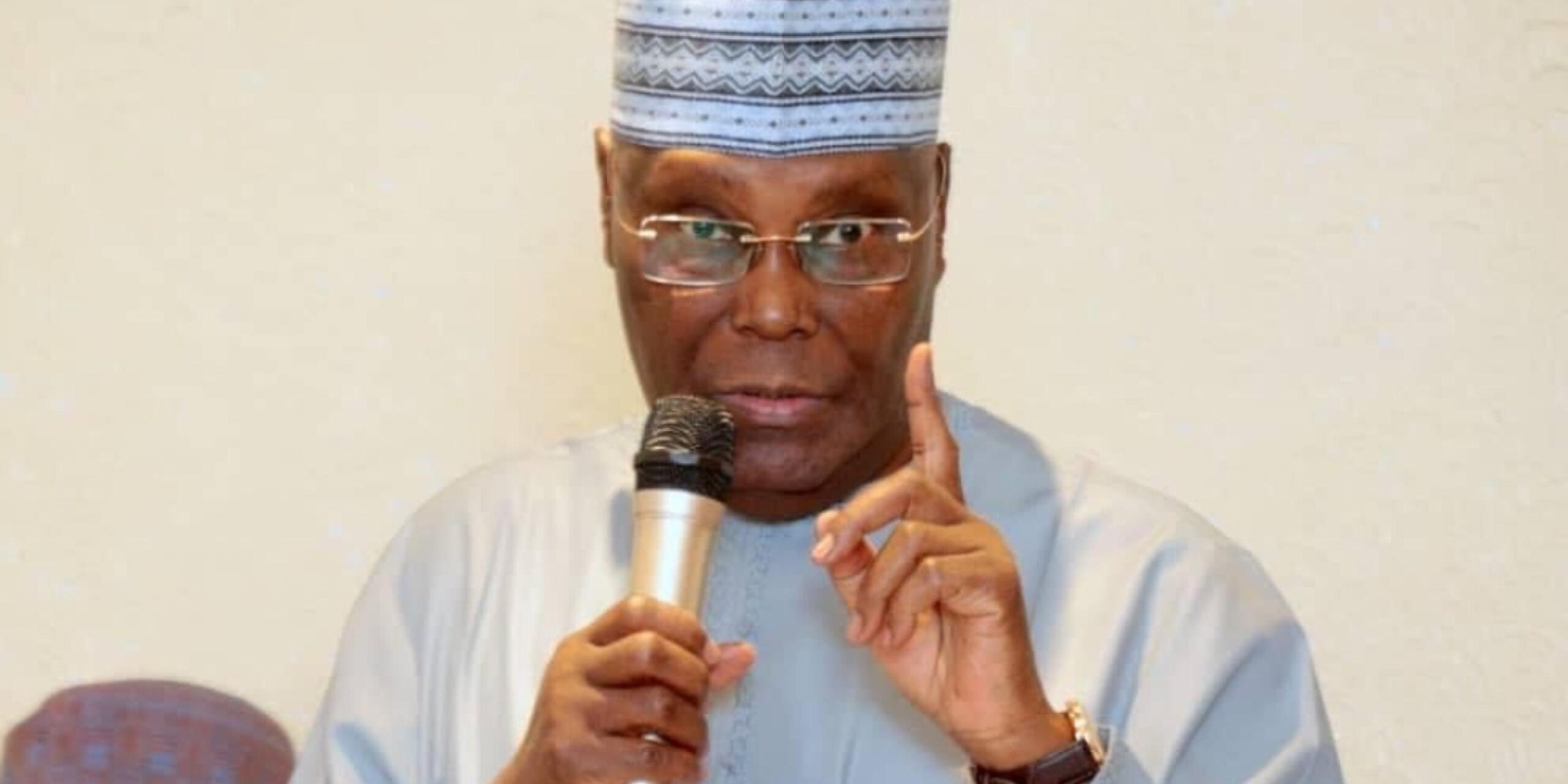
Former Vice President and African Democratic Congress (ADC) leader, Atiku Abubakar, has strongly condemned the Nigerian Senate for quickly approving President Bola Ahmed Tinubu’s request for a $6 billion external loan, calling the move reckless and concerning.

In a statement released on Tuesday by his Senior Special Assistant on Public Communication, Phrank Shaibu, Atiku expressed alarm that the loan was reportedly approved in under four hours after being presented to the Senate.
He described the rapid approval as a dangerous precedent, stressing that decisions with long-term economic implications should undergo careful scrutiny.

“What Nigerians have witnessed is not legislative diligence, but a worrying erosion of oversight responsibility,” Atiku said, criticizing the Senate for reducing itself to what he called a “rubber stamp” for executive requests.
He questioned the lack of transparency and debate in the process, asking, “Where was the discussion? Where was the rigorous analysis? Where was the accountability?”

Atiku also criticized the Federal Government’s borrowing strategy as unsustainable, noting that Nigeria’s increasing dependence on new loans to service existing debts and fund routine obligations reflects weak fiscal planning.
Highlighting recent financial data, he pointed out that Nigeria’s exposure to concessional loans from the World Bank’s International Development Association (IDA) had risen to $18.7 billion by early 2026. He also referenced domestic borrowing and bond issuances as evidence of aggressive debt accumulation.

The former Vice President questioned the reasoning behind the additional $6 billion loan, suggesting it may jeopardize Nigeria’s fiscal stability. “Borrowing is not inherently wrong, but reckless borrowing, enabled by legislative complacency, is dangerous,” he stated.
Atiku warned that the speed of the Senate’s approval reflects a sense of desperation within the government and urged lawmakers to fulfill their constitutional role in checking executive excesses. He emphasized that Nigerians deserve transparency, accountability, and responsible governance.
“History will judge both the executive and legislative arms for decisions made at critical moments like this,” he concluded.




