

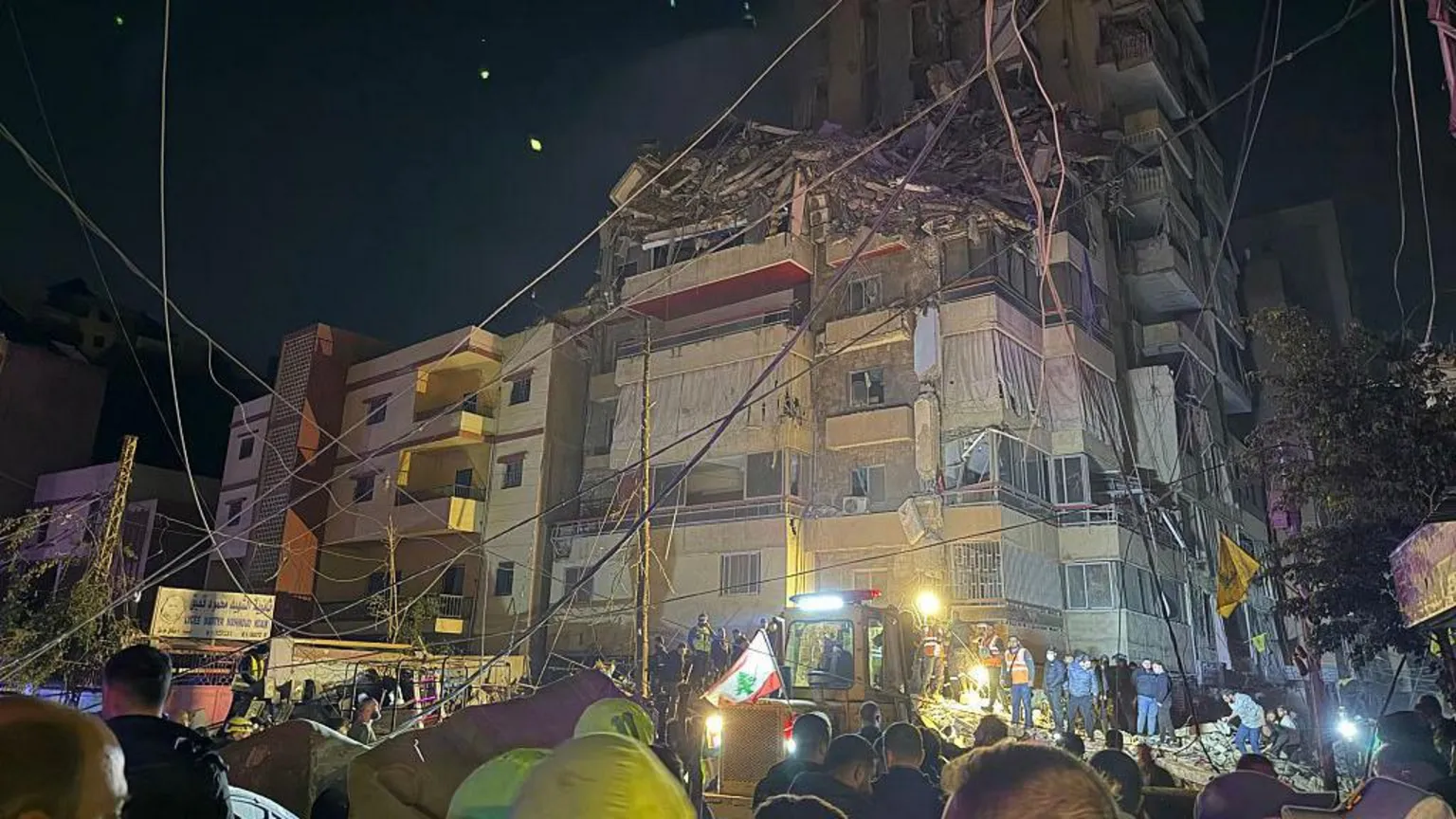
Beirut’s southern suburbs were hit by an Israeli airstrike late Thursday, marking the first attack on the Lebanese capital since a ceasefire agreement was reached between Israel and Hezbollah earlier in April. The strike, which targeted the Dahieh district—a known Hezbollah stronghold—has raised fresh concerns about the survival of the already fragile truce.
Eyewitnesses and images shared online showed large explosions followed by intense fires, with at least one building severely damaged. Panic reportedly spread through surrounding areas as residents reacted to the sudden escalation.
Israeli Prime Minister Benjamin Netanyahu confirmed he personally approved the operation, stating that it targeted a commander of Hezbollah’s elite Radwan Force. According to local reports, members of the unit were holding a meeting at the time of the strike around 8:00 p.m. local time.

Hezbollah has not yet issued an official response.
The strike is the first to hit Beirut’s Dahieh district since the US-brokered ceasefire announced on April 16. Despite the agreement, both Israel and Hezbollah have continued military actions, each accusing the other of violating the terms of the deal.
Most Israeli strikes in recent weeks have been concentrated in southern Lebanon, where the military says it is targeting Hezbollah infrastructure and operatives. Lebanese health authorities report that over 120 people have been killed in the past week alone, including women and children, though they do not separate civilian and combatant casualties.
Israel, meanwhile, maintains a military presence along parts of the Lebanese border, describing its operations as a security measure aimed at preventing Hezbollah activity near its northern communities. Lebanese officials and human rights groups have accused Israel of widespread destruction in border villages, with some incidents potentially amounting to violations of international law.
Hezbollah has also continued attacks on Israeli positions, using rockets and drones against military targets in northern Israel and southern Lebanon. Tensions escalated further last week when an Israeli defence contractor was killed in a drone strike while working near the border.
Dahieh, once a busy residential and commercial hub, remains largely deserted as many residents avoid returning due to ongoing fears of renewed strikes.
Netanyahu defended the latest attack, saying the targeted commander had been involved in operations against Israeli civilians and soldiers. “No terrorist is immune—Israel’s long arm will reach every enemy,” he said in a statement.
Diplomatic efforts supported by the United States are ongoing, but negotiations remain limited, with talks largely happening through intermediaries. Lebanese President Joseph Aoun has ruled out direct engagement with Netanyahu for now.
According to Lebanon’s health ministry, more than 2,700 people have been killed since early March, while Israel reports 16 soldiers and one civilian killed in southern Lebanon, alongside two civilians in northern Israel. The conflict continues to spiral despite repeated calls for restraint.




