

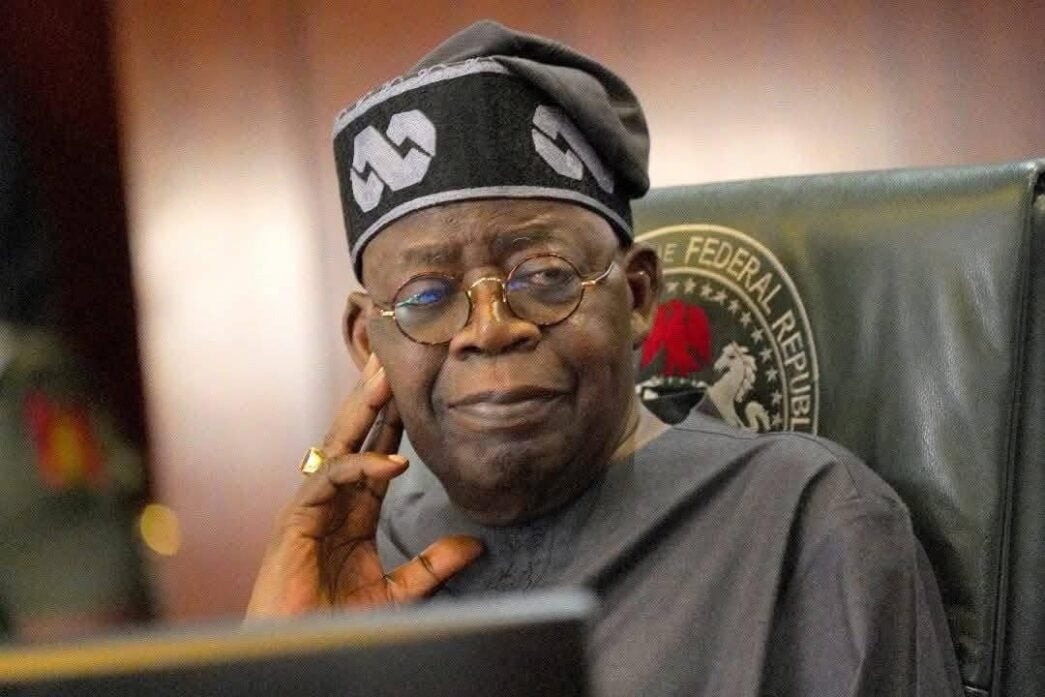
Economists and financial analysts have expressed differing views on President Bola Ahmed Tinubu’s economic performance three years into his administration, as debates continue over the impact of major reforms introduced since 2023.

President Tinubu marked his third year in office on May 29, 2026, during which his government implemented key policies including fuel subsidy removal and foreign exchange liberalisation. While these reforms were aimed at stabilising the economy, they have triggered significant inflationary pressures and rising living costs for many Nigerians.
Fuel prices, which stood at about N238 per litre before the policy changes in 2023, have risen sharply to over N1,300 per litre as of June 2026. Similarly, the exchange rate has depreciated from around N460 to over N1,300 per dollar within the same period. These developments have contributed to a sharp increase in the cost of goods and services nationwide.

Inflation data for April 2026 showed headline inflation at 15.69 percent and food inflation at 16.06 percent, further worsening the cost of living situation, even as the national minimum wage remains at N70,000.
Despite the hardship, some economic indicators suggest gradual recovery. Gross Domestic Product grew by 3.89 percent in the first quarter of 2026, while foreign reserves rose to approximately $49.58 billion. Analysts from the Centre for the Promotion of Private Enterprise noted that these figures point to a slow but steady recovery trajectory.

However, economists remain divided on the overall performance of the administration.
Former President of the Chartered Institute of Bankers of Nigeria, Okechukwu Unegbu, rated the administration at 20 percent, arguing that macroeconomic improvements have not translated into better living conditions for citizens. He cited high inflation, expensive fuel, and worsening poverty, while also questioning the reliability of official inflation data. He acknowledged that subsidy removal was necessary but criticised the lack of effective cushioning measures for citizens.
Professor of accounting and finance at Lead City University, Godwin Oyedokun, offered a more balanced assessment, rating the administration between 55 and 60 percent. He described the reforms as necessary and forward-looking, noting improvements in investor confidence, revenue generation, and macroeconomic stability. However, he stressed that ordinary Nigerians are yet to feel relief due to rising prices and declining purchasing power.

Similarly, financial expert and CEO of SD & D Capital Management, Gbolade Idakolo, rated the administration at 50 percent. He said the reforms helped prevent a fiscal crisis but admitted they have worsened living conditions. According to him, subsidy removal and forex reforms exposed long-standing structural weaknesses in the economy, even as they improved government finances and foreign reserves.
Across all viewpoints, analysts agreed on one key issue: while economic reforms may be stabilising macroeconomic indicators, the average Nigerian continues to face severe economic hardship.

Experts further noted that the central challenge for the administration is converting policy reforms into tangible improvements in living standards, including lower inflation, job creation, and improved income levels.
As the debate continues, the overall assessment of Tinubu’s economic performance remains mixed, reflecting both progress in structural reforms and persistent struggles in household welfare across the country.




