

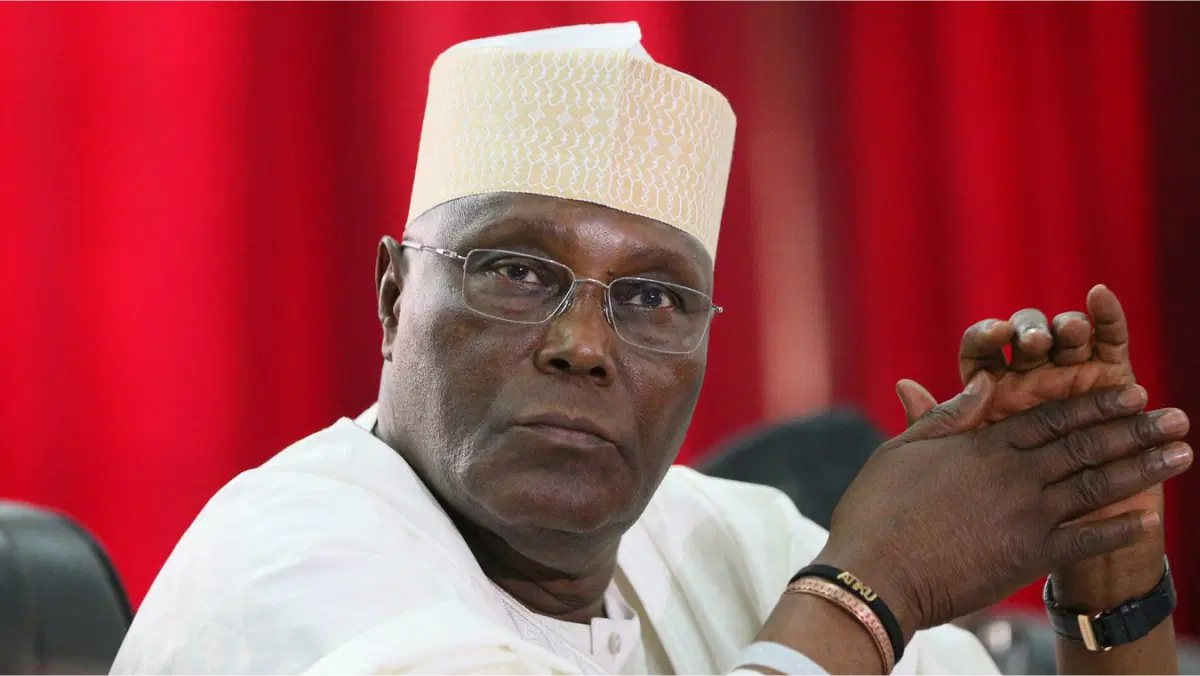
Nigeria’s Federal Government has disclosed that former Vice President Atiku Abubakar was among key political actors who supported the idea of rotational presidency in the aftermath of the annulment of the June 12, 1993 presidential election, a move officials say was aimed at preserving national unity.

The Secretary to the Government of the Federation (SGF), Senator George Akume, made the remarks during a press briefing in Abuja held as part of activities marking Nigeria’s 27th Democracy Day anniversary.
According to Akume, leaders of the Peoples Democratic Party (PDP) reportedly held a crucial meeting in Kaduna after the June 12 crisis, led by the late Chief Solomon Lar and Alhaji Adamu Ciroma, where discussions on power rotation between the North and South formed a central part of the political settlement.

He explained that the agreement on rotational presidency emerged as a compromise designed to address the political tension created by the annulled 1993 election and to promote inclusiveness in national leadership.
Akume stated that Atiku Abubakar was present at the discussions and was part of the broader consensus reached at the time, although he did not directly call for the opposition figure to withdraw from the 2027 presidential race.
Reflecting on the significance of June 12, Akume described the annulled election, widely believed to have been won by Moshood Kashimawo Olawale (MKO) Abiola, as a painful setback in Nigeria’s democratic journey and a reminder of the importance of respecting the will of the electorate.

He emphasized that one of the key lessons from that period is the supremacy of the people’s vote in any democratic system, stressing that electoral outcomes must always be respected.
The SGF also expressed confidence in Nigeria’s electoral system and the Independent National Electoral Commission (INEC), noting that the country has learned from past experiences and is committed to preventing a repeat of electoral annulment.

He added that democracy allows for freedom of expression and peaceful political participation, contrasting it with authoritarian systems, while urging political actors to continue strengthening democratic values in Nigeria.
Akume further cited international examples of electoral transitions to highlight the resilience of democratic systems and encouraged political stakeholders to accept outcomes and prepare for future elections rather than undermine the process.




