

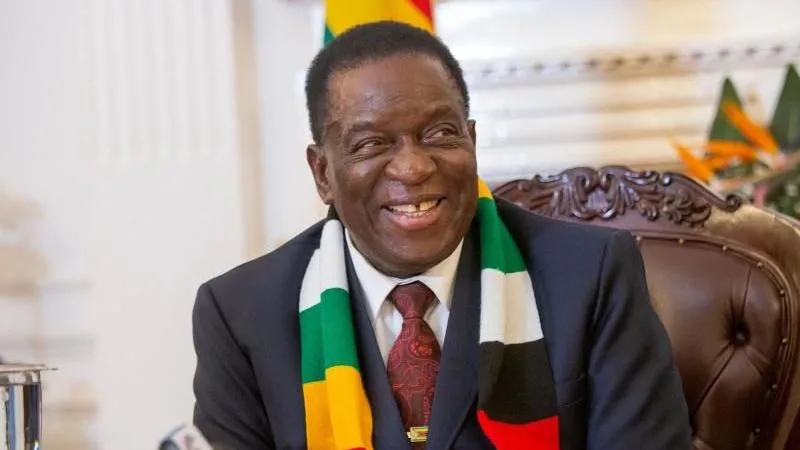
Zimbabwe’s lower house of parliament has passed a bill to extend presidential terms from five to seven years, a move that would allow President Emmerson Mnangagwa to remain in power until 2030.
More than 200 lawmakers voted in favour of the draft legislation on Thursday, surpassing the threshold required for a two-thirds majority to amend the constitution.

The bill also abolishes direct presidential elections, with future presidents to be chosen by parliament.
Mnangagwa, 83, came to power in 2017 after ousting long-time ruler Robert Mugabe with the backing of the military and later won disputed elections in 2018 and 2023.
The bill will now proceed to the Senate, where it is also expected to secure approval before being enacted by the president.

The move follows a campaign by the ruling Zanu-PF party, which has been in power since independence in 1980, to amend the constitution and extend presidential terms. The proposal received cabinet backing in February.
During Thursday’s vote, Speaker of Parliament Jacob Mudenda announced that 216 lawmakers supported the legislation, while 42 voted against it.
The amendment provides that:
– Presidential elections, held since 1990, will be abolished.
– Parliament will elect future presidents.
– Presidential and parliamentary terms will be extended from five to seven years.
– Parliamentary elections scheduled for 2028 will be postponed to 2030.
– President Mnangagwa, whose second and final term is due to end in 2028, will remain in office until 2030.

Opposition parties, civil society groups and constitutional lawyers have argued that such major changes should be subjected to a national referendum rather than approved solely by parliament.
Mnangagwa was initially hailed by supporters as a reformer who would restore economic growth and democratic governance. However, his presidency has been marked by economic difficulties, disputed elections and concerns over democratic backsliding.

Critics say the latest constitutional changes could weaken democratic accountability, while supporters argue that they are necessary to ensure continuity and stability.
Zimbabwe’s 2013 constitution limited presidents to two terms and stipulated that any extension of term limits must be approved by voters in a referendum. It also stated that a sitting president could not benefit from any extension without voters’ approval in a second referendum.

However, the Constitutional Court on Wednesday dismissed a legal challenge seeking to block the bill.




