

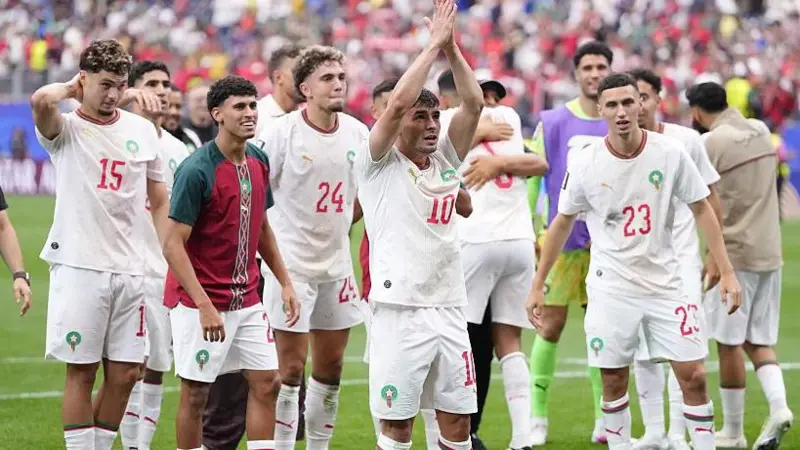
Morocco national football team continue to strengthen their reputation as one of the standout sides of the World Cup, after a commanding 3–0 victory over Canada in the round of 16 in Houston, a result that secured their place in the quarter-finals.
The North African side delivered a performance that was more efficient than elegant, creating just a handful of chances but still managing to control key moments of the match. In fact, they recorded only five shots on target—the lowest ever by a winning team in a World Cup knockout game—while the first half also set an unusual record, featuring more yellow cards than shots on goal.
Despite early pressure from Canada, including saves from goalkeeper Yassine Bounou to deny Jonathan David and Tani Oluwaseyi, Morocco gradually settled into the game and took full control as it progressed.

With captain Achraf Hakimi leading from the back and Brahim Díaz contributing two assists, Morocco’s attacking quality eventually broke through. Díaz now holds the record for the most World Cup assists by an African player, with four to his name.
The win extends Morocco’s remarkable unbeaten run, now stretching to 34 matches across all competitions, although part of that record remains disputed due to a controversial Africa Cup of Nations result. Their last defeat in open competition dates back to August 2025.
Head coach Mohamed Ouahbi admitted the match was difficult in its early stages but praised his team’s ability to stay mentally strong and adapt without abandoning their playing style. He emphasized resilience and identity as key reasons for their continued success.

Morocco have now reached back-to-back World Cup quarter-finals, matching their run from Qatar and becoming the most successful African nation in World Cup knockout history, with four knockout wins in two tournaments.
While their progress has sparked growing belief that they could be genuine title contenders, some analysts still feel they have not been fully tested and may face tougher challenges ahead, especially against elite opposition in the later stages.

Their rise is widely credited to long-term football investment in the country, which has helped develop world-class infrastructure and allowed the national team to benefit from both local talent and diaspora players.
What was once seen as a surprise run in Qatar is now being viewed as the emergence of a consistent global contender.




