


By Gloria Ameeda Fraser, MFR
Registrar of the Joint Admissions and Matriculation Board (JAMB), Professor Is’haq Oloyede, has reportedly called for a fundamental transformation of Islamic education in Nigeria, urging Muslim communities to reposition Madrasa education to produce globally competitive professionals capable of excelling in every sector of the economy.
According to a summary of his address circulating among stakeholders, the respected education administrator outlined a seven-point roadmap aimed at strengthening the newly introduced National Board for Arabic and Islamic Studies (NBIAS) qualification, improving educational opportunities for Muslim students and integrating Islamic education more effectively into Nigeria’s mainstream academic and professional landscape.

The recommendations come at a time when Nigeria continues to grapple with low enrolment in science, technology and technical education, while governments at both federal and state levels are encouraging greater participation in vocational and technical skills as drivers of economic growth.
Among the major recommendations highlighted are:
1. Make NBIAS compulsory for Arabic school graduates
Professor Oloyede reportedly urged all Arabic and Islamic schools to make it compulsory for graduating students to sit for the National Board for Arabic and Islamic Studies (NBIAS) examinations, describing the qualification as an important pathway into higher education.

A unified national examination, advocates argue, would provide a standardised benchmark for assessing graduates of Arabic institutions while enhancing their access to universities and other tertiary institutions.
2. Establish scholarship funds for indigent Muslim students
He also encouraged Muslim communities, philanthropists, organisations and educational foundations to establish sustainable scholarship schemes for financially disadvantaged students.
Education analysts note that scholarship programmes have consistently improved access to higher education in many countries by reducing financial barriers and helping talented students complete their studies.

3. Do not be discouraged by initial rejection of new qualifications
Addressing concerns over recognition of the new qualification, Professor Oloyede reportedly advised students not to be discouraged if some universities, particularly in Southern Nigeria, initially decline to accept the certificate.
Instead, he encouraged affected candidates to seek admission into institutions willing to recognise the qualification, excel academically and demonstrate the quality of NBIAS graduates through outstanding performance.

He reportedly reminded his audience that similar resistance greeted qualifications such as NECO and other educational certifications during their early years before they eventually gained widespread national acceptance.
Education experts observe that new examination systems often require time before receiving universal institutional recognition, provided they maintain credible standards and produce high-performing graduates.
4. Academic excellence will determine acceptance
Professor Oloyede reportedly argued that the strongest argument for recognition would not be public campaigns but academic performance.
If NBIAS graduates consistently emerge with First Class and Second Class Upper degrees while distinguishing themselves in their various professions, universities would increasingly gain confidence in the qualification.
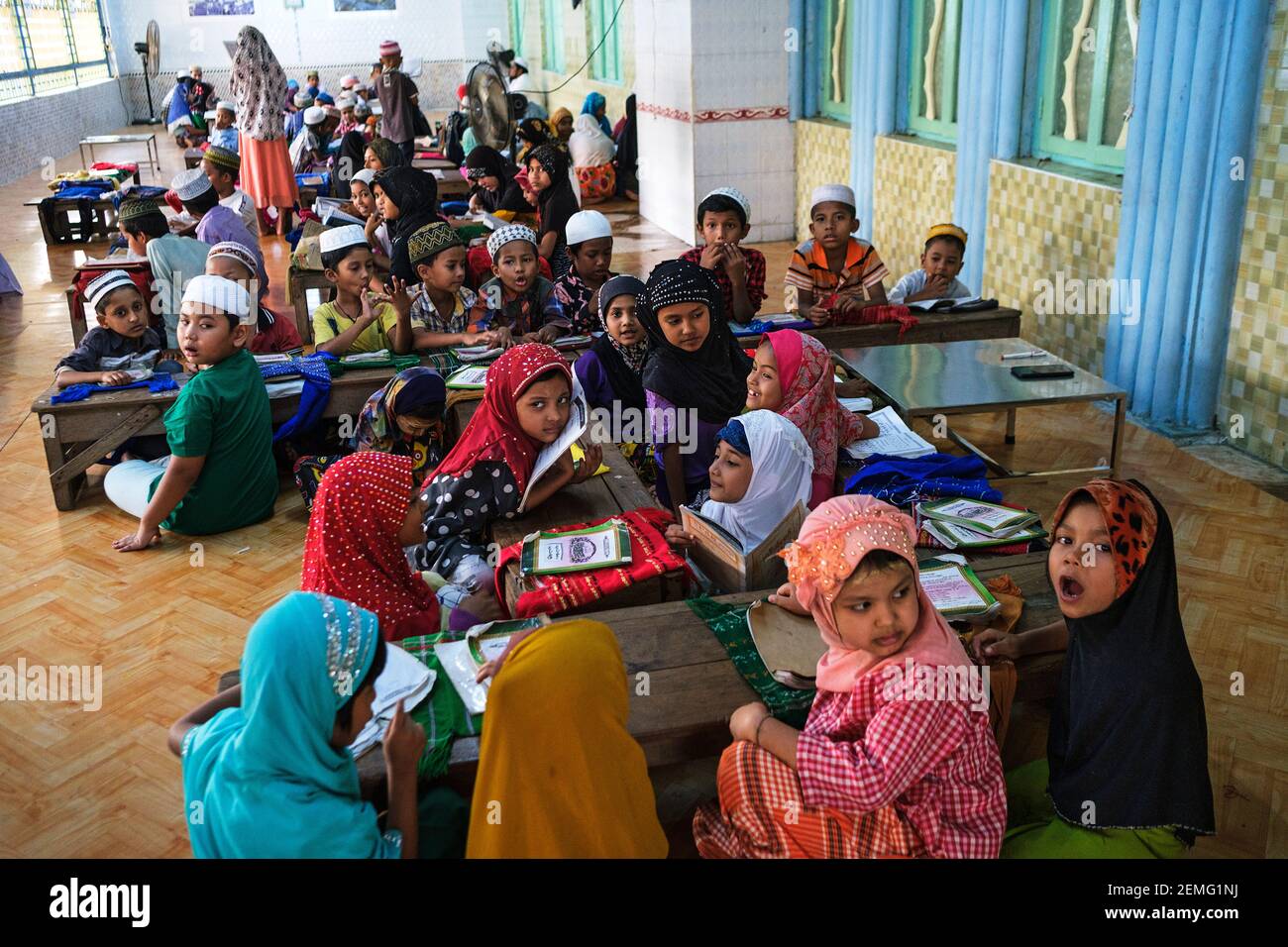
Across the world, institutional credibility is often strengthened by the success of graduates rather than by advocacy alone.
5. Change perceptions about Madrasa education
A significant aspect of the reported address focused on changing long-held perceptions among parents and religious leaders regarding the purpose of Islamic education.
According to the summary, many families still assume that graduates of Madrasas should primarily become traditional Islamic clerics engaged in religious activities such as teaching, counselling and other conventional roles.
Professor Oloyede reportedly argued that while religious scholarship remains valuable, Madrasa graduates should also be encouraged to pursue careers in engineering, medicine, law, journalism, accounting, academia, public administration, technology, agriculture and entrepreneurship.

He stressed that Islamic education and professional excellence are not mutually exclusive but can complement one another in building stronger communities.
6. Integrate science, technology and technical education
Perhaps the most far-reaching recommendation was the call for Islamic schools to modernise their curricula by incorporating science, technology and technical education alongside religious studies.
He reportedly urged Muslim students to embrace technical education and vocational skills, particularly in view of recent Federal Government initiatives aimed at expanding access to technical colleges and skills development.
Education economists have repeatedly argued that countries with strong technical education systems generally produce larger numbers of skilled workers needed for industrialisation, manufacturing, construction, energy and emerging technologies.
Many successful education systems across Asia and the Middle East integrate religious instruction with science, mathematics, engineering and digital technology, producing graduates who are both academically competitive and grounded in their faith.
7. Shared responsibility for implementation
Professor Oloyede reportedly concluded by emphasising that the success of the proposed reforms cannot rest on government alone.
Rather, he urged Islamic scholars, school proprietors, parents, alumni associations, philanthropists and Muslim organisations to collectively support the initiative through advocacy, funding, curriculum development and mentorship.

A Broader Vision for Educational Reform
The recommendations represent a broader vision of educational transformation in which Islamic education is viewed not as an alternative to modern education but as a complementary pathway capable of producing professionals who combine religious knowledge with technical competence and ethical leadership.
If implemented effectively, supporters believe the proposals could widen university access for thousands of graduates of Arabic institutions, reduce educational inequality and prepare a new generation of Muslim professionals equipped to contribute meaningfully to Nigeria’s economic development.
Ultimately, the reported message places excellence, innovation and adaptability at the centre of Islamic education, arguing that faith-based learning and modern professional achievement can—and should—advance together in meeting the demands of the twenty-first century.
The National Patriots urges Nigerian Muslims to embrace Professor Is’haq Oloyede’s vision of combining Islamic values with modern education. Investing in science, technology, technical skills and scholarships for indigent students will empower future generations to compete globally without compromising their faith. A stronger, educated Muslim community will contribute significantly to Nigeria’s unity, economic development, innovation and national prosperity.
Princess G. Ameeda Fraser. MFR
The National Patriots.
Special Adviser to Former President Goodluck Jonathan.




