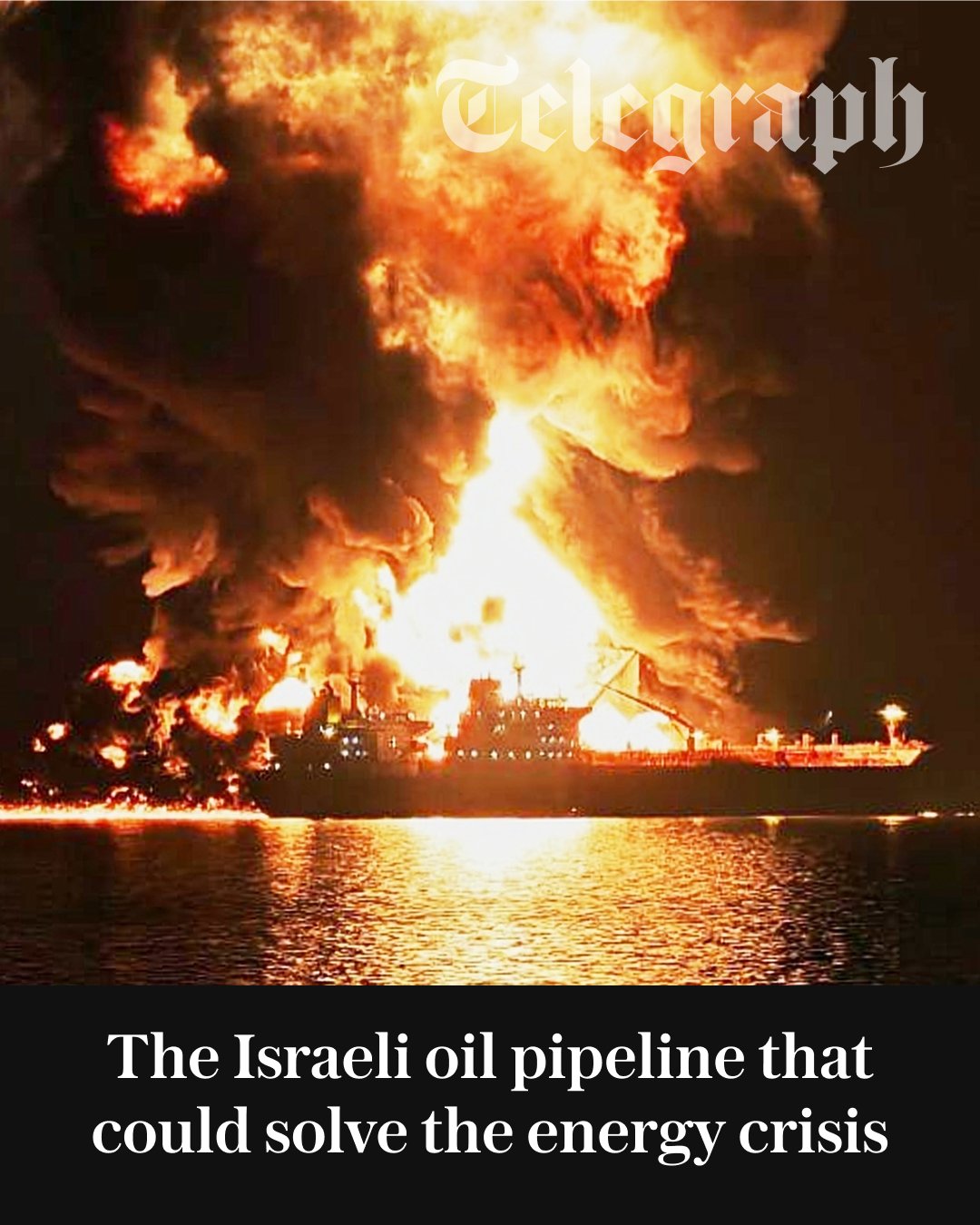
A proposed oil pipeline linking Saudi Arabia to Israel could reshape energy flows across the Middle East, but turning the idea into reality would require overcoming significant diplomatic, security and engineering challenges.
The biggest obstacle may not be the construction itself, but the political relationship between the two countries.
Saudi Arabia and Israel currently have no formal diplomatic relations. Riyadh has repeatedly said that normalisation with Israel would require the establishment of an independent Palestinian state, a condition Israel has firmly rejected.
Saudi Crown Prince Mohammed bin Salman has also been highly critical of Israel’s military campaign in Gaza, accusing the country of genocide over the deaths of tens of thousands of Palestinians since 2023.
Against that backdrop, the prospect of the two countries sharing major energy infrastructure may appear unlikely.
However, geopolitical efforts led by the United States and Israel are pushing towards closer relations between Riyadh and Tel Aviv. Energy cooperation is widely seen as one of the potential incentives for normalisation.

Israel has already strengthened its position in the regional energy market following the discovery of three major offshore natural gas fields.
The country’s growing energy links with its neighbours have also brought Gulf capital closer to Israeli infrastructure. Mubadala Energy, the United Arab Emirates’ sovereign wealth-backed energy company, invested about $1 billion in Israel’s Tamar gas field.
Egypt and Jordan have also become increasingly dependent on Israeli natural gas, creating deeper economic links that could make future confrontation more difficult.
Saudi Arabia, however, remains a much bigger diplomatic challenge.
US-Saudi deal could increase pressure for normalisation
One recent development could potentially accelerate the process.
The United States and Saudi Arabia last month reached a landmark 30-year agreement aimed at developing a civilian nuclear programme in the kingdom.
After the agreement was signed, US President Donald Trump said the arrangement was tied to Saudi Arabia eventually normalising relations with Israel.
Such a condition could place considerable pressure on Riyadh to establish formal diplomatic ties with Israel, potentially creating an environment in which broader economic and infrastructure projects—including energy pipelines—could be discussed.

Any Saudi-Israeli pipeline remains a long-term prospect, but Israel’s Ministry of Energy and Infrastructure has expressed support for greater regional energy connectivity.
The ministry said regional connectivity was important to its strategy and described the goal of turning Israel into an energy bridge between East and West as a central part of its energy vision.
Saudi Aramco, however, has been considerably less enthusiastic about the possibility.
When asked about the proposed pipeline and potential cooperation with Israel, a company spokesman declined to comment.
Pipeline could provide an alternative route
Supporters of the idea argue that a pipeline could provide an alternative route for moving crude oil and potentially reduce dependence on vulnerable maritime chokepoints.
The strategic importance of such infrastructure has increased following disruptions to oil shipments through the Strait of Hormuz.

Energy consultant Claire Jungman of Vortexa described pipelines as a pressure valve rather than a complete replacement for tanker transportation.
According to her, crude flows through the Strait of Hormuz fell dramatically during the conflict, dropping by about 90 per cent to below 1.5 million barrels per day in May before recovering to around 5.3 million barrels per day in July.
Existing pipelines have helped compensate for part of the disruption, allowing some crude to bypass the Strait of Hormuz and Red Sea routes. However, they remain incapable of replacing the enormous volumes normally transported by sea.
The limitations are even greater for natural gas, for which pipelines remain far more geographically constrained.
Israel’s own infrastructure faces security risks
Another major concern is security.
Israel’s existing energy infrastructure has already come under attack.
Pipeline terminals around Eilat and Ashkelon have been targeted by missiles and drones launched by Iran and the Houthis.
The Port of Eilat experienced such a severe decline in shipping activity that it was forced to close, contributing to current flows through the Trans-Israel pipeline falling to almost zero.
Ashkelon has also faced security threats. The city is home to important energy infrastructure and lies only a few miles from the Gaza Strip, making its refineries and terminals particularly vulnerable during regional conflicts.
The security risks raise questions about whether constructing another major pipeline across the region would actually improve energy security or simply create another strategically important target.
More pipelines are not necessarily a guarantee
Michael Carolan of Argus Media said diversifying supply routes remains valuable, particularly after recent conflicts demonstrated the vulnerability of relying heavily on a single export corridor.
Saudi Arabia already has the East-West pipeline, which transports crude from the kingdom’s oil-producing regions to Yanbu on the Red Sea coast.
The route has allowed Saudi exports to continue despite disruptions around the Strait of Hormuz, although at reduced levels.

Saudi Arabia also retains access to international markets through routes involving the Suez Canal and the Sumed pipeline, despite security threats around the Bab-el-Mandeb Strait.
However, Carolan cautioned that constructing additional pipelines would not eliminate the risks facing oil-producing countries.
Production facilities, storage terminals and other critical infrastructure can also be attacked.
A new pipeline could therefore provide an additional route for exports while simultaneously creating another highly visible piece of infrastructure for adversaries to target.
For now, a Saudi Arabia-Israel pipeline remains more of a strategic possibility than an imminent project. Its development would depend not only on billions of dollars in engineering and construction but also on a major transformation in relations between Saudi Arabia and Israel.
If diplomatic normalisation eventually takes place, energy cooperation could become one of the areas where the new relationship is tested.
But until the political divide over Palestine is addressed and the security environment improves, the proposed pipeline faces obstacles far greater than the engineering challenge of laying the line.