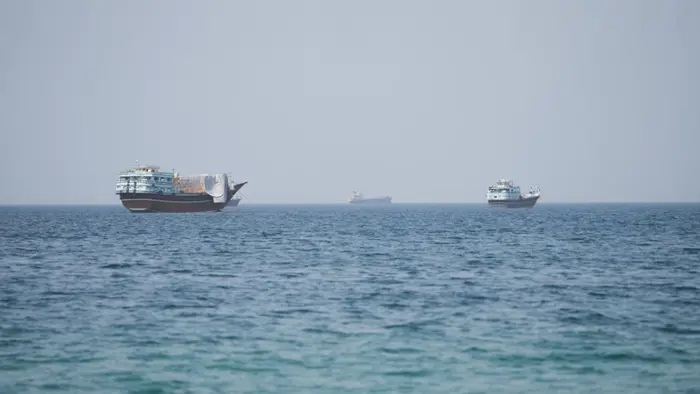
Iran Says Strait of Hormuz Reopening Depends on U.S. Accepting Its Conditions
Iran has said the Strait of Hormuz will only be reopened once the United States accepts its demands, even as Tehran and Oman appear to be nearing an agreement on a temporary shipping arrangement for the strategically important waterway.
Iranian Foreign Minister Abbas Araqchi said on Saturday that discussions with Oman over a new route through the strait had made significant progress, but stressed that an agreement between the two countries alone would not automatically lead to the reopening of the waterway.
According to Araqchi, Iran and Oman are “very close” to reaching an understanding on a new shipping route. However, Tehran maintains that additional conditions, including compensation from Washington, must be addressed before normal maritime traffic can fully resume.

Iran has rejected the previous traffic separation system used by ships passing through the Strait of Hormuz, saying the arrangement is no longer acceptable. Tehran is instead discussing a temporary route with Oman while technical and legal issues surrounding a permanent shipping system are resolved.
The developments come amid continued tensions following the conflict that began after U.S. and Israeli attacks on Iran on February 28.
The Strait of Hormuz is one of the world’s most important energy chokepoints, with roughly one-fifth of global oil and gas shipments passing through the waterway before the conflict disrupted maritime traffic.
UAE reports another attack on shipping
The situation remained tense on Saturday after the United Arab Emirates accused Iran of attacking a vessel linked to its state-owned oil company while it was transiting the Strait of Hormuz.
The UAE said the ship was struck by a missile but reported that there were no injuries. Iranian authorities did not immediately comment on the allegation.
Iranian media reported the UAE’s account but did not include the portion of the report that blamed Tehran for the attack.
The latest incident adds to growing concerns over the safety of commercial vessels attempting to pass through the strait.
U.S. expects possible agreement
Washington has repeatedly indicated in recent weeks that an agreement to restore shipping through the Strait of Hormuz could be close.
A U.S. official, speaking anonymously, said on Friday that Washington expected Iran and Oman to reach an agreement soon.

The official said the United States would lift its blockade of Iranian ports once an agreement was announced that restored commercial shipping through the strait without restrictions.
However, Washington also warned that any steps it takes would depend on Iran fulfilling its commitments under such an agreement.
The repeated claims from Washington that a deal is imminent have been met with denials from Tehran, which has previously rejected suggestions that formal negotiations were taking place.
Iran insists on its own conditions
Iran’s Islamic Revolutionary Guard Corps separately reinforced Tehran’s position on Saturday, saying the reopening of the Strait of Hormuz depended on Washington accepting Iran’s conditions rather than simply on the negotiations between Iran and Oman.
IRGC spokesperson Hossein Mohebbi did not publicly detail all of the conditions but said the United States must stop interfering in regional negotiations.
He was quoted by Iran’s Tasnim news agency as saying that the Strait of Hormuz would be reopened once the United States accepted Iran’s conditions.
The statement highlights a major difference between Tehran and Washington over who ultimately has control over the reopening process.
Proposed deal could give Iran greater control
Earlier reports indicated that a proposed agreement between Iran and Oman could give Tehran greater authority over ships entering the Gulf through the Strait of Hormuz.
A senior Iranian source and two regional officials told Reuters that the proposed arrangement could give Iran a degree of control over maritime access through the waterway.
Such a concession would represent a significant shift, particularly because U.S. officials have repeatedly said they would not accept Iran controlling access to one of the world’s most important energy trade routes.
It remains unclear whether Washington has sought changes to the proposed arrangement.
Iran has also used the conflict to justify imposing tolls on some oil tankers and restricting vessels attempting to pass through the strait without its approval.
Shipping disruption drives energy concerns

The restrictions and attacks on commercial vessels have severely disrupted global energy shipments, contributing to higher energy prices and increasing inflationary pressure.
Abu Dhabi National Oil Company, one of the world’s major energy producers, said on Friday that 15 of its vessels had been struck while transiting the Strait of Hormuz since the conflict began.
The company said the attacks had killed one crew member and injured 20 others.
Iranian media frequently report attacks on vessels that they say violated Iranian instructions, although such reports do not always explicitly identify Iranian forces as responsible for the attacks.
The disruption has also been compounded by attacks from the Iran-aligned Houthi movement in Yemen. The Houthis have targeted shipping around another major energy chokepoint between the Red Sea and the Gulf of Aden.
With negotiations continuing between Iran and Oman and Washington pressing for the restoration of commercial shipping, the future of the Strait of Hormuz remains closely tied to the broader conflict and the conditions being demanded by Tehran.
For now, Iran’s position remains clear: an agreement between Tehran and Muscat may help establish a new shipping route, but the Strait of Hormuz will not fully reopen unless the wider conditions, including those involving the United States, are met.