OSUN 2026: DAVIDO CLAIMS U.S. RESPONSE, BUT WHERE IS THE OFFICIAL EVIDENCE? — HEADLINENEWS.NEWS
Singer Posts WhatsApp Screenshot After Trump Appeal, But No Identified U.S. Official, White House Statement or Government Communication Confirms Contact
By Headlinenews.News Investigative Desk
In an election already charged with political tension, claims carrying the name of the President of the United States must be supported by more than social-media excitement and an unidentified WhatsApp message.
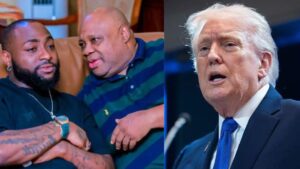
Nigerian music star David Adeleke, popularly known as Davido, has claimed that his appeal to United States President Donald Trump over Saturday’s Osun State governorship election has attracted a response from American authorities.
“Dem don reach out,” the singer declared on X, suggesting that his intervention had produced results. He subsequently posted a screenshot of a WhatsApp message stating that his tweet was “getting the right attention” and that embassies were reaching out.

But there is an important distinction between a claim of contact and evidence of official United States government engagement.
The screenshot circulating with Davido’s post does not, from the publicly available material examined, identify the person who sent the message. It does not carry the name or designation of a White House official, State Department officer, U.S. Embassy representative or any other identifiable American government authority.
That distinction matters.
Following checks of publicly accessible White House material and searches for official U.S. government communications concerning Davido’s appeal and the Osun election, Headlinenews.News has not found an official statement, presidential communication or publicly verifiable government document confirming that President Trump personally responded to Davido or directed his administration to intervene following the singer’s appeal.
That does not prove that no private communication whatsoever occurred. Governments and diplomatic missions routinely conduct communications that are not immediately made public. But it does mean that, on the evidence presently available, the claim cannot responsibly be elevated from Davido’s assertion into an established fact that “Trump responded.”
Indeed, Davido’s own screenshot appears to raise as many questions as it answers.
Who sent the WhatsApp message? Which “embassies” were supposedly reaching out? Was the sender an American government official, a private intermediary, political associate, diplomatic contact or simply someone informing Davido that his social-media campaign was gaining attention?
Until those questions are answered, the responsible description is straightforward: Davido says American authorities have made contact; independent public confirmation of that assertion has not been established.
This is particularly important because Davido is not a politically detached observer in the Osun contest. He is the nephew of Governor Ademola Adeleke, who is seeking re-election, and has openly used his considerable celebrity influence and social-media reach in support of his uncle.

He therefore has every right, like any Nigerian citizen, to campaign, mobilise supporters, condemn violence and advocate a peaceful election.
But celebrity influence does not lower the evidential standard for political claims. If anything, an audience running into millions makes accuracy even more important.
Invoking the name and authority of the President of the United States in a fiercely contested Nigerian election inevitably carries political weight. Statements such as “Una go see” can reasonably be interpreted by political opponents as suggesting that some external power has entered the contest or is preparing consequences for one side.
That is precisely why restraint is required.
There is also a broader democratic issue.
The Osun governorship election will be decided by Osun voters under Nigerian law, administered by Nigeria’s electoral institutions and protected by Nigerian security agencies. International election observation is legitimate and commonplace, but observation should not be confused with foreign determination of electoral outcomes.
Neither APC nor Accord should require intimidation to win an election. The ballot, not celebrity status, political threats or foreign names, must determine who governs Osun.
Davido would therefore make a more constructive contribution by using his enormous platform to encourage Osun residents to collect their PVCs, turn out peacefully, reject violence and vote according to their conscience.
If there has indeed been official communication from the United States government, establishing that fact should be simple: identify the institution or official involved, or produce an independently verifiable communication consistent with appropriate diplomatic protocols.
Until then, an unidentified WhatsApp screenshot should not be presented to Nigerians as proof that President Trump or the United States government has formally entered the Osun election conversation.
The same evidential standard must apply to everybody — APC, Accord, celebrities, politicians and media organisations alike.
Osun does not need another layer of political theatre four days before an election. It needs peace, credible information, professional security and a transparent electoral process.
Davido has every right to support his uncle. APC has every right to campaign against him. Neither side has the right to intimidate the other, and Nigerians should be careful not to convert unverified social-media claims into diplomatic facts.

Elections are won with votes, not WhatsApp screenshots. If Washington has spoken, let the evidence show who spoke, in what capacity and what exactly was said. Until then, the voters of Osun — not the noise of social media — remain the people who will decide who governs their state.
Dr. Imran Khazaly.
Headlinenews.News Special Investigative Desk.