

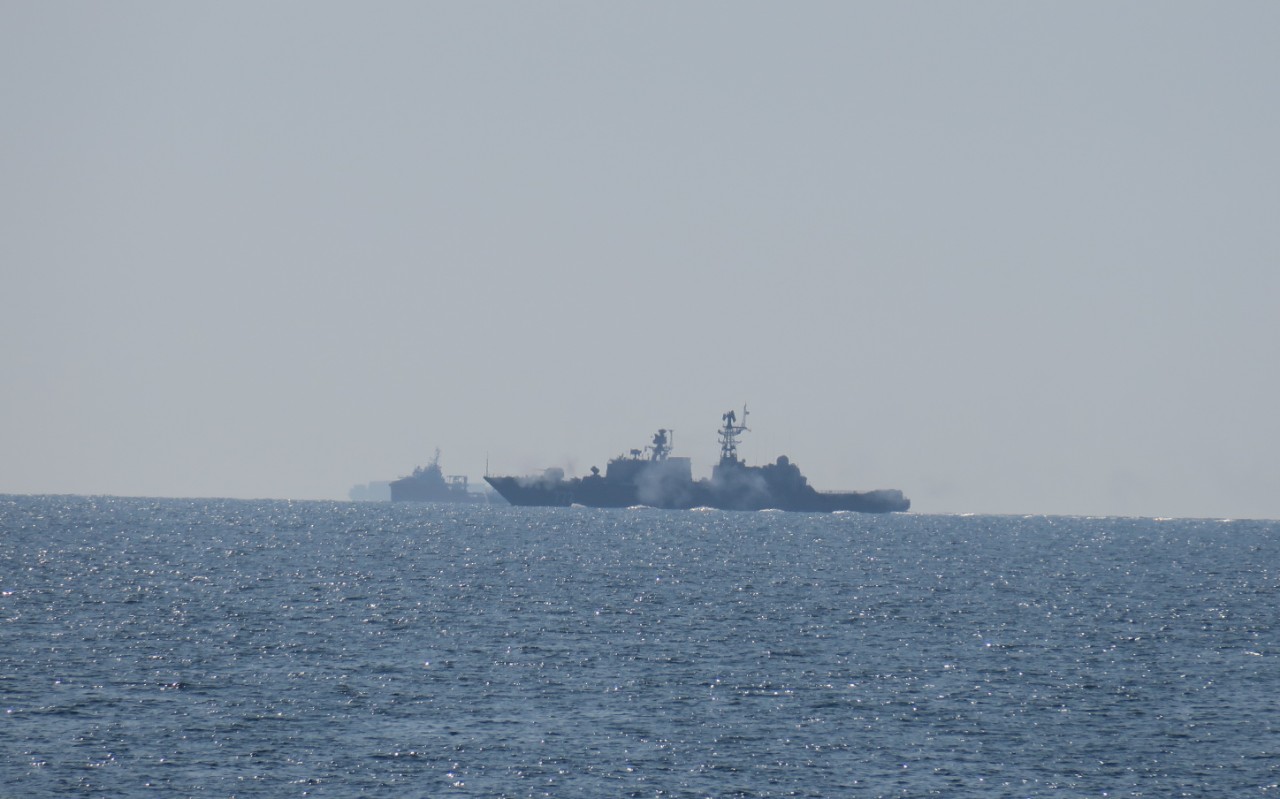
A Russian warship carried out live-fire exercises near the UK while a Royal Navy patrol vessel moved in to monitor its activities, as British forces continued to keep a close watch on increasing Russian naval activity around UK waters.
The Royal Navy said its ships and helicopters spent 21 days in July monitoring Russian warships and submarines operating around the UK and across the North Atlantic. The service also reported that the number of times British forces were activated to track Russian units had increased by 25 per cent during the first seven months of 2026 compared with the same period last year.

Four Royal Navy vessels — HMS Somerset, HMS Tyne, HMS Mersey and HMS Severn — took part in the operations, supported by Wildcat helicopters and Merlin anti-submarine aircraft.
One of the most notable incidents happened on July 20, when the Russian frigate RFN Neustrashimy carried out gunnery exercises outside UK and French territorial waters. HMS Tyne was nearby and moved to within about five nautical miles of the Russian vessel to monitor the exercise and gather intelligence.
The Russian frigate fired around 20 rounds from its 100mm main gun, as well as using its 30mm weapon. Despite the firing taking place relatively close to the British patrol vessel, HMS Tyne continued its surveillance mission.
Lieutenant Commander Sam Fields, the commanding officer of HMS Tyne, said the ship’s continued presence and cooperation with allied forces made it well suited to the operation.
The Royal Navy was also closely monitoring Neustrashimy as it escorted the Russian shadow fleet tanker MV Vulkan through European waters. HMS Severn first tracked another Russian frigate, Admiral Grigorovich, before later taking over from HMS Mersey to monitor Neustrashimy between July 23 and 26.
The British patrol vessel followed the Russian frigate as it escorted the tanker through the Dover Strait towards Ushant. British ships later handed over the monitoring mission as the Russian vessel turned back towards the east.

The operations come as the UK continues to increase its attention on Russia’s so-called shadow fleet, which is used to transport oil and other goods despite international sanctions. Britain has sanctioned more than 500 vessels linked to the trade.
The Royal Navy’s monitoring efforts are not limited to Russian surface ships. HMS Somerset recently returned to Plymouth after spending four months operating in the North Atlantic. The Type 23 frigate travelled more than 24,000 nautical miles while monitoring both surface and underwater activity and supporting the UK’s nuclear deterrent mission.
The latest developments highlight the growing pressure on the Royal Navy as it balances routine patrols, monitoring Russian activity and other international commitments. Britain’s River-class offshore patrol vessels are increasingly being used for surveillance and escort missions, even though they are much more lightly armed than the Russian frigates they sometimes monitor.
For now, the British approach remains focused on tracking and gathering information rather than confrontation, with Royal Navy ships maintaining close observation of Russian movements while avoiding any direct escalation.




