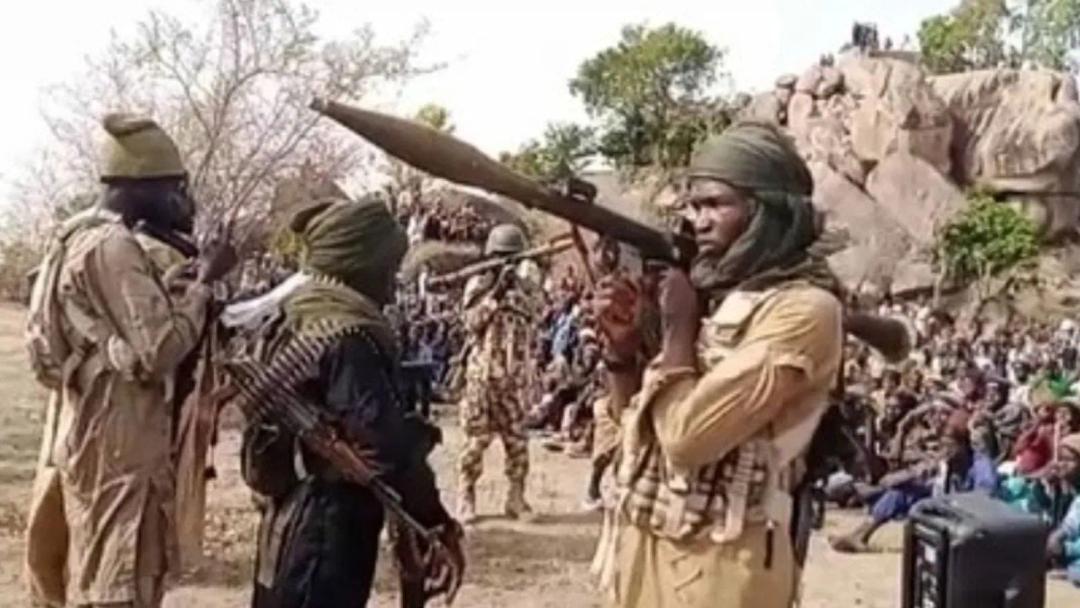
At least 28 people have been killed in an attack on Ungushi community in Kebbe Local Government Area of Sokoto State, raising fresh concerns over the growing threat posed by armed groups linked to Lakurawa.
Among the victims was Imam Aliyu, the chief imam of Ungushi Izala Jumu’at Mosque. His killing has reportedly heightened fear and anger among residents already grappling with repeated attacks in the area.
The latest incident occurred on Sunday evening, just days after another deadly attack on Ungushi and neighbouring communities.
The Sokoto State Police Command confirmed the attack but said it was initially difficult to determine the exact number of casualties. Police spokesman, DSP Ahmed Rufai, later confirmed that 28 bodies had been recovered.
Residents said the attackers stormed the community and opened fire on civilians, killing farmers, traders, religious leaders and other residents.

The repeated violence has reportedly forced many residents to flee their homes, with families seeking safety in other communities.
More attacks reported
The latest killings came shortly after an earlier attack that reportedly began during Jumu’a prayers at about 2:15pm on Friday, August 14.
According to eyewitnesses, armed men on motorcycles entered Ungushi, disrupted worshippers and opened fire on civilians. The attackers reportedly withdrew after the initial assault before returning later and continuing the violence into the early hours of Saturday.
A community leader involved in the burial of victims claimed that 32 bodies were recovered and buried following the earlier attack. He also alleged that 13 attackers were killed by locals during the confrontation.
Several houses, shops and vehicles were reportedly burnt, while the violence spread to nearby communities including Umbutu, Maikurhuna, Gwandi, Girkau and Zugu. Residents also reported the theft of livestock and other valuables.
Four soldiers were reportedly killed during the attacks, according to community sources.
The violence has reportedly displaced thousands of residents, with some fleeing to Kebbe, Jega, Koko, Tambuwal, Aleiro and other communities in Sokoto and neighbouring Kebbi State.
Army steps up operations
The renewed violence has increased pressure on the Nigerian Army and other security agencies to contain the threat and prevent further attacks.
On Sunday, Major General Bemgha Paul Koughna, General Officer Commanding the Nigerian Army’s 8 Division, visited the Forward Operating Base in Kebbe alongside more than 200 soldiers to assess the security situation.
Koughna said the Army had reviewed its security arrangements to prevent terrorist infiltration and protect vulnerable communities.
He assured residents that troops would maintain a strong presence in the area and would not allow terrorists to establish safe havens in Kebbe and surrounding communities.
The GOC also urged residents and community leaders to share information on suspicious movements with security agencies, stressing that local intelligence is crucial to detecting and disrupting attacks.
Police authorities also said additional personnel had been deployed to affected communities, while the Army confirmed that operations against the Lakurawa group were ongoing.
Concerns over intelligence and response
Despite the deployment of security personnel, the repeated attacks have raised questions about the ability of security agencies to obtain timely intelligence and prevent armed groups from reaching vulnerable communities.
The reported movement of large numbers of armed men on motorcycles has also raised concerns about how the attackers are able to operate across remote and difficult-to-access areas.
Security experts and residents face a broader challenge: preventing attacks rather than simply responding after casualties have occurred.
Effective intelligence gathering, rapid-response capabilities, stronger coordination among security agencies and closer cooperation with local communities will be crucial in preventing further violence.
Atiku demands decisive action
The killings have also attracted political criticism, with former Vice-President and African Democratic Congress presidential candidate Atiku Abubakar condemning the attacks.
Atiku said repeated expressions of sympathy were no longer enough and called on the Federal Government to take stronger action to protect citizens.
He urged authorities to improve intelligence gathering, secure vulnerable communities and ensure that those responsible for the killings are brought to justice.
The former vice-president warned that the recurrence of mass killings should be treated as an urgent national security challenge rather than met with condolences after each attack.