
TINUBU’S 2027 ADVANTAGE AS OPPOSITION MACHINERY FAILS THE ELECTORAL TES
By Gloria Fraser, MFR
The most dangerous illusion in politics is to mistake popularity for power. Popularity attracts crowds, dominates conversations and excites social media. Electoral power does something more demanding: it identifies voters, organises communities, deploys agents, protects ballots and converts public enthusiasm into officially recorded votes.
That distinction is the central lesson from three recent Nigerian elections—the Anambra governorship election of November 2025, the Federal Capital Territory Area Council elections of February 2026 and last week’s Osun governorship election.
Individually, each result can be attributed to local candidates, peculiar alliances and different political circumstances. Collectively, however, they reveal an increasingly consistent pattern that Peter Obi, Atiku Abubakar and the wider opposition cannot afford to ignore: their national political visibility remains considerably greater than their demonstrated grassroots electoral strength.
Photo by www.mortenfauerby.dk
©mortenfauerby 2010 – all rights reserved
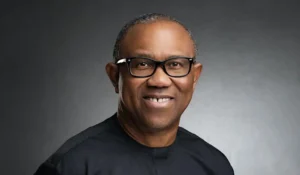



The first warning came from Anambra, Peter Obi’s home state.
In the 2023 presidential election, Obi won Anambra overwhelmingly, securing 584,621 votes—more than 95 per cent of the valid votes cast. That result reinforced the perception that his personal popularity could determine political outcomes across the state.
Yet, in November 2025, while Obi was still associated with the Labour Party, its governorship candidate, George Moghalu, received only 10,576 votes out of 584,054 valid votes—approximately 1.8 per cent. Governor Chukwuma Soludo’s APGA won all 21 local government areas with 422,664 votes.
The numerical contrast is extraordinary: Labour moved from Obi’s 584,621 presidential votes in Anambra in 2023 to 10,576 governorship votes in 2025. Admittedly, presidential and governorship elections are not directly interchangeable. Soludo was a strong incumbent, APGA possesses deep roots in Anambra, and Obi was not personally on the ballot. Nevertheless, a decline of this magnitude exposes the limits of transferring one individual’s appeal to another candidate.
The symbolism became even more striking at Obi’s polling unit. At Polling Unit 019, Agulu Ward 11, Anaocha Local Government Area, where Obi voted, APC’s Nicholas Ukachukwu secured 73 votes, Labour’s Moghalu polled 57 and APGA received 38.
A polling-unit result cannot define Obi’s national relevance. But it raises a legitimate strategic question: if a movement cannot reliably transfer the influence of its principal figure within his immediate political environment, how will it reproduce that influence across Nigeria’s more than 176,000 polling units?
That question became more consequential three months later in the Federal Capital Territory.

At the time of the February 2026 Area Council elections, Obi was still working with Atiku within the ADC-led opposition coalition. Whatever their later separation, the historical point remains important: the FCT contest provided a practical test of their combined political influence while they were together.
Approximately 48 hours before the election, Atiku and Obi appeared jointly on the campaign trail in Abuja, canvassing support for ADC candidates, particularly the party’s AMAC chairmanship candidate, Dr Paul Moses. Their physical participation elevated the election beyond a routine local contest. It became an opportunity to demonstrate that the combined followings of Nigeria’s second- and third-placed 2023 presidential candidates could be converted into electoral strength under one opposition platform.
The anticipated breakthrough did not occur.
APC won five of the six Area Council chairmanships, while PDP captured Gwagwalada. ADC failed to win a chairmanship and obtained only about 7.6 per cent of the aggregated chairmanship vote. In AMAC, where Atiku and Obi had personally campaigned, APC’s candidate secured 40,295 votes, while ADC received 12,109.
The comparison with 2023 is revealing. Obi won the FCT presidential contest with 170,392 votes, representing approximately 74.5 per cent of the vote. Yet, three years later, even the combined campaign intervention of Obi and Atiku could not deliver AMAC or any of the six Area Councils to ADC.
Again, different elections cannot be compared mechanically. Turnout, candidates and political stakes differ. But the organisational question cannot be avoided: where did the presidential enthusiasm go when it was required to support candidates at the grassroots?
If Obi’s 2023 FCT following and Atiku’s national network could not jointly produce a single ADC chairmanship victory, their political capital was either not transferable, not effectively organised or insufficiently connected to local voters. None of those explanations is reassuring for an opposition seeking to defeat an incumbent President.
Then came Osun.
Atiku won Osun during the 2023 presidential election with 354,366 votes, narrowly defeating Bola Tinubu, who received 343,945. That victory established that Atiku possessed a substantial electoral constituency in the state.
ADC therefore entered the 2026 governorship contest with prominent political assets. Atiku personally campaigned for its candidate, Najeem Salaam. Rauf Aregbesola, a former two-term governor of Osun and a leading ADC figure, also participated prominently. Salaam himself was not an obscure candidate; he had served as Speaker of the Osun State House of Assembly.
Despite this combination of national reputation, former incumbency and local political experience, ADC received only 17,180 votes and won no local government area. Governor Ademola Adeleke of Accord secured 511,067 votes, while APC’s Bola Oyebamiji obtained 444,815.
ADC’s total represented less than two per cent of the votes cast. More strikingly, the party’s 17,180 votes amounted to less than five per cent of the 354,366 votes Atiku secured in Osun in 2023.
Governorship elections differ from presidential elections, but political organisation is supposed to leave traces across electoral cycles. A party preparing to challenge for the presidency should demonstrate some capacity to retain, mobilise or inherit the constituencies associated with its leading figures. In Osun, that evidence was barely visible.
Put the three elections together and the pattern becomes difficult to dismiss.
In Anambra, Labour fell from Obi’s 584,621 presidential votes to 10,576 governorship votes and lost his polling unit. In the FCT, Obi and Atiku campaigned together for ADC, yet their combined intervention produced no Area Council chairmanship. In Osun, a state Atiku carried in 2023, his campaign appearance and Aregbesola’s local influence could deliver only 17,180 votes to ADC.
Three elections. Three different territories. Three distinct political circumstances. One recurring warning: political personality is not the same as political organisation.
Obi demonstrated remarkable national appeal in 2023, particularly among younger, urban and reform-minded Nigerians. Atiku retains extensive political relationships accumulated over several decades. But personal popularity cannot substitute for ward executives, canvassers, polling-unit agents, transportation, voter data, collation systems and the ability to defend votes lawfully.
A presidential candidate cannot personally visit every community. A rally cannot monitor every polling unit. Social-media followers cannot replace agents at collation centres. Political excitement does not automatically become votes—and votes do not protect or count themselves.
This is where APC’s principal advantage lies. It combines federal incumbency with an established national party organisation and extensive networks of governors, legislators, council chairmen and ward operatives. These structures cannot compel voters and do not guarantee victory. However, they give APC a nationwide mechanism for converting political support into electoral participation.

Nigeria has witnessed the defeat of an incumbent party before, but the 2015 opposition victory offers an instructive comparison. Muhammadu Buhari’s popularity alone had failed to win the presidency in previous elections. Victory came only after the merger that produced APC combined his northern support with organised political structures in the Southwest and other regions. Personality became power only when popularity acquired machinery.
That is the comparative lesson facing Obi and Atiku. The opposition cannot defeat an incumbent merely by assembling recognisable politicians or relying on public dissatisfaction with economic hardship and insecurity. Anger is political raw material; it is not an electoral organisation. A despondent electorate does not automatically vote for the opposition. It must be persuaded, mobilised and offered a credible alternative.
Anambra, the FCT and Osun do not constitute prophecies of defeat. They are warning signals. But warning signals become dangerous when repeatedly ignored.
The opposition already has personalities, publicity and public grievances to exploit. What it has yet to prove is that it possesses the machinery to carry those advantages into Nigeria’s wards and polling units.
Until that machinery becomes visible, the opposition’s loudest strength may remain its greatest illusion. Elections are not won by the politicians who dominate the national conversation. They are won by the organisations that find the voters, bring them to the polls, protect their choices and count the votes.
After Anambra, the FCT and Osun, the question facing Obi, Atiku and the opposition is no longer whether they are popular. It is whether their popularity has an electoral address. Without one, the road to 2027 may attract enormous crowds—but still lead nowhere.
Nigerians must understand that elections are won through organisation, structure and the disciplined conversion of support into votes—not by sentiment or social-media excitement. Elections in Anambra, the FCT and Osun confirmed this reality: leading opposition figures could not translate national popularity into corresponding grassroots votes. As National Patriots previously observed, Tinubu possesses the structure, organisation and nationwide political machinery required to win. APC’s political capital across the North, South, West and East cannot be underestimated in any credible electoral calculation.
Princess Gloria Adebajo-Fraser MFR.
Former Special Adviser to Former President Goodluck Jonathan. GCFR.
President, The National Patriots.