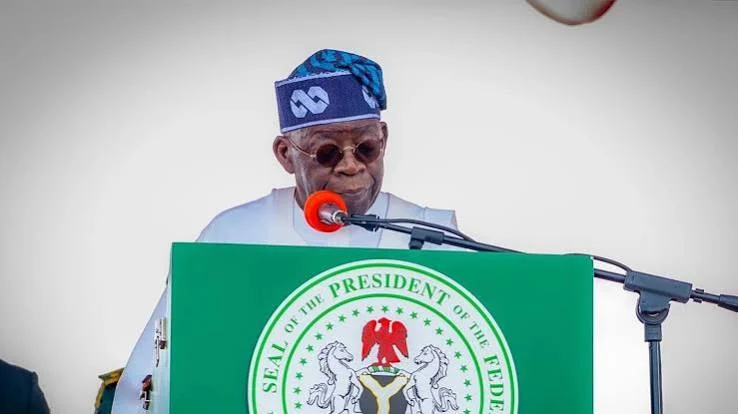
President Bola Ahmed Tinubu has launched a fresh political offensive ahead of the 2027 elections, taking aim at former Vice-President Atiku Abubakar and former Osun State Governor Rauf Aregbesola.
Tinubu made the remarks on Thursday at the Presidential Villa in Abuja while receiving Osun State Governor Ademola Adeleke, who visited the president days after securing re-election in the August 15 governorship election.
The meeting came shortly after campaigns for the 2027 presidential and National Assembly elections officially commenced on August 19, setting the stage for a new political battle involving Tinubu and several opposition figures.
One of the major issues raised by the president was Atiku’s recent promise to restore petrol subsidy if elected president in 2027.

Tinubu dismissed the proposal, describing it as evidence of what he called a serious lack of understanding of governance and economic management.
“I saw one of my opponents, Atiku Abubakar, now say he will go back to subsidy. I read it,” the president said.
He added that Atiku’s position demonstrated what he described as “serious ignorance on governance and economy.”
Tinubu argued that before he assumed office, several states were struggling to meet their financial obligations, including the payment of workers’ salaries and pensions.
“Before I came here, 27 states were unable to pay salaries, not to even talk of pensioners,” he said.
The president also took a direct swipe at Aregbesola, who governed Osun State between 2010 and 2018.
“In your state, I know a man that I raised who is nicknamed half salary,” Tinubu said.
The remark was an apparent reference to the “half salary” controversy that characterised parts of Aregbesola’s administration, when Osun faced serious financial difficulties and struggled to pay full salaries to civil servants.
Tinubu used the situation to reinforce his argument that Nigeria could no longer sustain the former petrol subsidy regime.
He said the policy had placed enormous pressure on government finances, leaving states dependent on federal assistance to meet basic obligations.

According to the president, resources previously used to subsidise petrol could instead be directed towards infrastructure, housing, education, healthcare and other areas that directly affect citizens.
He cited road construction and rehabilitation, housing projects, school improvements, healthcare delivery and the training of teachers and health workers as areas where government resources could be better deployed.
Tinubu has consistently defended his decision to remove petrol subsidy shortly after assuming office in May 2023, arguing that the policy was necessary to increase government revenue and reduce the financial burden on the government.
The subsidy removal, however, remains one of the most contentious aspects of his administration’s economic reforms.
Atiku has repeatedly criticised the policy, arguing that Nigerians have not received sufficient benefits from the savings generated since the subsidy was removed.
The former vice-president recently pledged to restore the subsidy if elected in 2027, while questioning how the money saved by government had been utilised.
Atiku argued that the funds should have been channelled into poverty reduction, education, security and the creation of opportunities for young Nigerians.
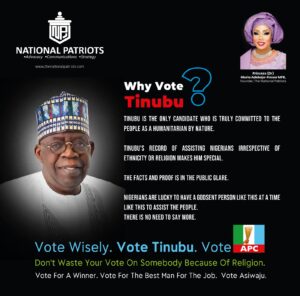
Tinubu’s latest comments have therefore brought the fuel subsidy debate firmly into the early stages of the 2027 campaign, with both political camps presenting sharply different positions on the policy and its economic consequences.
The president’s remarks also came against the backdrop of the recent Osun governorship election, in which Adeleke defeated the All Progressives Congress candidate, Bola Oyebamiji.
Adeleke secured 511,067 votes against Oyebamiji’s 444,815 votes, retaining control of Osun State.
His visit to the Presidential Villa has now provided the backdrop for Tinubu’s first major political attack on key opposition figures since the formal commencement of the 2027 campaign season.