

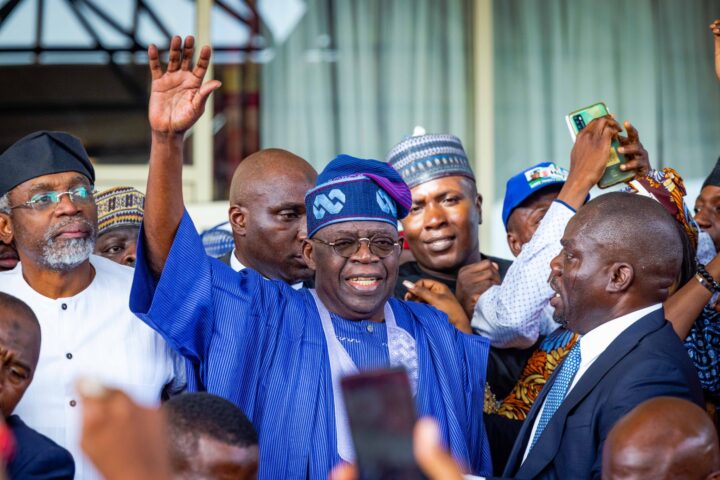
President Bola Tinubu’s approach to governance is being examined through the lens of the reforms he pursued as governor of Lagos State, with questions emerging over the legacy he will leave behind at the federal level.

A recent analysis highlights how Tinubu’s Lagos administration focused on improving revenue generation, public administration, transportation, infrastructure, technology and accountability. His approach involved identifying major problems, breaking them into manageable areas, assembling capable teams and introducing reforms designed to continue beyond his tenure.
The analysis also points to Tinubu’s belief that successful reforms should produce visible results for citizens rather than rely solely on political promises. His experience in Lagos, where internally generated revenue reportedly increased significantly during his tenure, is presented as an example of this approach.

However, applying the same model nationally presents a much bigger challenge. Nigeria has a more complex political structure, wider economic pressures and problems that extend far beyond those faced by Lagos State.

The central issue, therefore, is whether Tinubu can build institutions and systems capable of functioning effectively without depending on him personally. The analysis argues that a leader’s lasting legacy should be measured not only by what is achieved while in office, but also by the institutions, systems and people left behind after leaving power.




