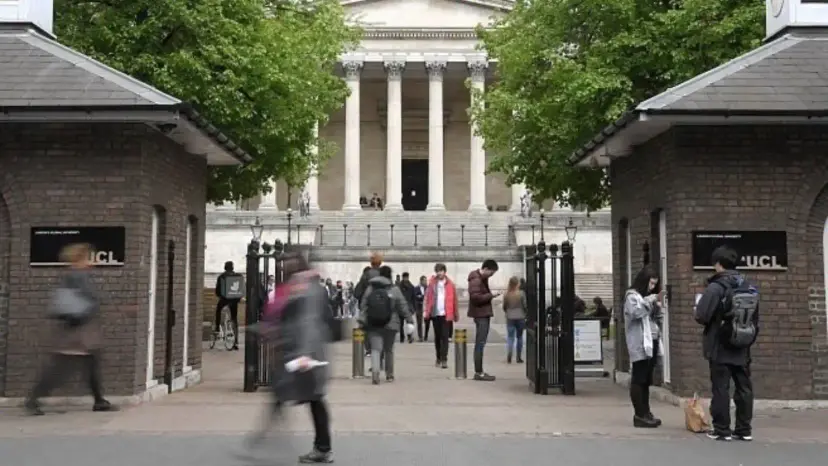
Some universities in the United Kingdom have withdrawn admission offers made to Nigerian students following stricter student visa regulations and a sharp increase in visa refusals by the UK Home Office.

According to a Financial Times report, universities withdrew offers, particularly to Nigerian and Pakistani applicants, during the first half of 2026. The institutions reportedly decided to avoid breaching immigration compliance requirements that could restrict their ability to recruit international students.
The report revealed that 10.5 per cent of UK study visa applications were withdrawn during the first six months of 2026, compared with 2.3 per cent in the corresponding period of 2025 and 0.4 per cent in 2023.
Nigeria recorded a significant increase, with 22.7 per cent of study visa applications withdrawn in the first half of 2026, up from 4.5 per cent during the same period in 2025.

UNIVERSITIES FACE STRICTER IMMIGRATION RULES
The increase in withdrawn applications comes as the UK government intensifies its scrutiny of international student recruitment and visa applications.
Under the revised rules, universities risk losing permission to recruit international students if more than five per cent of prospective students they admit subsequently have their visa applications rejected. The threshold was previously 10 per cent.
The stricter requirements have reportedly prompted some universities to withdraw admission offers pre-emptively to protect their recruitment status.

Data from visa processing company Enroly indicated that nearly half of UK universities had visa refusal rates exceeding the new five per cent threshold, potentially putting their ability to recruit overseas students at risk.
UNIVERSITY LEADERS RAISE CONCERNS
University leaders have expressed concerns about the increasing unpredictability of the visa process and its implications for international education.
Jamie Arrowsmith, director of Universities UK International, said visa processing had become less predictable, adding that some refusals appeared to be based on inconsistent or subjective assessments.
Sir David Bell, vice-chancellor of the University of Sunderland, also noted that the rise in visa refusals had prompted universities to reconsider recruitment from certain international markets.

Meanwhile, James Miller, vice-chancellor of the University of the West of Scotland and convener of Universities Scotland, criticised some visa refusal decisions and warned that institutions were reducing recruitment from certain regions to remain within the required limits.
POSSIBLE IMPACT ON STUDENTS AND UNIVERSITIES
The development has created uncertainty for Nigerian students seeking higher education opportunities in the UK, particularly those who have already received admission offers.

Universities are also concerned about the financial and operational consequences of declining international student numbers. Reduced enrolment could lead to restructuring, job losses and the closure of some courses or campuses.
The situation highlights the growing challenges facing prospective Nigerian students as UK institutions attempt to balance international recruitment with increasingly strict immigration compliance requirements.
Students planning to study in the UK are therefore encouraged to ensure that their applications and supporting documents are accurate, complete and consistent, while carefully monitoring communications from their chosen institutions and the relevant immigration authorities.