The Kenyan Government has announced a shift in its agricultural strategy, moving beyond increasing food production to ensuring that farming becomes more profitable, creates jobs and improves the livelihoods of farmers.

Deputy President Kithure Kindiki said the administration was working to reduce production costs, increase productivity, strengthen agricultural markets and encourage local processing to ensure that farmers earn better returns from their investments.
Speaking at the opening of the Agriculture and Food Systems Transformation Summit 2026 in Nairobi on Wednesday, 7 October, Prof Kindiki said agriculture remained central to the Government’s Bottom-Up Economic Transformation Agenda (BETA). He noted that the sector supports millions of households, supplies raw materials to industries, generates export earnings and provides employment.
The Government has introduced several measures to reduce the cost of farming. According to the Deputy President, the price of a 50-kilogramme bag of fertiliser has fallen from KSh7,000 in 2022 to KSh2,000, while the price of certified maize seed has dropped by 50 per cent, from KSh300 to KSh150 per kilogramme. The cost of sexed semen used in dairy breeding has also decreased from KSh8,000 to KSh1,400 per dose.

Farmer registration has expanded significantly, with approximately 7.2 million crop farmers and three million livestock keepers registered under the Government’s agricultural data systems. The initiative is designed to improve access to subsidised inputs, agricultural services and other forms of support.
Prof Kindiki stressed, however, that the success of these interventions should be measured by their impact on productivity and farmers’ incomes rather than the number of people registered. He said the Government intended to strengthen agricultural insurance, expand access to finance and extension services, reduce food imports and improve the performance of export-oriented agricultural value chains.
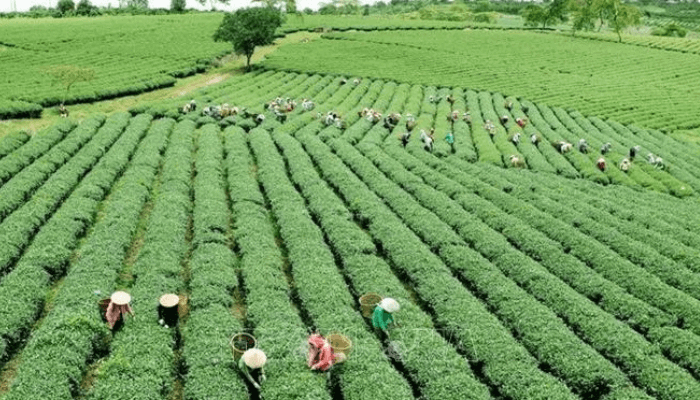
Kenya has also recorded growth in several agricultural industries. Tea earnings have reportedly increased from KSh138 billion to KSh180 billion, while the value of meat exports has risen from KSh8.9 billion to KSh12.9 billion.

Milk production has grown from 4.6 billion litres to 5.2 billion litres, while the value of dairy products has increased from KSh4.9 billion to KSh8.9 billion. The Government also reported that Kenya had become Africa’s leading exporter of processed milk.
In the livestock sector, approximately 8.9 million cattle have been vaccinated under an ongoing programme targeting an estimated 22 million cattle and 50 million sheep and goats. The initiative aims to control Foot and Mouth Disease in cattle and Peste des Petits Ruminants, commonly known as goat plague, in sheep and goats.
The Government is also investing in agricultural processing and manufacturing through 17 completed County Aggregation and Industrial Parks. These facilities are expected to improve the collection, storage, processing and marketing of agricultural produce.

Prof Kindiki said agriculture must be treated as an interconnected economic system, linking research, seed production, farm inputs, financing, storage, processing and distribution. He called for a model that connects production directly to industrial processing and markets, allowing the country to retain more value from its agricultural resources.
He further urged the private sector to play a greater role in agricultural development, with the Government concentrating on creating an enabling environment for investment, innovation and enterprise.
Agriculture and Livestock Development Cabinet Secretary Mutahi Kagwe said Kenya needed to increase domestic food production and reduce its dependence on imports, particularly wheat. He noted that climate change and related shocks continued to challenge farmers, making stronger food systems and more resilient agricultural practices essential.
The Government is also expanding fisheries and aquaculture to improve food supplies and create economic opportunities. Support measures include fish landing facilities, boats, cage-farming equipment, aquaculture infrastructure and fingerling production. Nine fish landing sites have been established between Migori and Busia, while additional facilities have been developed along the Indian Ocean and Lake Victoria.

According to Prof Kindiki, the value of Kenya’s fisheries sector has increased from KSh37 billion to KSh59 billion, while fish production rose from 173,000 metric tonnes in 2022 to 189,000 metric tonnes in 2025.
The Government is also strengthening livestock identification and traceability systems to help combat cattle rustling and livestock theft while improving animal health monitoring throughout the meat supply chain.
Technology and research are expected to play an increasingly important role in the transformation of agriculture. Cabinet Secretary Kagwe highlighted smart farming techniques, including drone technology and precision agriculture, which enable farmers to apply water, fertilisers and pesticides according to the specific needs of their crops.
The Kenya Agricultural and Livestock Research Organisation is also supporting the development of improved crop varieties, animal breeds and farming technologies. Meanwhile, the expansion of agricultural extension services is intended to equip farmers, particularly young people entering the sector as agricultural entrepreneurs, with the skills and knowledge needed to succeed.
The Government’s central objective is to ensure that agricultural growth translates into tangible economic benefits for farming households. Rather than focusing solely on producing more food, Kenya is seeking to build a more commercially viable agricultural sector in which lower costs, higher productivity, local processing and better market access deliver improved incomes, employment opportunities and greater national food security.