

Labour leaders and pro-democracy activists have called on Nigerians to unite against rising petrol prices and worsening economic hardship, accusing the Federal Government of pursuing policies that deepen poverty among workers and ordinary citizens while benefiting a privileged few.
The call was made at a memorial celebration and symposium held in Lagos in honour of the late activist, Abiodun Aremu. Participants included the Nigeria Labour Congress (NLC), human rights lawyer Femi Falana, SAN, and members of the Joint Action Front (JAF).

The speakers warned that rising petrol prices had reduced workers’ purchasing power, increased the cost of living and pushed millions of Nigerians into greater financial difficulties.
NLC BLAMES SUBSIDY REMOVAL FOR WORSENING HARDSHIP
NLC President Joe Ajaero, represented by the union’s Acting General Secretary, Benson Upah, said the removal of petrol subsidies had placed a heavy burden on workers and the wider population.
He explained that rising transport fares, food prices and electricity tariffs, alongside the depreciation of the naira, had made daily life increasingly difficult for Nigerians.
According to the labour union, the price of a bag of rice, which previously sold for about ₦30,000, had risen to more than ₦80,000. Similarly, the price of a loaf of bread had increased from approximately ₦500 to ₦1,500.

The NLC also argued that rising electricity costs had forced some small businesses to close, while the weakening naira had made imported medicines, industrial materials and other essential goods more expensive.
Ajaero attributed the situation to economic policies that, according to him, were implemented without adequate consultation or sufficient measures to protect vulnerable citizens.
He maintained that the consequences of these policies were being felt most severely by workers and low-income households struggling to meet their basic needs.
NLC ISSUES TWO-WEEK ULTIMATUM OVER PETROL PRICES
The labour union disclosed that it issued a two-week ultimatum to the Federal Government on October 9, 2026, demanding an immediate reduction in petrol prices.

Ajaero said the demand was intended to address the widening gap between workers’ earnings and the rising cost of living.
He argued that petrol prices should be brought down to a level that reflects the purchasing power of Nigerians, particularly those earning the national minimum wage of ₦70,000 monthly.
The NLC president noted that when the current minimum wage was introduced in July 2024, petrol sold for approximately ₦668.30 per litre. However, prices had subsequently risen above ₦1,400 per litre in many parts of the country.
He described the situation as unacceptable, arguing that the minimum wage had lost much of its purchasing power amid rising living costs.

Beyond reducing petrol prices, the NLC called on the Federal Government to stabilise the naira, control inflation and strengthen domestic refining capacity.
The union also questioned whether the expected benefits of removing fuel subsidies, particularly increased investment in local refining, had been adequately delivered to Nigerians.
FALANA QUESTIONS GOVERNMENT’S FUEL PRICING POLICY
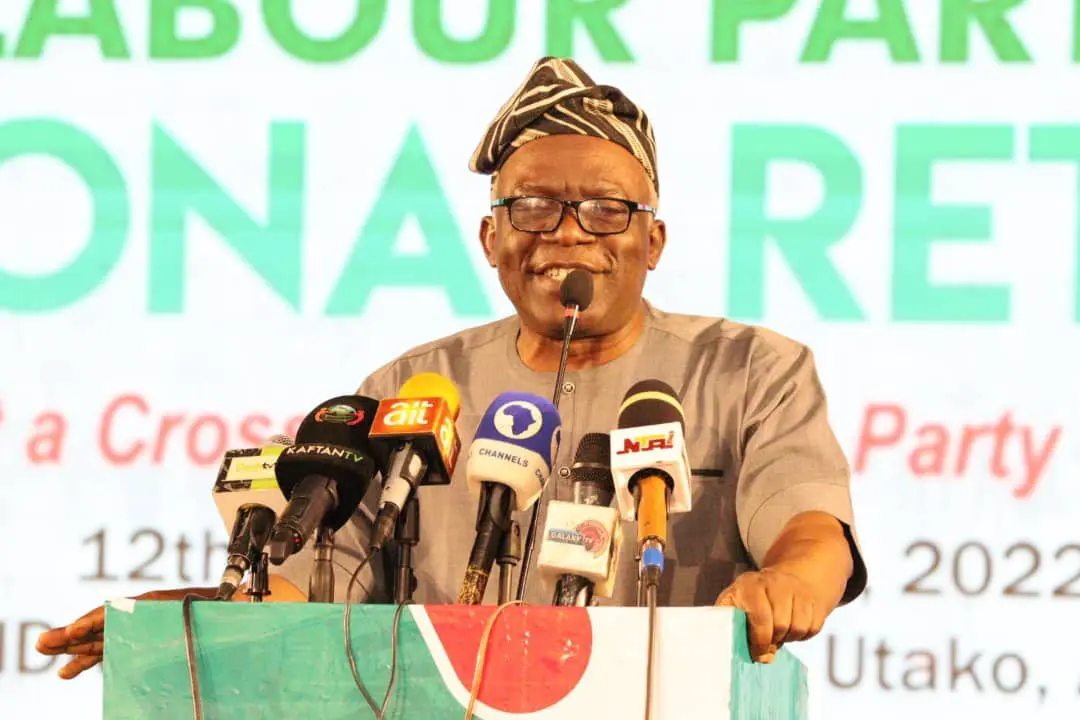
Femi Falana, who chaired the symposium, challenged the argument that removing petrol subsidies was the only option available to the government.
He pointed out that several countries, including major economies such as the United States, Germany and France, continued to subsidise fuel, education, healthcare and other essential services.

Falana argued that the government should consider alternative economic policies capable of protecting citizens from rising costs rather than treating subsidy removal as an unavoidable decision.
He also criticised the high cost of petrol in Nigeria, questioning the government’s position on the commodity’s landing cost.
According to him, even if the landing cost of petrol were reduced, additional transportation and distribution expenses would continue to affect the final price paid by consumers in different parts of the country.
Falana also referred to political discussions surrounding possible reductions in petrol prices, noting that some political figures had reportedly proposed selling the product for less than ₦500 per litre if given the opportunity to govern.
His remarks reinforced the call for the government to reconsider its approach to fuel pricing and introduce policies that would ease the burden on ordinary Nigerians.

₦70,000 MINIMUM WAGE CAN BUY ONLY 50 LITRES OF PETROL — JAF
Rashidat Adesina of the Joint Action Front highlighted the impact of rising petrol prices on low-income earners.
She recalled that petrol sold for approximately ₦165 per litre before the subsidy was removed in 2023, after which prices rose to around ₦500 and later ₦600 per litre.
According to her, petrol prices had subsequently climbed to between ₦1,350 and ₦1,400 per litre in some locations.
Adesina questioned how workers earning the national minimum wage could cope with such increases while meeting their household expenses.
She explained that a worker earning ₦70,000 monthly could purchase only 50 litres of petrol at a price of ₦1,400 per litre.

She noted that this calculation did not account for rent, food, school fees, transportation, healthcare and other essential expenses.
Adesina argued that the comparison demonstrated how rising energy costs had weakened the ability of workers to provide for themselves and their families.
She further expressed concern about the growing economic divide, arguing that workers, traders, artisans, young people and other low-income groups were bearing a disproportionate share of the burden while some sections of the business community continued to accumulate wealth.

ACTIVISTS CALL FOR A REVIEW OF ECONOMIC POLICIES
The speakers collectively called on the Federal Government to review its economic policies and introduce measures that would provide meaningful relief to struggling Nigerians.
They argued that reducing petrol prices, improving workers’ wages, stabilising the naira, controlling inflation and investing in domestic refining should form part of a broader strategy to address the country’s economic difficulties.
The activists maintained that economic reforms should not leave workers and vulnerable households struggling to afford basic necessities.
They urged Nigerians to unite in demanding policies that promote fairness, protect livelihoods and ensure that the benefits of economic development are more widely shared.




