The initiative is aimed at strengthening local manufacturing, creating jobs, increasing export earnings and improving Nigeria’s position in the global cocoa value chain.
The facility, Premium Cocoa Products Ile-Oluji Limited, was commissioned in 1980. According to the company’s Managing Director, Sunday Bamikole, it is the only surviving first-generation cocoa-processing factory in Nigeria.

Johnvents took over the plant in February 2023 after its operations had declined significantly. Although the factory had an installed capacity of 30,000 metric tonnes annually, it was processing fewer than 2,000 metric tonnes of cocoa per year at the time.
The company subsequently began a recovery programme to stabilise production, restore the factory’s capacity and meet growing demand for locally processed cocoa products.
RESTORING COCOA’S INDUSTRIAL VALUE
Cocoa was once a major source of wealth for Nigeria’s former Western Region, supporting farmers, traders and related industries. However, the country’s cocoa-processing sector has struggled, leaving much of its agricultural potential underutilised.
Bamikole noted that other processing facilities, including Cocoa Industries Limited in Ikeja and a factory established by the Oyo State Government in Ede, had become largely inactive.

Against this background, the revival of the Ile-Oluji factory represents an opportunity to rebuild Nigeria’s domestic processing capacity and reduce dependence on exporting raw cocoa beans.
According to Bamikole, demand for the factory’s products increased substantially following the takeover, with the company receiving capacity requests amounting to 300 per cent within six months.
The company also disclosed that its operations had supported more than 40,000 farmers.
TURNING RAW COCOA INTO INDUSTRIAL PRODUCTS
The factory processes cocoa beans into several products, including cocoa nibs, cocoa liquor, cocoa butter, cocoa cake and cocoa powder.

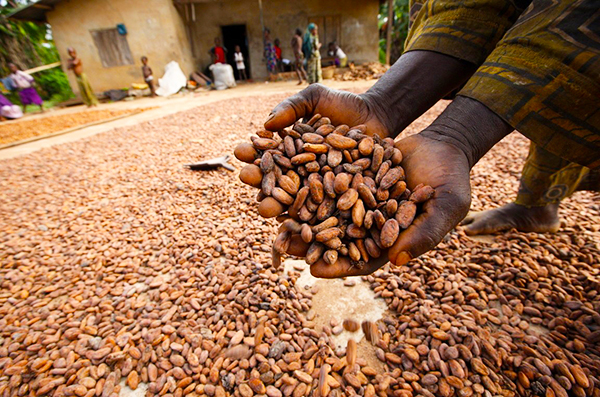
The process begins with harvesting mature cocoa pods, extracting the beans, fermenting them for five to seven days and drying them before transportation to the factory.
At the facility, the beans undergo cleaning to remove stones, wood particles and other impurities. Their moisture content is also reduced to improve processing efficiency.
The beans are subsequently broken and separated from their shells through a process known as winnowing. The edible portions, called cocoa nibs, are then treated and roasted to develop the flavour, colour and aroma associated with chocolate.
The roasted nibs are ground into cocoa liquor, which is mechanically pressed to separate cocoa butter from the remaining cocoa solids. The solid residue is processed into cocoa cake and eventually ground into cocoa powder.
This process enables the company to generate higher-value industrial ingredients from locally produced agricultural commodities.

EXPORTS, JOB CREATION AND ECONOMIC BENEFITS
Bamikole said the factory’s growing operations were contributing to foreign-exchange earnings through exports while creating employment opportunities for people in Ile-Oluji and surrounding communities.
The economic benefits also extend to local traders and service providers who supply goods and services to factory workers and other businesses linked to its operations.
He disclosed that 99.99 per cent of the factory’s cocoa butter was exported, highlighting the importance of international markets to the business.
However, sustaining this growth will depend on consistent production, reliable supplies of quality cocoa beans and the ability to meet customers’ requirements.

EXPANSION TARGETS FOR 2026 AND 2027
Johnvents is pursuing a phased expansion programme to increase production and improve the factory’s contribution to Nigeria’s economy.
The immediate target is to restore the facility to its installed capacity of 30,000 metric tonnes annually, before expanding to 45,000 metric tonnes.
Bamikole said support from the Bank of Industry in 2024 helped accelerate the company’s capital investment plans.
The company expects to reach an annual processing capacity of 30,000 metric tonnes by the fourth quarter of 2026 and 45,000 metric tonnes by December 2027.
These remain targets, with their achievement dependent on investment, operational improvements, adequate supplies of cocoa beans and sustained market demand.

FROM COMMODITY TRADING TO AGRIBUSINESS
Johnvents Group founder, John Alamu, explained that challenges faced by farmers influenced his decision to move beyond commodity trading into processing and manufacturing.
According to Alamu, many farmers struggle to access financing and secure competitive prices for their produce. These challenges informed the development of the company’s operations across the agricultural value chain.
He said the acquisition of struggling cocoa-processing facilities provided an opportunity to expand local manufacturing, particularly in Ondo State, Nigeria’s leading cocoa-producing state.
Alamu also disclosed that the group had diversified into other products, including soya beans, soya oil, animal feed, seasoning, chocolate and consumer beverages.
He said the group operated 10 factories in Ondo State, employed more than 4,000 people and had a presence in 19 countries, with over 60 products.

QUALITY CONTROL AND LOCAL FOOD PRODUCTION
Meanwhile, the Managing Director of Noble-Eagle Industries Limited, Owo, Dr Tomi Omotosho, highlighted the importance of food quality, consumer safety and locally sourced ingredients in manufacturing.
Omotosho said the company was working to make quality food products more accessible by reducing the number of intermediaries between farmers and consumers.
She stressed that profitability should not come at the expense of product quality and explained that regular checks were conducted to ensure that manufactured products met required standards, including correct packaging and quantities.

A NEW OPPORTUNITY FOR NIGERIA’S COCOA SECTOR
The planned expansion of the Ile-Oluji factory reflects the wider opportunity to transform Nigeria’s agricultural resources into industrial wealth.
Increasing domestic cocoa processing could create more employment, improve farmers’ market access, strengthen export earnings and enable the country to capture greater value from its cocoa production.
However, achieving these benefits will require sustained investment in processing facilities, stronger links with farmers, improved post-harvest handling and a dependable supply chain.
If Johnvents achieves its expansion targets, the Ile-Oluji facility could play a significant role in strengthening Nigeria’s cocoa-processing industry and advancing the country’s broader efforts to promote agro-industrial development.