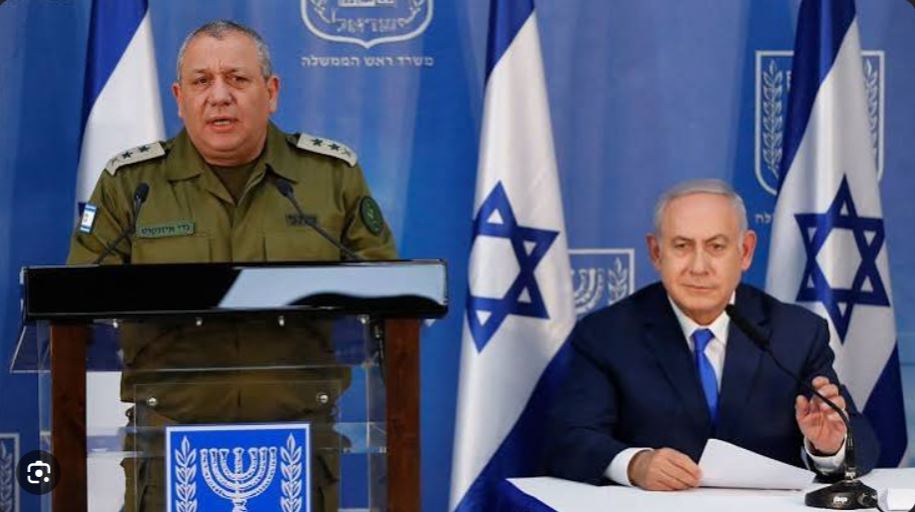
Former Israel Defense Forces (IDF) chief of staff Gadi Eisenkot has emerged as a major challenger to Prime Minister Benjamin Netanyahu ahead of Israel’s October 27, 2026, general election, as political competition intensifies over the country’s future leadership.
Eisenkot, 66, leads the centrist Yashar party and has gained support among voters seeking an alternative to Netanyahu’s longstanding leadership. Recent opinion polls have placed his party ahead of Netanyahu’s Likud party, although neither side is assured of securing enough parliamentary seats to form a government independently.

A former lieutenant general, Eisenkot served as chief of staff of the Israeli military from 2015 to 2019 after spending more than four decades in military service. His extensive security background has become a central feature of his political profile as voters consider the country’s security challenges and leadership following the October 7, 2023, Hamas-led attacks.
Eisenkot joined Netanyahu’s war cabinet after the attacks but resigned about eight months later, accusing the prime minister of failing to establish a comprehensive strategy for the war in Gaza.
His family has also suffered significant losses during the conflict. His son, Gal Meir Eisenkot, was killed while serving in Gaza in December 2023, while two of his nephews also died fighting in the war.

Political observers say his military experience, personal sacrifices and public image have helped distinguish him from Netanyahu. However, some analysts have also questioned the decisions made by Israel’s military leadership before the October 7 attacks, noting that Eisenkot bears part of the responsibility associated with his former role.
Eisenkot has maintained a firm position on national security, supporting the dismantling of Hamas’ military capabilities and opposing Palestinian statehood. He has also criticised Jewish extremist violence in the occupied West Bank and expressed concerns about Netanyahu’s far-right coalition partners.
His political rise has attracted attention because of the differences between his background and that of Netanyahu, who has dominated Israeli politics for much of the past two decades.

Despite the momentum reported in opinion polls, Israel’s proportional electoral system means that winning the most seats does not automatically guarantee the premiership. The leading party must secure sufficient support from other parties to command a majority of at least 61 seats in the 120-member Knesset.
As election day approaches, the contest between Eisenkot and Netanyahu is shaping up as a significant test of public confidence in Israel’s current leadership and the direction the country will take on security, governance and relations with the international community.