

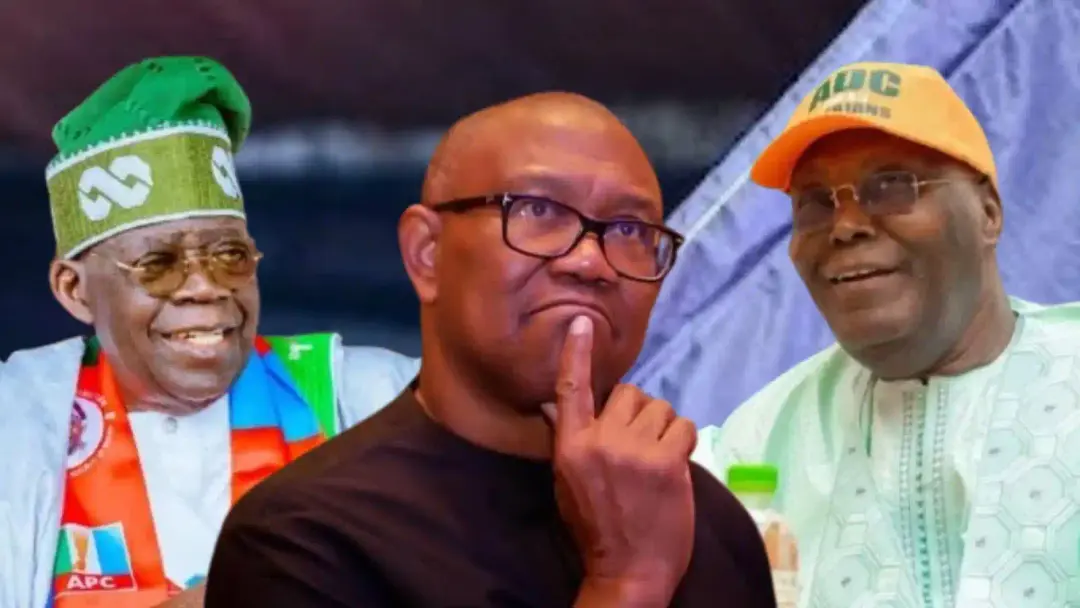
Obi, who gained significant political support through the Obidient Movement during the 2023 presidential election, has witnessed some former allies distance themselves from his political activities, with others reportedly aligning with rival parties and candidates.

The developments have raised questions about the strength of his political support network and the level of unity within the movement that played a significant role in his previous presidential campaign.
One of the notable developments involves Yunusa Tanko, a prominent figure associated with the Obidient Movement, whose recent political decisions have attracted attention among Obi’s supporters.
The situation has also brought renewed attention to disagreements involving other political figures who previously worked alongside Obi.

The development involving Yunusa Tanko is particularly significant because he previously served as the national coordinator of the Obidient Movement and was one of the prominent figures associated with Obi’s 2023 presidential campaign.
Tanko was unveiled on November 11, 2026, as the National Coordinator of the Social Democratic Party’s (SDP) Presidential Campaign Council, where he is expected to work for the party’s presidential candidate, Adewole Adebayo.
He had earlier resigned from his position as Obi’s political adviser for Northern Nigeria on October 30, 2026. Following his new appointment, Tanko reportedly expressed dissatisfaction with his experience in Obi’s political camp, alleging that he had suffered a breakdown of trust and loyalty.

Another notable departure involves Yusuf Datti Baba-Ahmed, Obi’s running mate in the 2023 presidential election. Datti left the Labour Party in April 2026 and joined the Peoples Redemption Party (PRP), while also expressing reservations about Obi’s political direction.
Other former associates, including Doyin Okupe, Kenneth Okonkwo, Valentine Ozigbo and Isaac Balami, have also moved away from the political structure that supported Obi during the 2023 election. Their subsequent political alignments have included support for the APC and other political platforms.
Religious leader Isa El-Buba, who previously supported Obi, has also withdrawn his backing and declared support for SDP presidential candidate Adewole Adebayo, citing concerns about Obi’s leadership approach.
Meanwhile, some former members of the Obidient Movement have openly supported other presidential aspirants. However, political disagreements and endorsements should not automatically be interpreted as formal defections from the movement.
While Obi’s political camp has experienced these departures, President Bola Tinubu’s APC has continued to attract politicians from opposition parties, including several serving governors and influential political figures.
Former Vice-President Atiku Abubakar has also attracted established opposition politicians through the African Democratic Congress (ADC), although the opposition coalition has experienced internal disagreements of its own.
Despite these developments, Obi’s political alliance with former Kano State Governor Rabiu Kwankwaso could provide an opportunity to strengthen his national political support ahead of the 2027 elections.
In the 2023 presidential election, Obi secured 6.1 million votes, while Kwankwaso received approximately 1.5 million votes. Their combined support exceeded 7.5 million, although past election figures do not necessarily determine future voting patterns.
The growing political realignments have raised questions about the ability of the Obidient Movement to maintain its organisational structure and retain experienced campaign figures ahead of another presidential contest.
Political observers will be watching how Obi responds to the developments, particularly regarding the need to strengthen grassroots organisation, maintain relationships with political associates and build a broader national coalition.
Although the departure of prominent supporters presents challenges, it does not necessarily mean that ordinary members of the Obidient Movement have abandoned Obi.
As the 2027 general elections approach, the ability of political parties and candidates to maintain alliances, build effective structures and mobilise supporters will remain an important part of the electoral contest.