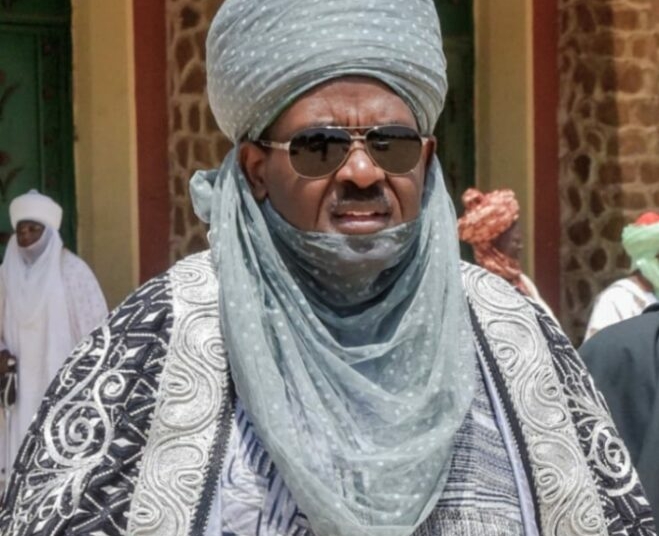
Ten years in a position of leadership provide an opportunity to assess performance, evaluate achievements and determine how effectively a leader has fulfilled the trust placed in him. In traditional institutions, where authority is closely connected to culture, history and public confidence, such milestones carry particular significance.

This is the context in which the tenth anniversary of Ambassador Ahmed Umar, OON, as a District Head (Hakimi) in the Kano Emirate should be viewed. The occasion goes beyond celebrating a personal achievement; it provides an opportunity to reflect on a decade of traditional leadership shaped by cultural values, professional experience and commitment to community development.
Ambassador Umar’s journey through the Kano traditional institution has been notable. Within ten years, he has held three distinguished titles: Dan Malikin Kano, Jarma Kano and, currently, Sarkin Yakin Kano.
His successive elevations reflect the recognition of his service and personal qualities, as well as the confidence placed in him by the Kano Emirate Council under the leadership of the Emir of Kano, Khalifa Muhammad Sanusi II, CON, PhD.
Although traditional titles carry prestige, they also come with responsibilities. Ambassador Umar’s progression therefore represents an expectation that he will continue contributing to the institution and improving the welfare of the people under his authority.

DIPLOMATIC EXPERIENCE MEETS TRADITIONAL LEADERSHIP
One of the defining aspects of Ambassador Umar’s leadership journey is his professional background as a career diplomat.
His international assignments took him to Morocco, Saudi Arabia and the United States. He also served at the British High Commission in the United Kingdom and was Chief of Protocol to the late Head of State, General Sani Abacha.
These experiences exposed him to different cultures, political systems and administrative practices. Diplomacy requires patience, tact, discretion, negotiation and the ability to manage relationships across different backgrounds.
Such qualities are equally important in traditional leadership, particularly in communities facing increasingly complex social and developmental challenges.

His transition from international diplomacy to traditional leadership brings together two areas that can complement each other. His professional exposure and administrative experience offer additional perspectives for an institution whose authority remains deeply rooted in cultural heritage and community values.
His journey also demonstrates that traditional institutions can benefit from the knowledge and experience of individuals who have served in different professional capacities.
ANNIVERSARY ACTIVITIES FOCUS ON COMMUNITY DEVELOPMENT
The programme marking Ambassador Umar’s tenth anniversary was notable for extending beyond the usual ceremonies associated with traditional institutions.
The activities began on Wednesday, 11 November 2026, with recitation of the Holy Qur’an and special prayers, providing a spiritual foundation for the celebrations.

On Thursday, the District Head visited the 7Up Bottling Company, where he acknowledged the company’s contribution to youth employment in Mariri District.
The visit highlighted the importance of private-sector investment in creating employment opportunities, supporting livelihoods and strengthening local economic development.
Traditional institutions have an important role in encouraging constructive relationships between businesses and the communities in which they operate. By recognising the company’s contribution, Ambassador Umar demonstrated an understanding that development requires cooperation between traditional institutions, government and the private sector.
Later that day, he visited a children’s home in Tudun Maliki, Ja’oji, where he offered support to vulnerable children and encouraged their caregivers.

The visit underscored the importance of extending leadership beyond the palace and paying attention to people whose circumstances make them particularly vulnerable.
A responsible traditional leader must recognise the needs of less privileged families, children without adequate parental support and other members of society who depend on community assistance.
The anniversary programme also included a visit to Mariri Primary Health Care Centre on Sunday. The visit provided an opportunity to interact with healthcare personnel and demonstrate concern for the health and welfare of residents.
Primary healthcare facilities remain essential to communities, particularly for people who depend on them as their first point of contact when seeking medical attention.

SUPPORT FOR EDUCATION AND RELIGIOUS DEVELOPMENT
Education and religious development also featured prominently in the anniversary activities.
Ambassador Umar paid a courtesy visit to Ahlu Badar Litahfizil Qur’an Islamiyya Foundation at Shekar Barde, where he interacted with pupils and encouraged their commitment to Qur’anic education.
He also acknowledged the dedication of the teachers and caregivers responsible for their development.

Religious institutions play an important role in promoting moral values, discipline and responsible citizenship. The visit therefore reflected his interest in supporting faith-based education and the development of younger generations.
Special prayers were also conducted at Juma’at mosques across the communities represented by the district’s 17 village heads on Friday.
Together, these activities highlighted the relationship between faith, education, social responsibility and community development.
VILLAGE HEADS COMMEND LEADERSHIP AND COOPERATION
Perhaps one of the most significant events during the anniversary was the reception organised by the 17 village heads of Mariri District.

Beyond its celebratory nature, the gathering provided an opportunity to examine the relationship between the District Head and the traditional structures operating under his leadership.
The participation of village heads, ward heads, religious leaders and other community stakeholders demonstrated the level of cooperation that has developed within the district.
Speakers at the event commended Ambassador Umar’s leadership qualities and expressed appreciation to the Emir of Kano for appointing him to Mariri District.
Such expressions of support are important because the effectiveness of traditional leadership depends considerably on the confidence and cooperation of the people.
An equally significant observation came from a representative of the Divisional Police Officer, who attributed a substantial reduction in crime within the district to cooperation between traditional institutions and security agencies.

The observation highlights the importance of community participation in maintaining security.
Law enforcement agencies cannot tackle insecurity effectively without the cooperation of residents, timely information and trusted relationships with community leaders.
Traditional rulers, village heads, ward heads and religious leaders are particularly well positioned to support security efforts because of their close relationships with residents and their understanding of local circumstances.
The experience in Mariri demonstrates how traditional institutions can contribute to crime prevention, peacebuilding and stronger community security through effective partnerships with security agencies.
THE EMIR’S VISION FOR A MODERN TRADITIONAL INSTITUTION
While recognising Ambassador Umar’s achievements, it is equally important to acknowledge the vision of the Emir of Kano, Khalifa Muhammad Sanusi II.
The appointment and elevation of individuals with diverse professional backgrounds into traditional positions suggest an appreciation of the changing realities of contemporary society.

Traditional institutions remain important custodians of culture, history, identity and values. However, their continued relevance also depends on their ability to respond to the evolving needs of their communities.
Contemporary challenges include unemployment, insecurity, inadequate educational opportunities, public health concerns, environmental problems and the changing expectations of younger generations.
Addressing these issues requires more than ceremonial authority. It demands experience, sound judgement, strategic thinking and the ability to establish partnerships with government institutions, private organisations and civil society groups.
Ambassador Umar’s diplomatic background offers an additional resource in this regard. His experience can strengthen the capacity of the traditional institution to engage constructively with modern development challenges.

This does not mean abandoning established cultural values. Rather, traditional institutions can preserve their foundations while embracing relevant knowledge, professional experience and innovations that improve their effectiveness.
The relationship between tradition and modernity should therefore be seen as an opportunity to strengthen institutions rather than a contradiction.
THE IMPORTANCE OF GUIDANCE AND SUPPORT
Another important figure in Ambassador Umar’s traditional leadership journey is his Wakili, Alhaji Mohammed Sabo Kwalli, a retired Permanent Secretary.
His administrative experience, reputation and commitment to traditional institutions have provided valuable support throughout Ambassador Umar’s journey.
Ambassador Umar is fortunate to have an experienced and respected personality who has consistently demonstrated encouragement, loyalty and support.
His involvement also highlights the importance of experienced advisers, mutual respect and trusted counsel in the effective discharge of traditional responsibilities.
THE RESPONSIBILITIES AHEAD
Ten years is a significant milestone, but it also serves as a reminder that leadership is an ongoing responsibility.
The anniversary has provided an opportunity to celebrate achievements, recognise important relationships and appreciate the people whose cooperation has contributed to the journey.
For Ambassador Umar, the next phase should build on the foundations already established. Maintaining the confidence of the Emir and the people will require continued engagement, fairness, accessibility and a genuine commitment to the welfare of all communities within Mariri District.
The involvement of the 17 village heads, ward heads, Imams and other community stakeholders must remain central to his leadership.
Their cooperation will be important in addressing security challenges, encouraging school enrolment, supporting vulnerable families and mobilising communities around development initiatives.
Ultimately, the success of a traditional ruler should not be measured simply by the titles he holds, the grandeur of his palace or the attendance at his celebrations.
It should be measured by the confidence he inspires, the peace he helps maintain, the lives he touches and the positive changes his leadership brings to the community.
As Ambassador Ahmed Umar celebrates ten years in traditional leadership, expectations remain high that he will continue to justify the confidence placed in him by the Emir of Kano and the people of Mariri District.
His diplomatic experience, leadership capacity and commitment to community development will remain valuable assets as he undertakes the responsibilities ahead.
May Almighty Allah grant him wisdom, good health and the strength to continue serving humanity with integrity, humility and distinction.
Baba Dantiye, MON, mni, FNGE
Former Commissioner for Information and Internal Affairs, Kano State.
Former President, Nigerian Guild of Editors (2003–2008).