


National Patriots examines the inherited funding burden, documented links between reform and World Bank financing, and why proposals to restore subsidy must come with credible numbers.
By Princess Gloria Adebajo-Fraser, MFR
Petrol subsidy made fuel cheaper at the pump. It did not make the underlying cost disappear. The difference was borne through public resources—resources Nigeria also needed for education, health, infrastructure and security.
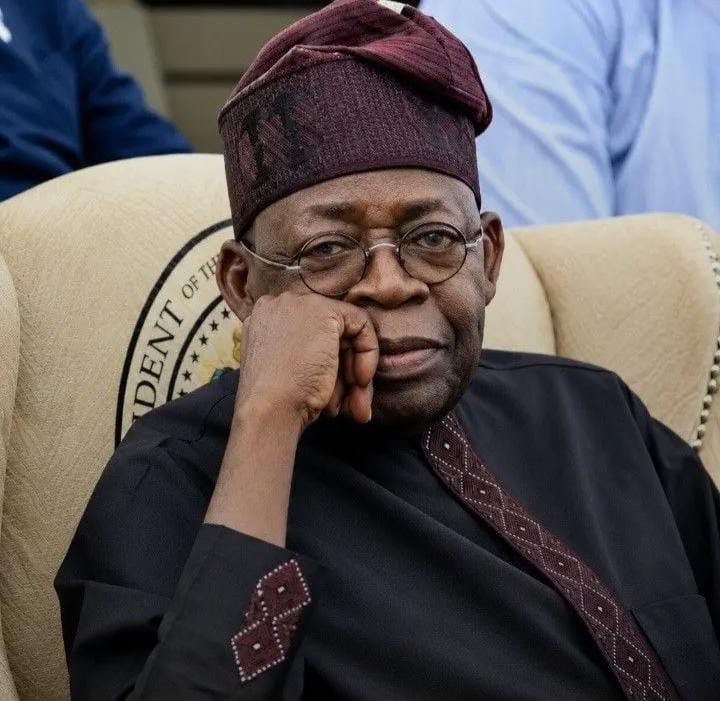
That is the central fiscal reality behind President Bola Ahmed Tinubu’s decision to end the subsidy regime. The adjustment imposed substantial hardship, but continuing the previous arrangement carried costs of its own.
The strongest justification for removal is therefore not that Nigerians should endure pain without question. It is that an increasingly expensive, poorly targeted intervention was consuming resources needed to build a more productive economy.
THE FINANCING PRESSURE WAS REAL
Recent remarks by former minister Babatunde Fashola have renewed attention to the financial circumstances preceding removal.
Speaking on Channels Television’s Politics Today on Tuesday, November 17, Fashola said:
“The World Bank simply said, ‘We won’t finance your country again unless you remove subsidy.’”
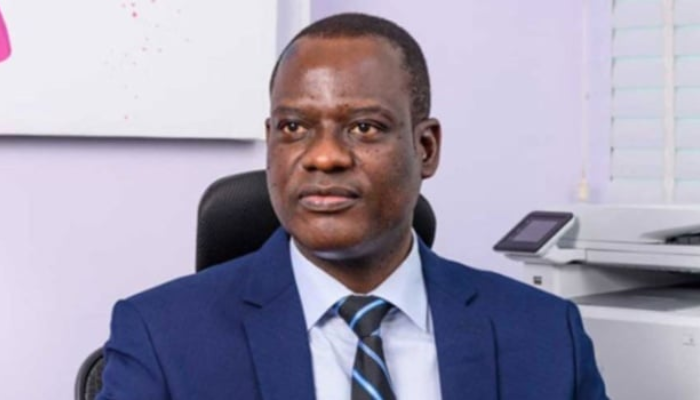
His account carries weight as a former member of the Federal Executive Council. Contemporary reporting from 2020 also described subsidy removal, electricity tariffs and exchange-rate reform among issues surrounding negotiations for a proposed $1.5 billion World Bank loan. These reports support the existence of financing pressure, although they do not independently establish a threat covering every World Bank facility.
Subsequent primary documentation establishes a direct connection between reform and specific financing.
The World Bank’s programme document for its $1.5 billion RESET operation, approved in June 2024, explicitly identifies increased petrol prices and termination of subsidy-related deductions from oil revenue as a prior action supporting the operation.
That substantiates the relationship between subsidy reform and access to particular financing.
Nigeria’s case for reform, however, was fundamentally domestic: the country needed to improve the resources available for its own development.
WHAT TINUBU INHERITED
The 2023 budget framework provided ₦3.36 trillion for petrol subsidy up to mid-year, with removal envisaged by June. Tinubu inherited an arrangement already approaching its planned funding endpoint.
This matters. Subsidy removal was not an entirely new policy invented on inauguration day. Equally, the accurate position is that provision existed for the first six months—not that the entire annual budget contained none.
World Bank documentation estimates that subsidy-related deductions from oil revenue reached ₦4.5 trillion in 2022, equivalent to 2.2 per cent of GDP, exceeding the combined budget allocations for health, education and social protection.
Those figures reveal the opportunity cost. Nigeria was committing enormous resources to keeping one product below its recoverable cost while essential services competed for funding.

Removal addressed that imbalance. It did not guarantee that every released naira would automatically be spent well; that requires separate accountability.
WHY THE OLD SYSTEM WAS POORLY TARGETED
The subsidy benefited ordinary Nigerians through cheaper transport and distribution. Its removal therefore affected households without cars as well as motorists.
But benefits were distributed unevenly.
The World Bank’s RESET programme document reports that the bottom 40 per cent of households purchased less than 3 per cent of petrol sold. It also identifies incentives for cross-border smuggling, shortages and corruption within the previous arrangement. The consumption figure concerns direct petrol purchases; it does not erase poorer households’ indirect benefits.

The policy weakness was that a broad price discount absorbed substantial public resources without reliably directing the greatest assistance to those most in need.
A better approach is to protect vulnerable households more directly while investing in transport, energy alternatives and productive services.
THE LEGAL DIRECTION PREDATED TINUBU
Section 205(1) of the Petroleum Industry Act 2021, subject to the section’s other provisions, establishes unrestricted free-market pricing conditions for wholesale and retail petroleum products.

Tinubu’s decision consequently followed an existing market-pricing direction.
The Act should not be stretched into the claim that retaining subsidy would automatically have made his presidency unlawful. Its relevance is that any restoration proposal must explain its legal mechanism alongside its financing.
WHY LOCAL REFINING DOES NOT MAKE SUBSIDY FREE
Domestic refining can strengthen supply security and reduce dependence on imported products. It does not eliminate the value of crude oil, processing expenses or distribution costs.
If a government requires petrol to sell below its recoverable cost, someone must absorb the difference.
Any proposal to restore subsidy should therefore disclose:
– The intended selling price and eligible beneficiaries.
– The expected annual cost and funding source.
– The response to changes in crude prices and exchange rates.
– Safeguards against inflated claims, diversion and smuggling.
– The consequences for other spending and government borrowing.
These are essential questions for any administration, including an opposition government proposing reversal.
A promise of cheaper petrol becomes a credible policy only when its costs and trade-offs are visible.
TURNING FISCAL REFORM INTO HOUSEHOLD RELIEF
Tinubu’s stated intention was to redirect resources towards public infrastructure, education, health and employment. That remains the appropriate test of delivery.
There are measurable interventions to assess.
Reporting based on NELFUND’s disbursement statement put cumulative payments at ₦375.28 billion as of October 29, 2026: ₦194.77 billion for institutional fees and ₦180.51 billion for upkeep, across 320 institutions. These figures demonstrate financial support, although they do not establish how many beneficiaries would otherwise have dropped out.
The national minimum wage increased from ₦30,000 to ₦70,000, approximately 133 per cent in nominal terms. Its effectiveness depends on implementation and purchasing power.

The Nigeria Tax Act 2025 applies a zero-per-cent rate to the first ₦800,000 of annual taxable individual income.
CNG transport initiatives also offer a route to reducing dependence on petrol. Their value must be demonstrated through accessible refuelling, reliable services and savings that reach passengers.
These programmes form part of the administration’s response. Their entire expenditure should not automatically be attributed to subsidy savings without a published reconciliation.

STABILITY MUST BECOME PROSPERITY
Reported NBS figures show headline inflation easing to 14.06 per cent in October 2026, from 14.63 per cent in September. This represents slower annual price increases, not a return to earlier prices.
The distinction matters to families whose wages still struggle to cover essentials.
Reform is most persuasive when improving public finances produces affordable transport, dependable services, stronger businesses and rising real incomes.
NATIONAL PATRIOTS POSITION
The National Patriots commends President Tinubu’s willingness to confront an expensive inherited distortion despite the political cost.
The evidence provides a substantial justification for subsidy removal: its fiscal burden, uneven distribution of benefits and diversion of resources from competing national priorities.
We support consolidating that reform while strengthening household protection and publishing clear accounts of how additional resources are used across government.
Critics proposing restoration must present a funded alternative. Government must demonstrate that the alternative it chose delivers.
Tinubu’s decision addressed a genuine fiscal problem. The task now is to turn the resources recovered into opportunities Nigerians can see, services they can use and prosperity they can feel.
Princess Gloria Adebajo-Fraser, MFR,MIoD, FIPMD.
President, National Patriots
Member, APC-PCC Strategic Communications Team 2027