

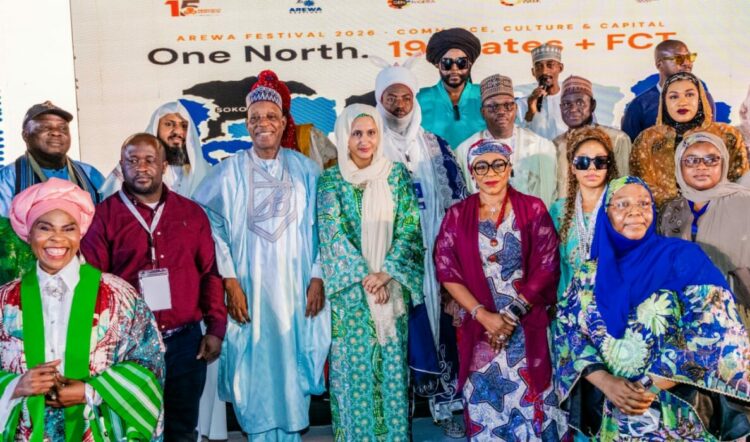
Stakeholders in Northern Nigeria have called on President Bola Tinubu’s administration to increase investment in the region, improve infrastructure and provide businesses with access to affordable loans to accelerate economic development.
They said agriculture, agro-processing, manufacturing, commerce, tourism and cultural industries were among the sectors that could generate employment, encourage industrialisation and strengthen the region’s contribution to Nigeria’s economy.

The call was made at the 2026 Arewa Festival held in Abuja, where participants urged the government to move away from short-term humanitarian interventions towards sustainable investments capable of turning the region’s resources into productive businesses.
The Executive Director of Greenwich Bank, Dr Goni Umar Farouk, said Nigeria’s ambition to build a diversified trillion-dollar economy would be difficult to achieve without fully harnessing Northern Nigeria’s economic potential.
He warned that presenting the region mainly as a humanitarian challenge, rather than an investment destination, could discourage long-term investors and limit economic opportunities.

Farouk said the North had significant economic advantages, including extensive agricultural land, established trading networks, a large youthful population and traditional expertise in leatherwork, textiles and metal production.
However, he stressed the need for the region to move beyond exporting raw materials and invest more in local processing, manufacturing and value addition.
He identified cold storage, milling, food dehydration, dairy processing, packaging and logistics as areas that could attract investment, reduce post-harvest losses and improve farmers’ earnings.
Farouk also called for the development of strategic trade routes, particularly along the Abuja-Kaduna-Kano corridor, to improve the movement of goods, connect producers with markets and strengthen regional commerce.

He said improved trade links with neighbouring countries, including Niger, Chad and Cameroon, could create further opportunities for businesses under the African Continental Free Trade Area.
Using Nigeria’s petroleum industry as an example, he cautioned against a system in which the country exports raw materials and later imports processed products at higher costs.
He argued that greater investment in local industries, including leather processing, would allow Nigerian businesses to produce and sell finished goods rather than lose much of the economic value to foreign markets.
STAKEHOLDERS CALL FOR LOWER INTEREST RATES
On access to finance, Farouk identified high borrowing costs as a major obstacle to industrial development.
He said conventional commercial lending rates of between 28 and 30 per cent were unsuitable for businesses seeking long-term investments in factories, agro-processing facilities and textile production.
He therefore advocated a financing system combining development finance, concessional loans, credit guarantees and blended capital to support businesses with long-term growth potential.
Farouk also urged entrepreneurs to formalise their businesses through proper registration, effective corporate governance and protection of intellectual property.
He said governments had a responsibility to create a more predictable business environment through better roads, broadband connectivity, harmonised taxes and transparent land administration.

SUPPORT FOR SMALL BUSINESSES
Also speaking at the event, the Managing Director of the Global Entrepreneurship Network (GEN) Nigeria, Dr Olawale Anifowose, called for stronger institutional and financial support for entrepreneurs and small businesses.
He stressed that enterprise development should not be concentrated in major commercial centres, urging stakeholders to create opportunities for businesses across different parts of the country.
Earlier, the Chief Executive Officer of Tripoint Travels, Shuhda Mohammed, said the festival was organised to challenge negative perceptions of Northern Nigeria by highlighting its cultural diversity, tourism potential and entrepreneurial capacity.
She noted that the region was frequently associated with insecurity, poverty and educational challenges, while its achievements, natural attractions, cultural heritage and business opportunities received less attention.
The stakeholders maintained that coordinated investment by governments, financial institutions and the private sector would be essential to unlocking the region’s economic potential.