


NAPM Launches in Abuja: A National Shift Toward Agribusiness — But Experts Warn Against Leaving Small Farmers Behind
By HeadlineNews.News Agriculture Bureau | May 2025
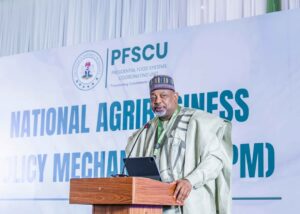
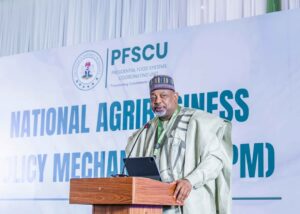
In a landmark move to modernize and unify Nigeria’s agricultural development, the Federal Government has launched the National Agribusiness Policy Mechanism (NAPM) at the Presidential Villa, Abuja. The policy, championed by Vice President Senator Kashim Shettima, GCON (represented by Senator Ibrahim Hadejia), is designed to serve as a national coordination framework for agribusiness policy, investment alignment, and productivity enhancement.
The launch brought together governors, agriculture commissioners, development partners, and private stakeholders from across the country to adopt a shared strategy for transforming Nigeria’s food systems.

NAPM: A Platform for Coherent, Competitive Agribusiness
NAPM is designed to reposition agriculture from subsistence to structured, market-driven, and mechanized agribusiness. It will also enable intelligence-sharing, cross-sectoral investment, and policy alignment between federal and state governments.
“Agriculture ought to be at the heart of our national development agenda,” said the Vice President. “With over 80% arable land and a youth-dominated population, we must aggressively transform agriculture to combat poverty, unemployment, and food insecurity.”

Beyond Kaduna: States Driving Innovation & Partnerships
While Kaduna State was highlighted for its Contract Farming, Soybean Policy, and Gender in Agriculture initiatives, several other states are driving agriculture through state-specific strategies and international partnerships:
Benue State: Under Governor Hyacinth Alia, the state is pursuing food security via direct subsidies, irrigation expansion, and World Bank-supported agricultural transformation plans.
Ogun State: Developed the Ogun Farmers Information Management System (OGFIMS), providing data access to smallholders and partnering with AFEX and CBN for digital financing access.
Oyo State: Launched a 50% tractor subsidy program and home-grown urban gardening initiative. Collaborating with IITA Ibadan for cassava value-chain enhancement.
Kebbi State: Forged a bilateral livestock partnership with the Republic of Indonesia, focusing on artificial insemination, animal genetics, and feed formulation to boost beef and dairy production, aiming to increase livestock output by 40% over three years.
Niger State: Partnered with IITA and AGRA to advance climate-resilient maize and rice production, targeting 20% yield increases through improved seed distribution.
Osun State: Rolled out youth-focused input access programs, supplying seedlings and small tools with the aim of reducing youth rural unemployment by 30% over five years.







Akwa Ibom State: Introduced the Food Sufficiency Strategy and Agricultural Policy with targeted support for rice and oil palm processors; has engaged FAO and IFAD to support mechanization pilots.

These partnerships reflect a growing trend: states are no longer waiting for the federal government—they are forging international, public-private, and regional deals to secure food futures.
Food Security Expert Warns: “Don’t Leave Small Growers Behind”
While the NAPM has been widely applauded, experts caution that its implementation must include Nigeria’s majority—smallholder farmers.
“The NAPM is a step in the right direction,” said Dr. G. Fraser, MFR, a food security policy expert and climate-agriculture advocate. “But it must incorporate scalable irrigation solutions like the Eden Irrigation Systems if we’re serious about food security.”
Dr. Fraser emphasized that 80% of Nigeria’s food comes from small growers, who are mostly non-mechanized, rural, and poorly educated.
“Mechanized farming is ideal for large estates, but subsistence farmers are the ones feeding the nation. Ignoring them for glossy agribusiness models is dangerous and impractical.”
She argued that Eden Irrigation’s systems—tested and deployed in other developing countries—have proven to increase yield by up to 300%, while its Etrac electric tractor offers smallholders a low-cost, climate-friendly mechanization alternative.
“We need hybrid models. Combine agribusiness thinking with realistic, village-level solutions. Irrigation and tools must be made available to poor farmers if we expect sustainable results.”

Global Lessons and Local Realities
In Brazil, agricultural reform was only successful because smallholder cooperatives were supported with water access, microcredit, and training, not just large-scale agribusiness financing. Likewise, India’s Green Revolution emphasized irrigation and seed access for rural farmers—factors that NAPM must prioritize if Nigeria is to achieve food sovereignty.

Borno State
Borno has been revitalizing its agricultural sector, focusing on irrigation and mechanization. The state government has trained agricultural extension agents on dry season farming and distributed inputs to farmers. These efforts aim to enhance food security and economic resilience.
NAPM Potential: Borno’s focus on irrigation and mechanization aligns with NAPM’s objectives to modernize agriculture and improve productivity.
Jigawa State
Jigawa has launched a rice value chain development initiative targeting an annual production of 3.6 million metric tonnes. The state has also partnered with international investors to enhance agricultural mechanization.
NAPM Potential: Jigawa’s initiatives in rice production and mechanization are in line with NAPM’s goals to boost agricultural productivity and value chain development.
Zamfara State
Zamfara has implemented the Comprehensive Agricultural Revolution Programme (ZACAREP), focusing on food security and poverty reduction. The state has distributed fertilizers and farm inputs to thousands of farmers and attracted foreign investments in greenhouse and mechanized farming.
NAPM Potential: Zamfara’s emphasis on comprehensive agricultural development and foreign investment aligns with NAPM’s objectives to modernize agriculture and attract investment.
Yobe State
Yobe has revitalized its agricultural sector by reintroducing agricultural exhibitions and launching empowerment programs. The state has also focused on training extension agents and acquiring agricultural machinery to boost productivity.
NAPM Potential: Yobe’s efforts in capacity building and mechanization support NAPM’s aim to enhance agricultural productivity and sustainability.
Katsina State
Katsina has signed a $158 million agreement with IFAD to boost agricultural value chains and has partnered with the Nigeria Agribusiness Group to develop a Climate Smart Agriculture Policy.
NAPM Potential: Katsina’s focus on climate-smart agriculture and value chain development complements NAPM’s objectives to modernize agriculture and improve resilience.
Kebbi State
Kebbi State has made significant strides in agriculture, particularly in rice production. The state has distributed free farm inputs to over 48,000 farmers, focusing on enhancing dry season rice farming. This initiative includes the provision of high-quality seeds, fertilizers, and technical support.
NAPM Potential: Kebbi’s emphasis on rice production and farmer support aligns with NAPM’s goals to boost agricultural productivity and value chain development.
Plateau State
Plateau State has launched the distribution of subsidized fertilizers and other essential farming inputs for the 2025 farming season. The state government disbursed N5 billion to empower 140 farming communities across the three senatorial zones.
NAPM Potential: Plateau’s initiatives in input distribution and community empowerment are in line with NAPM’s objectives to enhance agricultural productivity and sustainability.
Sokoto State
Sokoto State has partnered with FAO and ECOWAS to boost food security, agricultural productivity, and climate resilience. The state government contributed N1 billion in counterpart funds to the Agro-Climatic Resilience in Semi-Arid Landscapes (ACReSAL) Project to curb desert encroachment.
NAPM Potential: Sokoto’s focus on climate resilience and food security aligns with NAPM’s goals to modernize agriculture and improve resilience.
Kano State
Kano State has allocated N16.6 billion to agriculture in its 2025 budget, emphasizing food security and increased productivity. The state has also partnered with IFAD and the Special Agro-Industrial Processing Zones (SAPZ) program to empower over 1,000 farmers, with plans to scale up to 14,000.
NAPM Potential: Kano’s investment in agriculture and farmer empowerment supports NAPM’s objectives to enhance productivity and value chain development.
Gombe State
Gombe State aims to boost agricultural productivity by expanding farming land and diversifying crops. The state has partnered with global fertilizer giant OCP to enhance agriculture and the economy.
NAPM Potential: Gombe’s efforts in land expansion and fertilizer partnerships align with NAPM’s goals to modernize agriculture and improve productivity.
Osun State
Osun State has launched the Imole Agropreneur Model Project to empower farmers and boost agricultural productivity.
NAPM Potential: Osun’s focus on farmer empowerment aligns with NAPM’s objectives to enhance agricultural productivity and sustainability.
Oyo State
Oyo State has initiated the second phase of a 50% tractor subsidy to support smallholder farmers.
NAPM Potential: Oyo’s mechanization efforts support NAPM’s goals to modernize agriculture and improve productivity.
Ogun State
Ogun State has supported farmers with N5.4 billion worth of inputs through the Ogun State Transformation Economic Programme (OGSTEP).
NAPM Potential: Ogun’s investment in agricultural inputs aligns with NAPM’s objectives to boost productivity and food security.
Ekiti State
Ekiti State’s young farmers participating in the state’s farming scheme made over N200 million last year from the sale of their produce.
NAPM Potential: Ekiti’s youth-focused agricultural programs align with NAPM’s goals to empower young farmers and enhance productivity.
Ondo State
Ondo State has embarked on the ‘Red Gold Project’ scaling its oil-palm production and is also focusing on cassava and cocoa production.
NAPM Potential: Ondo’s diversification and scaling of agricultural production support NAPM’s objectives to modernize agriculture and improve resilience.
Lagos State
Lagos State has trained over 100,000 farmers and empowered 151,595 agribusinesses in six years.
NAPM Potential: Lagos’s investment in training and agribusiness aligns with NAPM’s goals to enhance productivity and value chain development.
Akwa Ibom State
Akwa Ibom State has launched agricultural programs to encourage the involvement of the populace in farming activities.
NAPM Potential: Akwa Ibom’s focus on community involvement in agriculture supports NAPM’s objectives to boost productivity and food security.
Cross River State
Cross River State has commenced construction of a Special Agro-Industrial Processing Zone to boost agricultural productivity.
NAPM Potential: Cross River’s investment in agro-industrial processing aligns with NAPM’s goals to modernize agriculture and improve resilience.
Rivers State
Rivers State has trained over 4,250 agripreneurs as part of a $30 million scheme to empower farmers.
NAPM Potential: Rivers’s focus on agripreneurship supports NAPM’s objectives to enhance productivity and value chain development.
Delta State
Delta State’s agriculture sector has undergone significant transformation, driven by formalization and mechanization.
NAPM Potential: Delta’s mechanization efforts align with NAPM’s goals to modernize agriculture and improve productivity.
Anambra State
Anambra State is set to launch the “Operation Farm To Feed Campaign” in all 21 Local Government Areas to boost agricultural productivity.
NAPM Potential: Anambra’s grassroots agricultural initiatives support NAPM’s objectives to enhance food security and productivity.
Imo State
Imo State has commenced a 35-hectare farm estate project to employ 1,000 farmers and boost agricultural production.
NAPM Potential: Imo’s investment in agricultural estates aligns with NAPM’s goals to modernize agriculture and improve resilience.
Benue State
Known as the “Food Basket of the Nation,” Benue State has been revitalizing its agricultural sector under the leadership of Governor Hyacinth Alia. The state government is implementing a comprehensive agricultural program focusing on modern farming techniques, mechanization, and value chain development. Initiatives include training farmers on new farming methods and technologies, as well as plans to establish a Faculty of Agriculture at Benue State University to enhance agricultural education and research .
NAPM Potential: Benue’s emphasis on modernizing agriculture and enhancing value chains aligns with NAPM’s objectives to boost productivity, ensure food security, and promote sustainable agricultural practices.
Nasarawa State
Nasarawa State is emerging as a model for agricultural reforms in Nigeria. The state has prioritized rice production, implementing advanced irrigation technologies to improve crop yields. The government has also established a one-stop investment center to attract both domestic and foreign investments in the agricultural sector .
NAPM Potential: Nasarawa’s focus on irrigation, investment attraction, and crop yield improvement complements NAPM’s goals of enhancing agricultural productivity and fostering economic growth through agribusiness.
Niger State
Under Governor Mohammed Umaru Bago, Niger State has embarked on an ambitious agricultural revolution. The state is exploring 3 million hectares of arable land to harness its agricultural potential. Initiatives include the establishment of Niger Foods Limited to facilitate agricultural investments and transition farmers from subsistence to mechanized farming. The state has also prepared over 500,000 hectares for cultivation, aiming to boost food security and economic growth .
NAPM Potential: Niger State’s large-scale land development and mechanization efforts are in line with NAPM’s objectives to modernize agriculture, increase productivity, and ensure food security.
These states have made significant strides in agricultural development, and their initiatives align well with the objectives of the National Agribusiness Policy Mechanism. By leveraging NAPM, they can further enhance productivity, sustainability, and economic growth in their agricultural sectors.
The Eden Irrigation systems therefore offers Nigerian States the unique opportunity to align with the objectives of NAPM to boost food security with increased productivity, rural empowerment, value chain development, economic development, agribusiness for small growers and mechanization, crops resilience, all year round cultivation without dependence on rainfall, improved yield by up to 300% for selected crops, reducing inflation, enabling multi seasonal cultivation and practical for use by illiterates. Specially designed for African rural farmers & African mechanized farming which is not full scale mechanized due to several factors.
The Eden Irrigation systems is collaborating with global irrigation companies to produce various systems which would be suitable for African climatic conditions and topography.
Email edenirrigation2025@gmail.com for more information.
Eden irrigation systems is partnering the Renewed Hope developmental projects nationwide to ensure food security in Nigeria.
Conclusion: NAPM Is a Bold First Step—Execution Is Key
The launch of NAPM represents a turning point in Nigeria’s agricultural evolution, but its success depends on how well it aligns federal ambitions with grassroots realities.
“Let’s not design a food system for Abuja while rural Nigeria is left struggling,” Dr. Fraser concluded. “We’re optimistic that the Federal Government will integrate these practical, proven solutions into the final NAPM guidelines.”
Editor’s Note: HeadlineNews.News will continue to track the implementation of NAPM and the progress of state-level agricultural strategies across the federation. Follow our Food Futures series for updates.
Headlinenews.news Special Investigative Report.




