

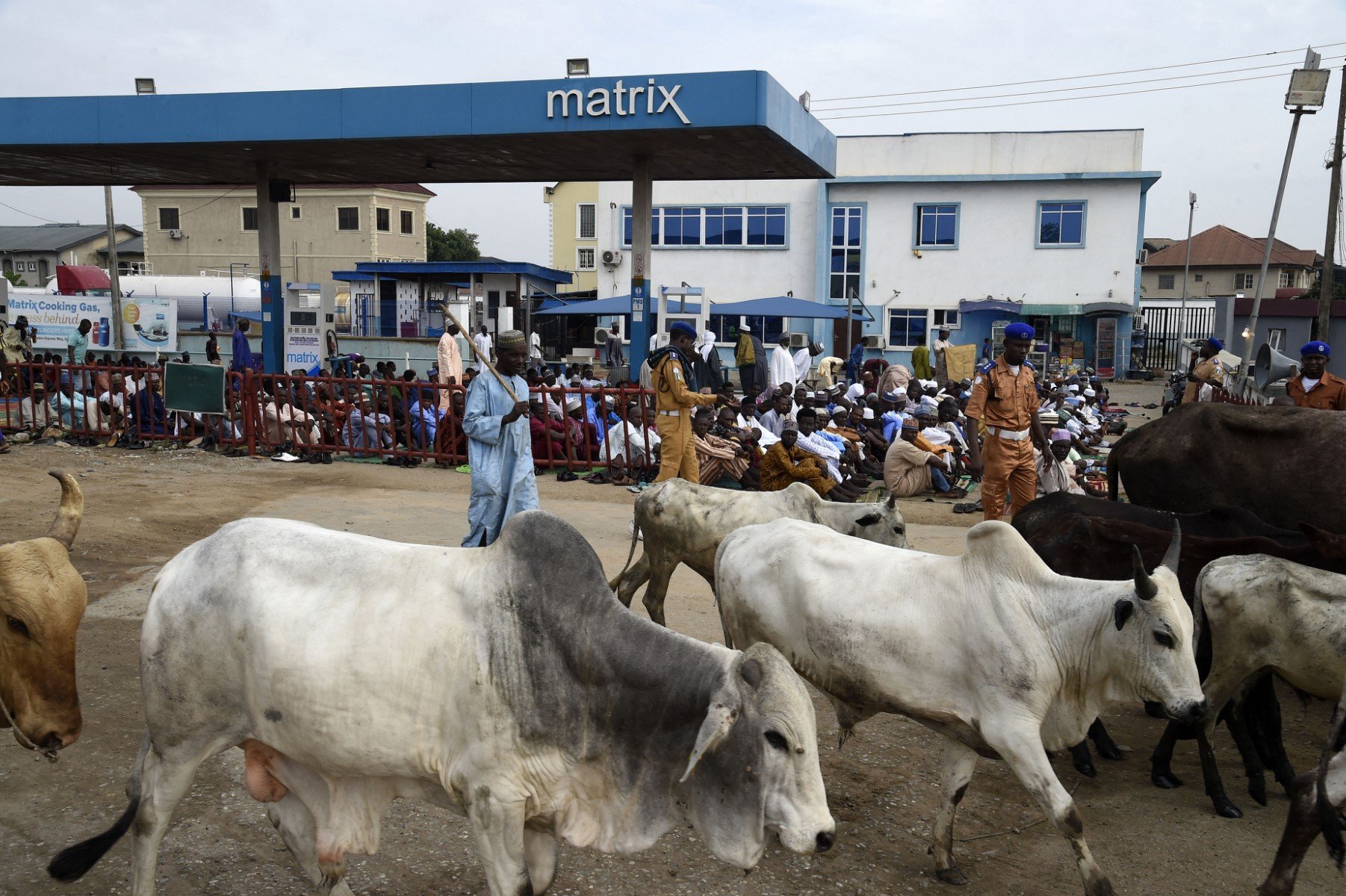
The Donald Trump administration and its congressional allies are intensifying pressure on Nigeria over violence against Christian communities, with Fulani pastoralists increasingly in the crosshairs as Washington seeks concrete steps to address one of Africa’s most persistent conflicts.

In a joint submission to the White House on Monday, February 23, 2026, the U.S. House Committees on Appropriations and Foreign Affairs described Nigeria as “the most dangerous place in the world to practise the Christian faith.” The report, following months of hearings, bipartisan fact-finding missions, and consultations, urged targeted sanctions, visa restrictions, and a renegotiation of bilateral security ties.

Lawmakers recommended invoking Country of Particular Concern (CPC) presidential directives, conditioning aid on measurable progress against religious violence, and supporting legal reforms—including the repeal of Sharia codes and criminal anti-blasphemy laws in northern states, which they argue enable systemic discrimination and target minorities.
They also called for disarming Fulani herdsmen—potentially through restrictions on beef and cattle exports—and allowing farmers legitimate self-defence while disrupting terrorist financing networks. The committees further proposed divesting from Russian military equipment in favour of U.S. systems and countering Chinese influence, including allegations of Beijing paying protection money to Fulani militias.

Chairman Tom Cole emphasised: “Liberty continues when strength stands guard. Protecting the freedom to worship requires vigilance that deters evil, confronts violence, and stands watch so prayer is never left undefended.”
Subcommittee Chairman Mario Díaz-Balart added: “We must stand with vulnerable communities and ensure those responsible for this violence are held accountable.”

The report warned that unchecked attacks risk destabilising West Africa and threatening U.S. national security interests.
Ghana becomes key
U.S. hub Parallel to the pressure campaign, the U.S. is deepening military coordination with Ghana. On Monday, Ghanaian President John Dramani Mahama met AFRICOM Commander U.S. Air Force Gen. Dagvin Anderson in Accra to discuss expanded defence cooperation, joint maritime patrols, and enhanced logistics support.
Anderson highlighted the migration of terrorist networks into West Africa, exploiting ungoverned spaces in the Sahel. He stressed that no single nation can contain the threat alone.

The U.S. Christmas Day airstrike on Sokoto, Nigeria, was reportedly launched from a naval platform off Ghana’s coast, underscoring the country’s growing role as a strategic launchpad for U.S. operations in the region.
Ghana has hosted AFRICOM’s largest exercise (African Lion), partnered on medical readiness and joint drills, and co-hosted the Africa Maritime Forces Summit.

FG rejects persecution claims
Nigeria’s Minister of Information and National Orientation Mohammed Idris rejected allegations of state-backed religious persecution, insisting the violence stems from terrorism, organised crime, and communal tensions not government policy or religious bias.
“Nigeria does not have, and has never had, a state policy of religious persecution,” Idris said.
He reaffirmed constitutional guarantees of religious freedom and equal protection under the law, highlighting intensified military operations, forest guard deployments, intelligence-sharing, and investments in security assets.
On ransom allegations related to school abductions, Idris said: “No ransom was paid, and no militant commanders were freed.” He dismissed helicopter delivery claims as “fake and laughable.”
The government urged media verification to avoid emboldening criminals and undermining troop morale, while expressing openness to constructive dialogue with partners.
CAN warns against Sharia repeal
The Christian Association of Nigeria (CAN) cautioned that U.S. calls to repeal Sharia and blasphemy laws risk inflaming religious tensions. CAN advocates a new, people-driven constitution that fairly accommodates all faiths rather than selective repeal.

Kano Assembly responds to U.S. claims
The Kano State House of Assembly urged the state government to address U.S. allegations reportedly linking former Governor Rabiu Kwankwaso to terrorism and asset freezes. The motion praised Kwankwaso’s contributions to peace, education, and infrastructure, describing him as a unifying figure.




