

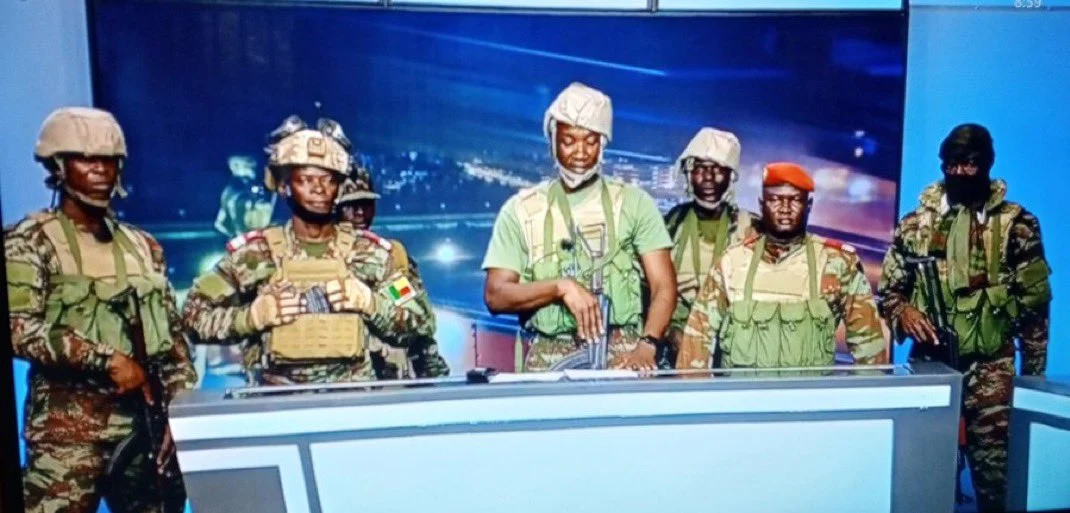
Authorities in Benin have placed around 30 individuals, mostly military personnel, in custody over their alleged involvement in a failed coup attempt against President Patrice Talon earlier this month, according to legal sources.

AFP reports that the suspects appeared on Monday before a special prosecutor at the Court for the Repression of Economic Crimes and Terrorism (CRIET) in Cotonou, the country’s economic capital. Following hours of questioning, they were ordered into pre-trial detention on Tuesday.
The accused face serious charges, including treason, murder, and acts endangering state security, stemming from the attempted overthrow of the government.

The alleged coup first came to light on December 7, when a group of soldiers appeared on national television declaring that President Talon had been removed from office. The announcement was quickly quashed as loyalist forces regained control.
Security sources said the mutiny was suppressed with support from the Nigerian Air Force and French special forces, highlighting growing regional and international concerns over political instability in West Africa.

Reports indicate that several people were killed during the clashes associated with the attempted coup. The alleged ringleader, Lieutenant-Colonel Pascal Tigri, along with other mutinous soldiers, remains at large.
AFP journalists observed heavy security presence around the court on Tuesday, reflecting the high sensitivity of the case.

In a related development, Chabi Yayi, son of former Beninese president and prominent opposition leader Thomas Boni Yayi, was released on Monday after being questioned in connection with the coup plot. Sources noted that he remains under investigation, although authorities have not publicly disclosed the specific charges. Chabi Yayi’s ties to the opposition have added to political tensions in the country.

President Talon, who is set to leave office in April after completing the constitutionally allowed two terms, has been credited by supporters with driving economic growth. Critics, however, accuse his administration of authoritarian practices, raising concerns in a country long viewed as a model of democratic stability in West Africa.




