


Nigeria’s current hardship is real.
The frustration expressed in this commentary reflects what millions of citizens feel daily: rising costs, insecurity, uncertainty, and a longing for relief.
No serious analyst disputes that suffering has intensified for many households.
But the larger question is whether this hardship should be framed as proof of personal failure by President Bola Tinubu, or as the inevitable turbulence of confronting a system that has been structurally broken for generations.
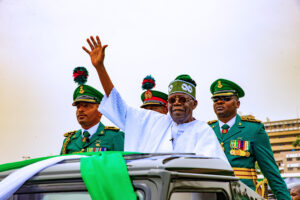
The truth is that Nigeria’s economic and governance crisis did not begin in 2023.
The country’s distortions are the product of over five decades of misrule, military disruption, corruption, subsidy dependence, institutional collapse, and elite capture.
Since the oil boom of the 1970s, Nigeria built an economy that consumed more than it produced, spent more than it earned, and imported what it should have manufactured.
This created a fragile state where government survived on oil rents and borrowed money rather than productivity and taxation.
By the time Tinubu assumed office, Nigeria was spending trillions of naira annually on fuel subsidies that mostly benefitted smugglers and the wealthy, while debt servicing was consuming a dangerous share of federal revenue.
The Central Bank was entangled in quasi-fiscal interventions, foreign exchange was heavily distorted, and investor confidence was weak.
These were not new problems. They were postponed crises.
This is the central point many critics overlook: Tinubu did not invent Nigeria’s economic pain.
He inherited an economy already nearing fiscal exhaustion.
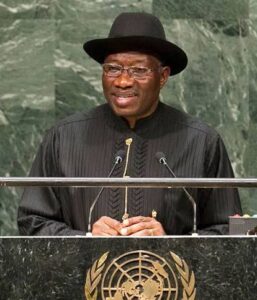
Where this administration differs is that it chose to confront long-avoided structural reforms early.
The removal of the petrol subsidy, though painful, ended a decades-long drain that experts across the IMF, World Bank, and Nigerian economists had warned was unsustainable.
The unification of the foreign exchange market, though disruptive in the short term, addressed a rent-seeking system where connected actors exploited multiple exchange rates while ordinary businesses suffocated.
These reforms were not designed to punish Nigerians; they were attempts to stop a national collapse that would have been far worse if delayed.
It is also important to recognise that Tinubu’s government has not been inactive.
Revenue reforms are underway, states are gaining more fiscal responsibility, and major efforts are being made to reposition infrastructure, power decentralisation, and domestic industrial capacity.
Security investments and regional defence partnerships have intensified.
These are the kinds of foundational steps that do not produce instant comfort, but are necessary for long-term stability.
Still, the commentary raises one valid concern that cannot be ignored: cushioning and sequencing.
Even sound reforms become politically dangerous when citizens feel abandoned in the transition.
The weakness has not been in the logic of reform, but in the human management of reform. Inflation, food prices, transport costs, and wage stagnation have created a perception that sacrifice is one-sided.
A reform agenda must be matched with aggressive social protection, clearer communication, faster targeted relief, and visible accountability among elites.
That is where improvement is required.

Tinubu should not be blamed for creating Nigeria’s rot.
That rot is the outcome of 57 years of compounded structural failure.
But he must still be judged on whether his government can steer Nigerians through the storm with empathy, competence, and shared sacrifice.
The fairest conclusion is this: Tinubu did not cause Nigeria’s long collapse, but he now carries the burden of correcting it.
His administration has taken bold steps that previous governments avoided.
Yet reforms must translate not only into macroeconomic logic, but into daily survival for ordinary Nigerians.
History will eventually judge the reformers kindly if outcomes improve.
But leadership is measured in the present, by whether citizens can endure the path to renewal.

The task ahead is not to reverse five decades overnight. It is to ensure that the correction does not break the people it is meant to save.
The National Patriots Movement notes that President Bola Tinubu did not create Nigeria’s deep structural decay built over decades of misrule, subsidy waste, and institutional erosion. His administration has initiated bold reforms long avoided, including subsidy removal and fiscal restructuring. However, urgent cushioning, food security measures, and visible elite sacrifice are essential to ensure recovery does not overwhelm ordinary Nigerians.
Princess G. Adebajo-Fraser MFR.
President, the National Patriots.




